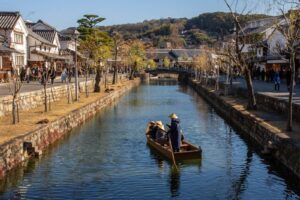
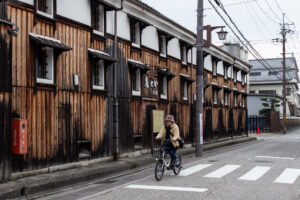
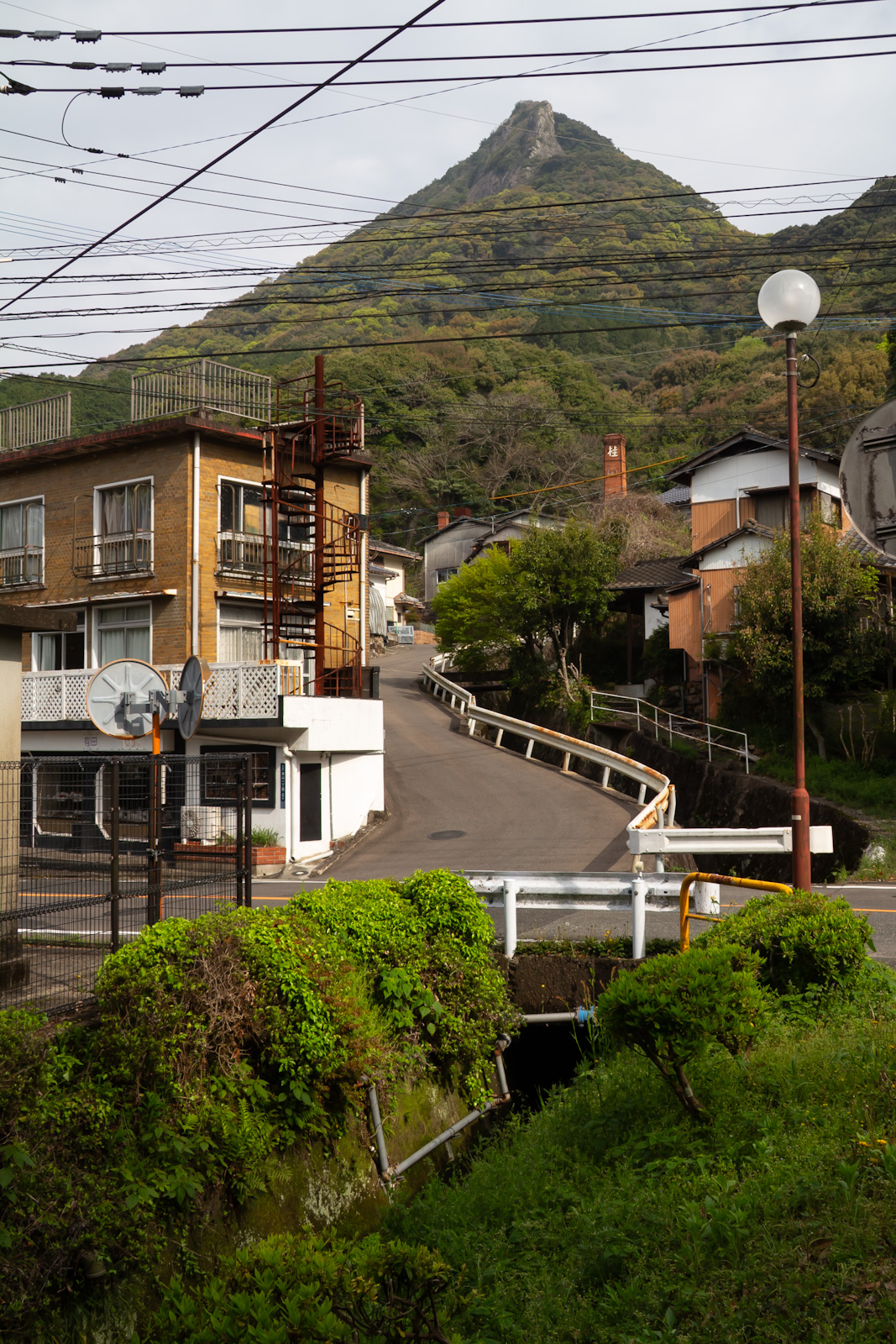
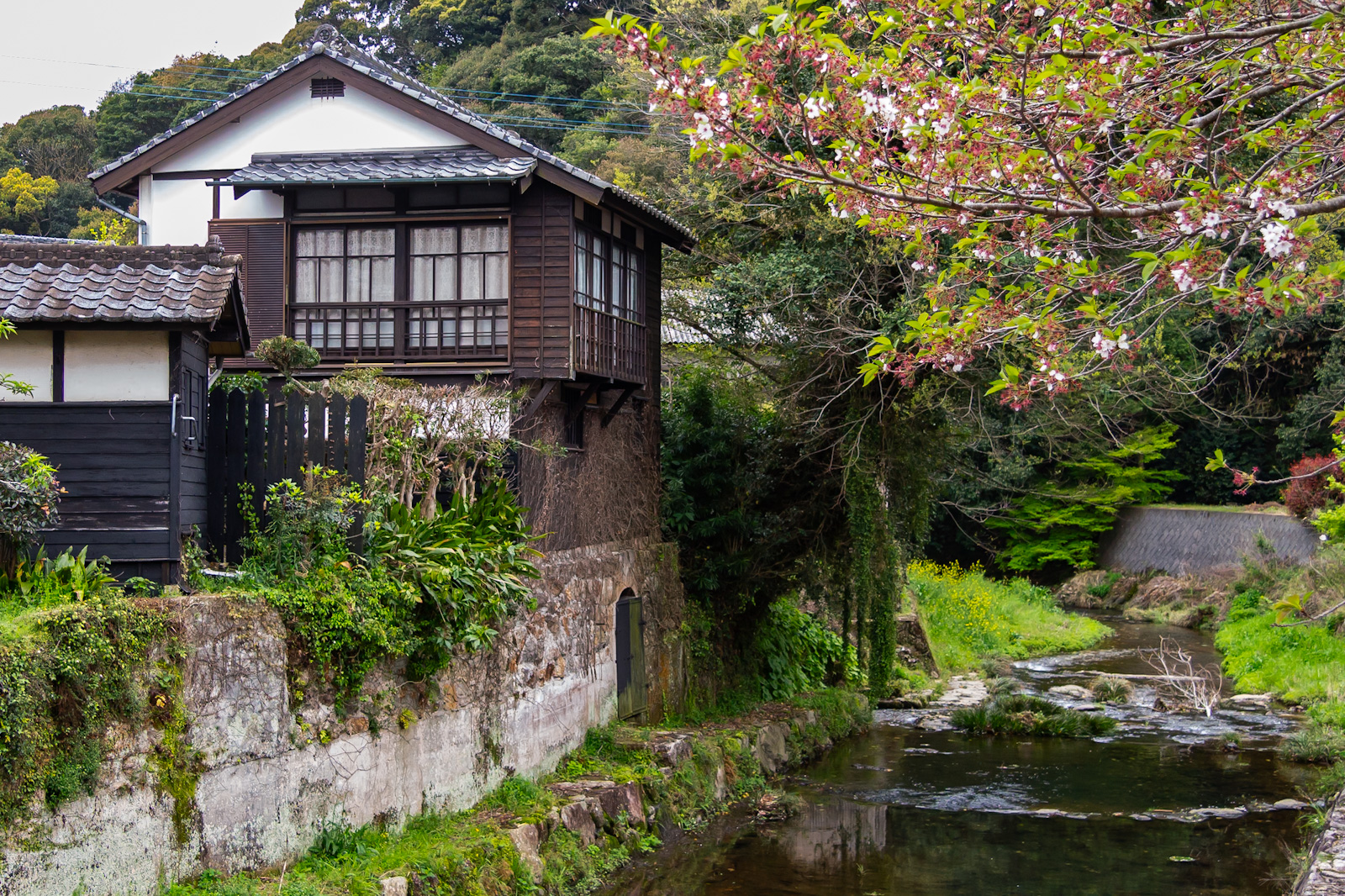
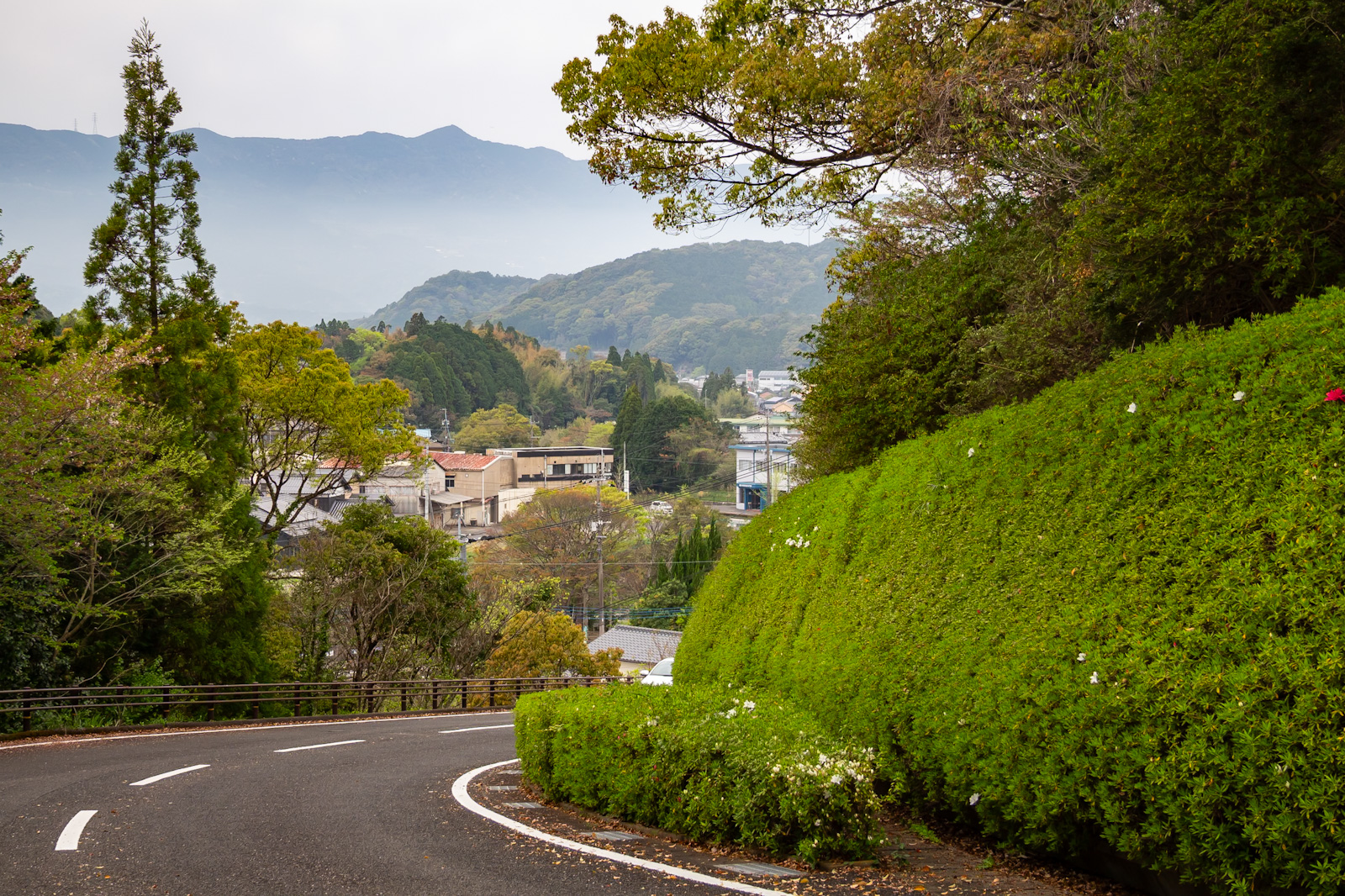
In the forested mountains of western Saga is a small town called Arita, which is known for its porcelain. Every Golden Week, it hosts one of Japan’s largest ceramics fairs, where visitors can browse a variety of discounted wares. But on an ordinary day, it’s a quiet, sleepy place, the kind that makes you feel like you’ve stepped through a portal into a hidden world. And for a while, wandering around on an early Sunday morning, I was the only one in it. But that’s the charm of small-town Japan: it leaves you be.
This article is featured on GPSmyCity. To download it for offline reading or create a self-guided walking tour of the highlighted attractions, go to Walking Tours and Articles in Arita.
Arita’s 400-year history dates back to Japan’s 16th-century invasions of Korea. As the story goes, a potter named Yi Sam-Pyeong was brought to Saga by the army of Nabeshima Naoshige, the lord of the Saga Domain, and was tasked with developing porcelain production in the prefecture. In 1616, he found a kaolin deposit in Arita, and the production of Arita-yaki, or Arita porcelain, began. For this, he was allowed to take the Japanese name Kanagae Sanbee and became known as the father of Japanese ceramics.
But because the earliest known source mentioning Kanagae Sanbee dates back to 1653, over 50 years after he arrived in Japan, and was written by Kanagae himself, this narrative is often questioned by modern historians. Kanagae says he worked for the ruling family of the Taku region after arriving in Japan. Then in 1616, he moved to Arita with 18 other people, including three Taku potters.
Kanagae did not claim to be a potter, nor to have been brought to Japan for his talent. So, some historians presume that Kanagae learned pottery from the Taku potters. And since the earliest known Arita-yaki dates back to the 1630s and 40s, Kanagae’s discovery of kaolin in 1616 is also disputed. Still, there’s no doubt that kaolin was found in Arita. And the quantity and quality made large-scale porcelain production possible in Japan for the first time.
Izumiyama Quarry
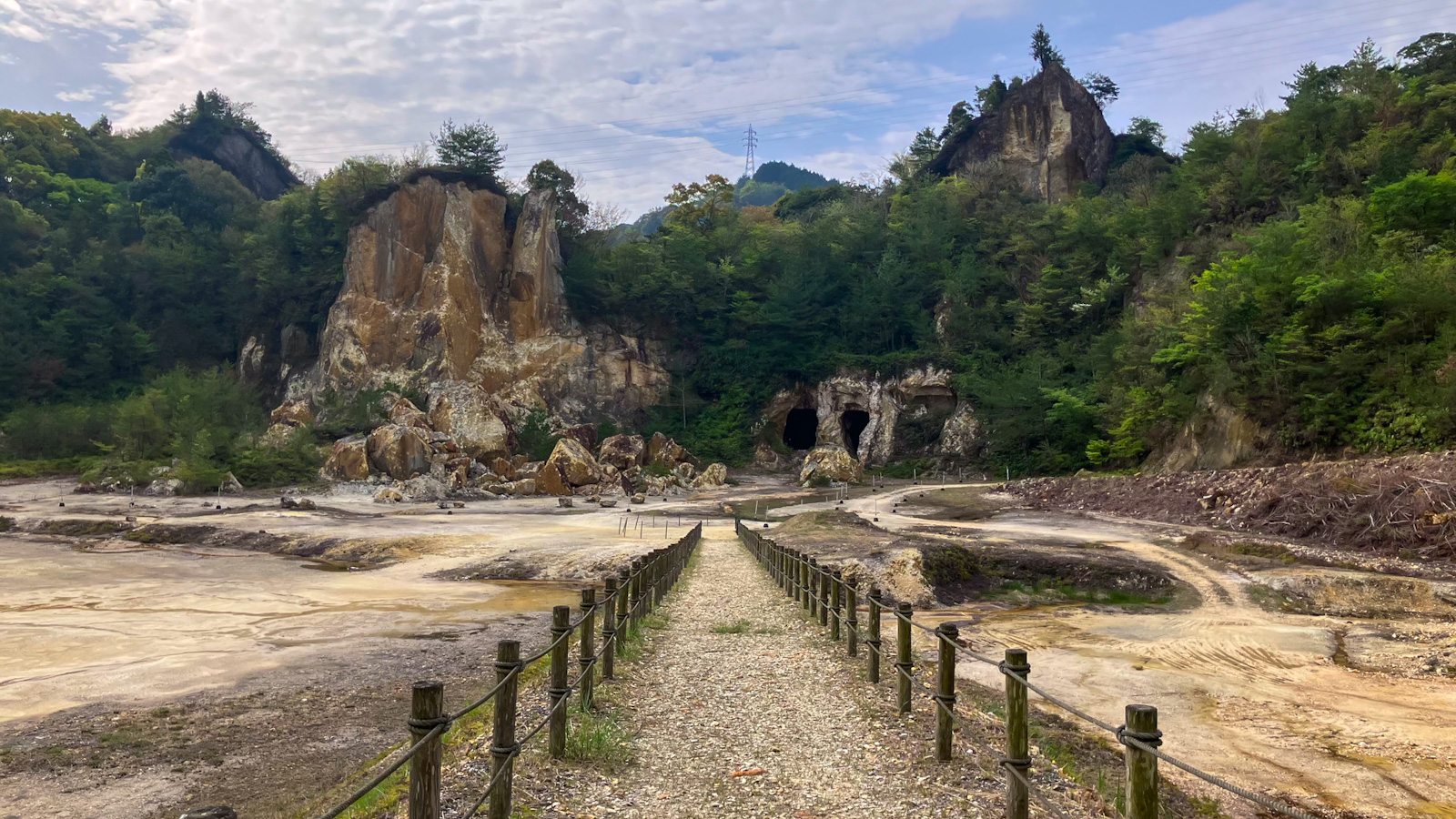
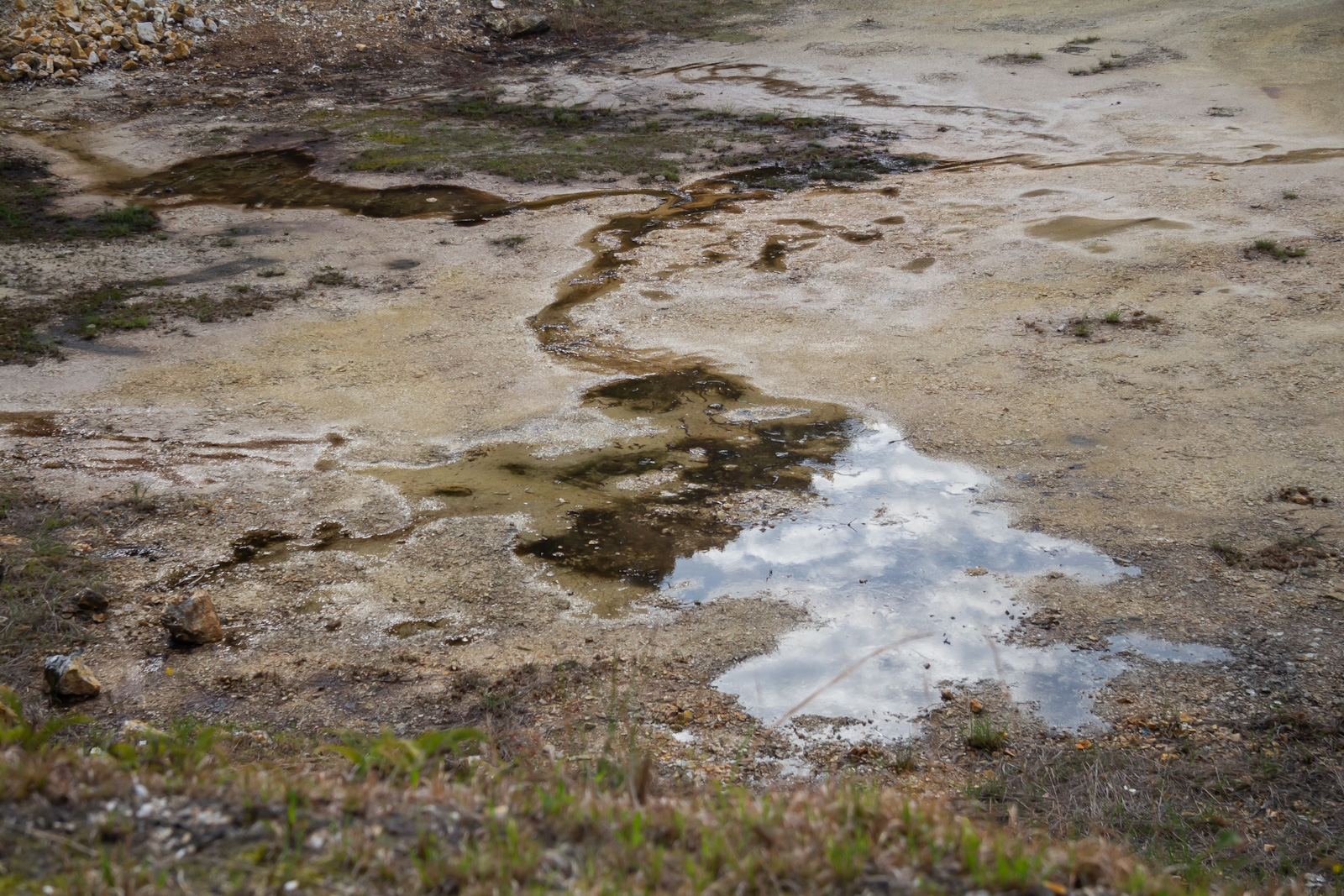
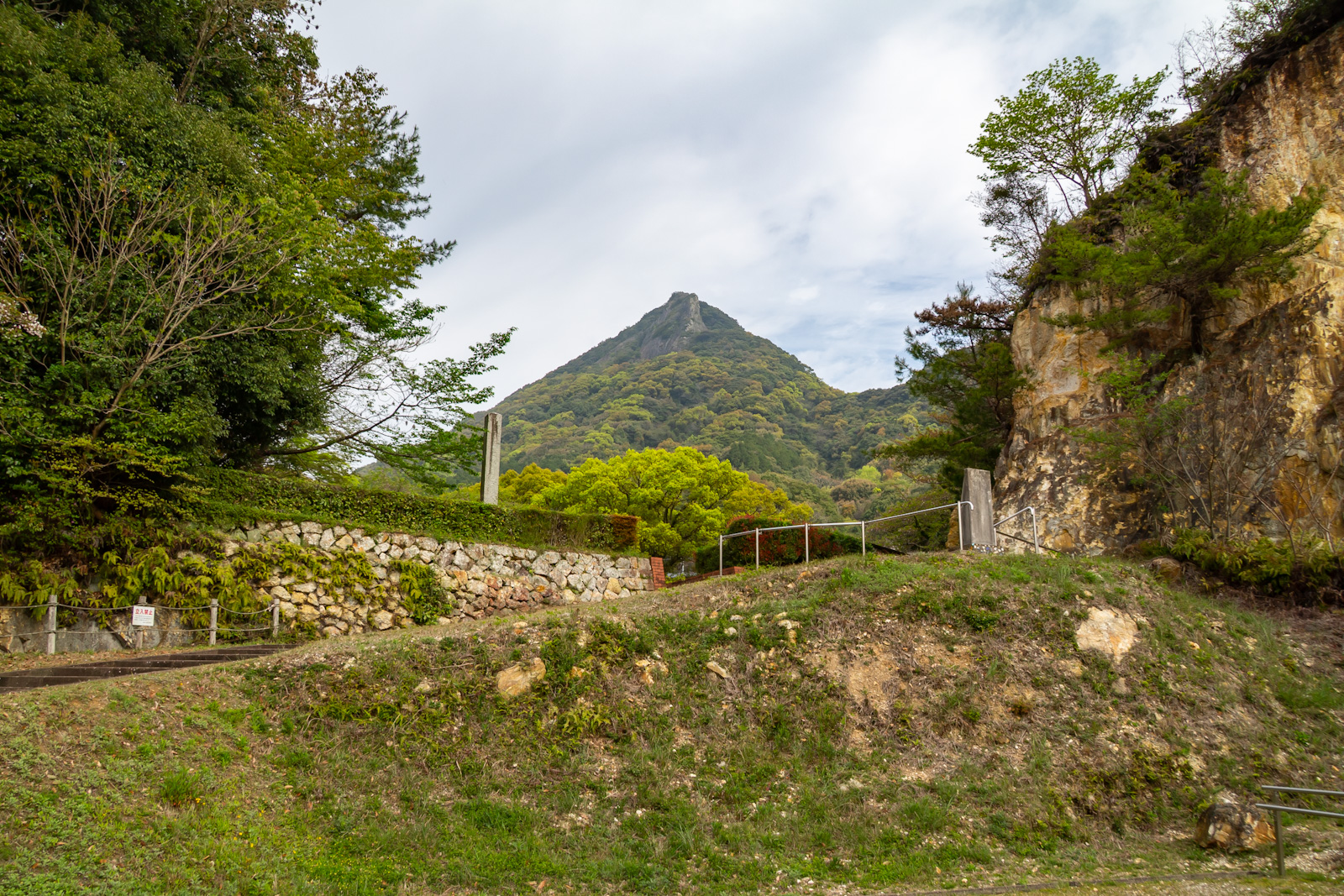
The kaolin deposit in Arita was found at Mount Izumiyama, which became a quarry. The volcanic stone, high in silica and quartz, also contained sericite, a fine-grained mica, that acted as a natural binder. This meant the crushed rock could be turned into workable clay without the need for many other materials. When fired at high temperatures, it produced a white porcelain unlike anything that had been produced in Japan before that time.
As such, Izumiyama Quarry was designated a National Historic Site in 1980. It continued to operate as a mine until 1995, when deposits were finally depleted. The remaining pits still stand today, the scale of which shows just how much kaolinite was extracted. It’s a breathtaking view, especially in the quiet of the early morning. The surrounding landscape is gorgeous, but there’s also something hauntingly beautiful about such a vast, abandoned space.
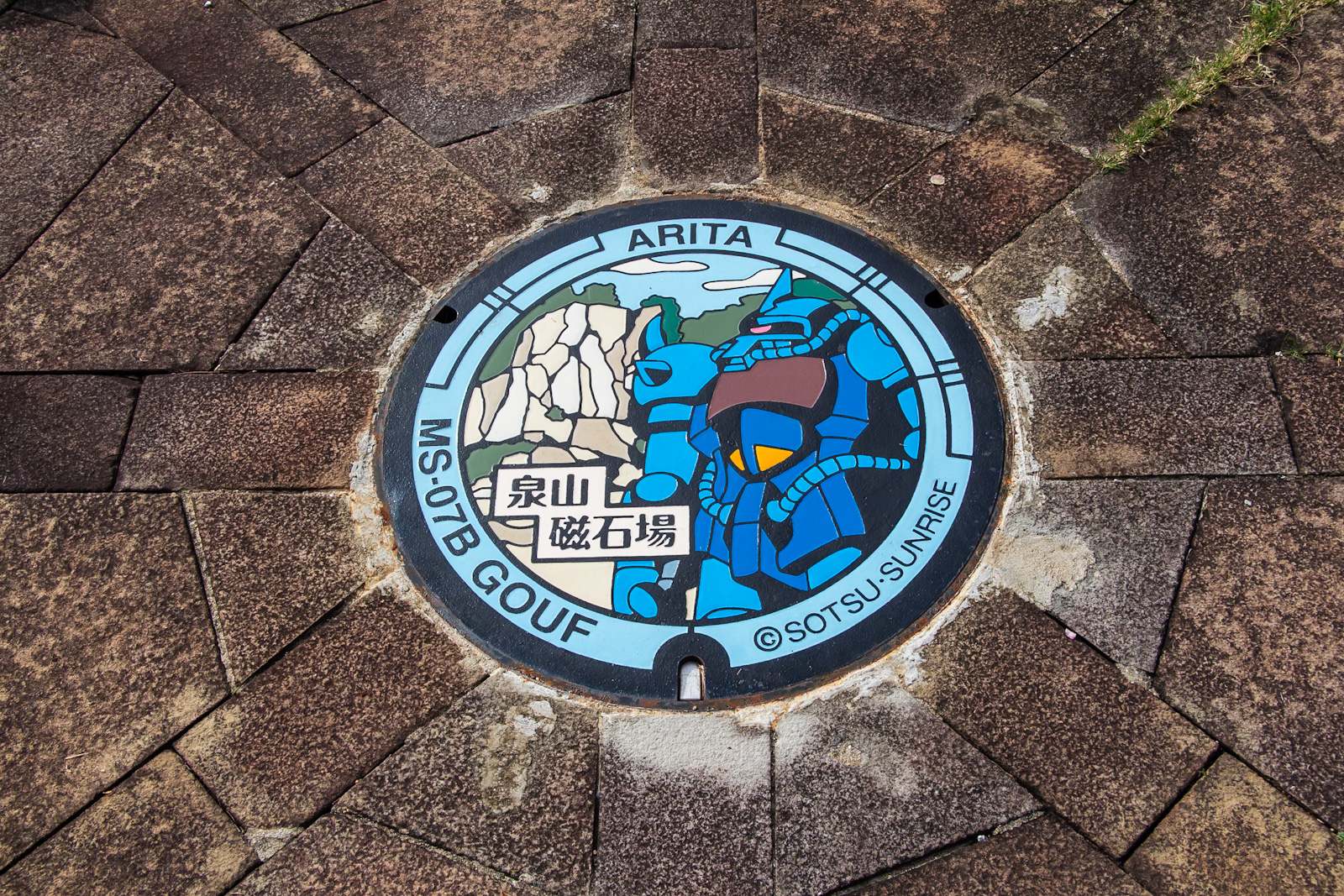
Not related to porcelain at all, but at the quarry, you can also see one of Arita’s Gundam manholes. Part of the Gundam Manhole Project, it features the MS-07B Gouf combat mobile suit, famously piloted by Ramba Ral in the 1979 sci-fi anime series.
Hakuji Hill Sumo Ring
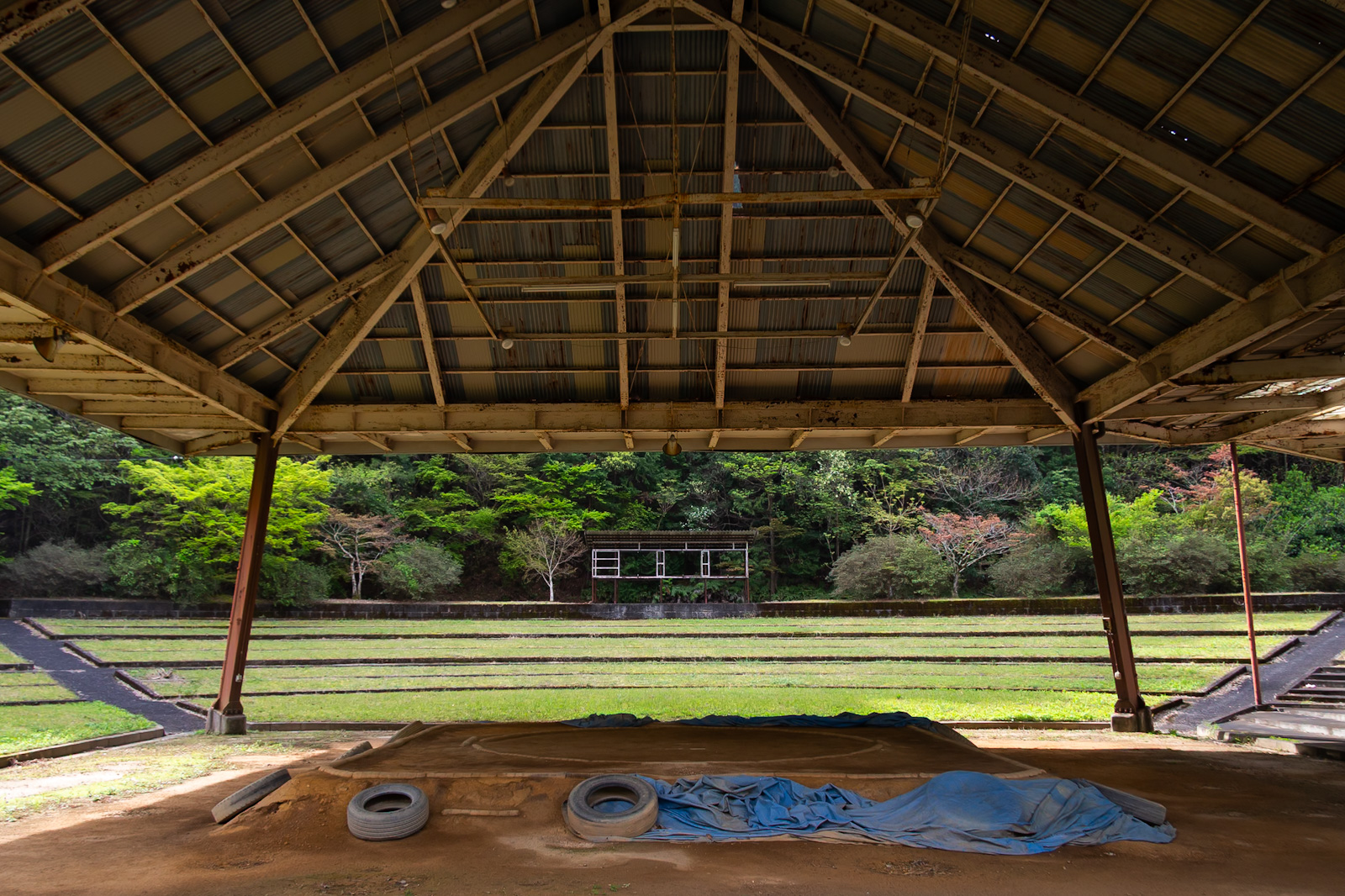
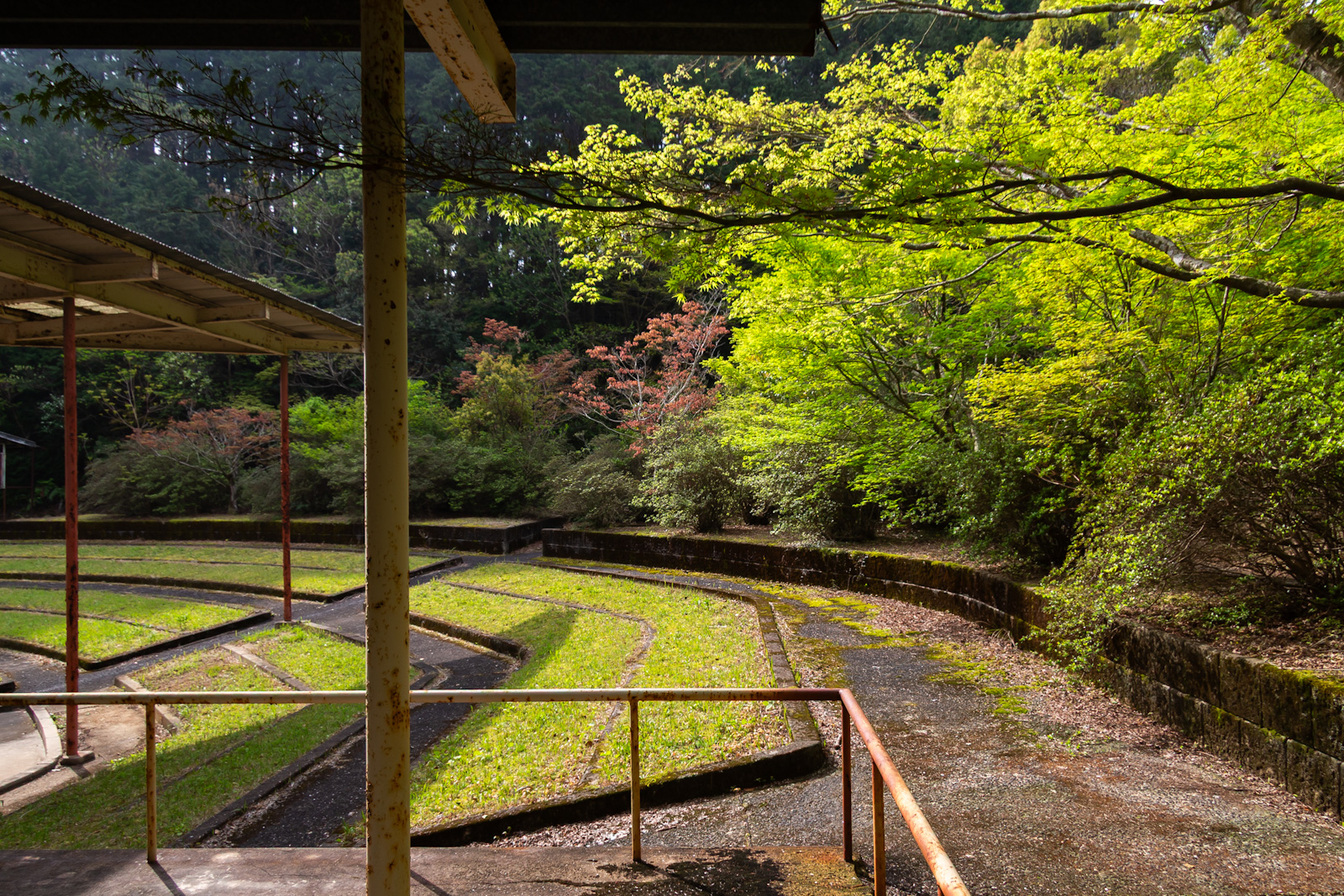
Just behind Izumiyama Quarry is a huge, outdoor sumo ring. It’s used for Arita’s annual Ishiba Sumo Tournament, which has been held every autumn since the Meiji Period. The 100-year-old votive event asks for prosperity in the ceramic industry and safety in stone excavation.
Outside the festival, the sumo ring functions as a historical site, where visitors can get a close look at a traditional sumo ring and learn more about how the event ties into the history of Arita.
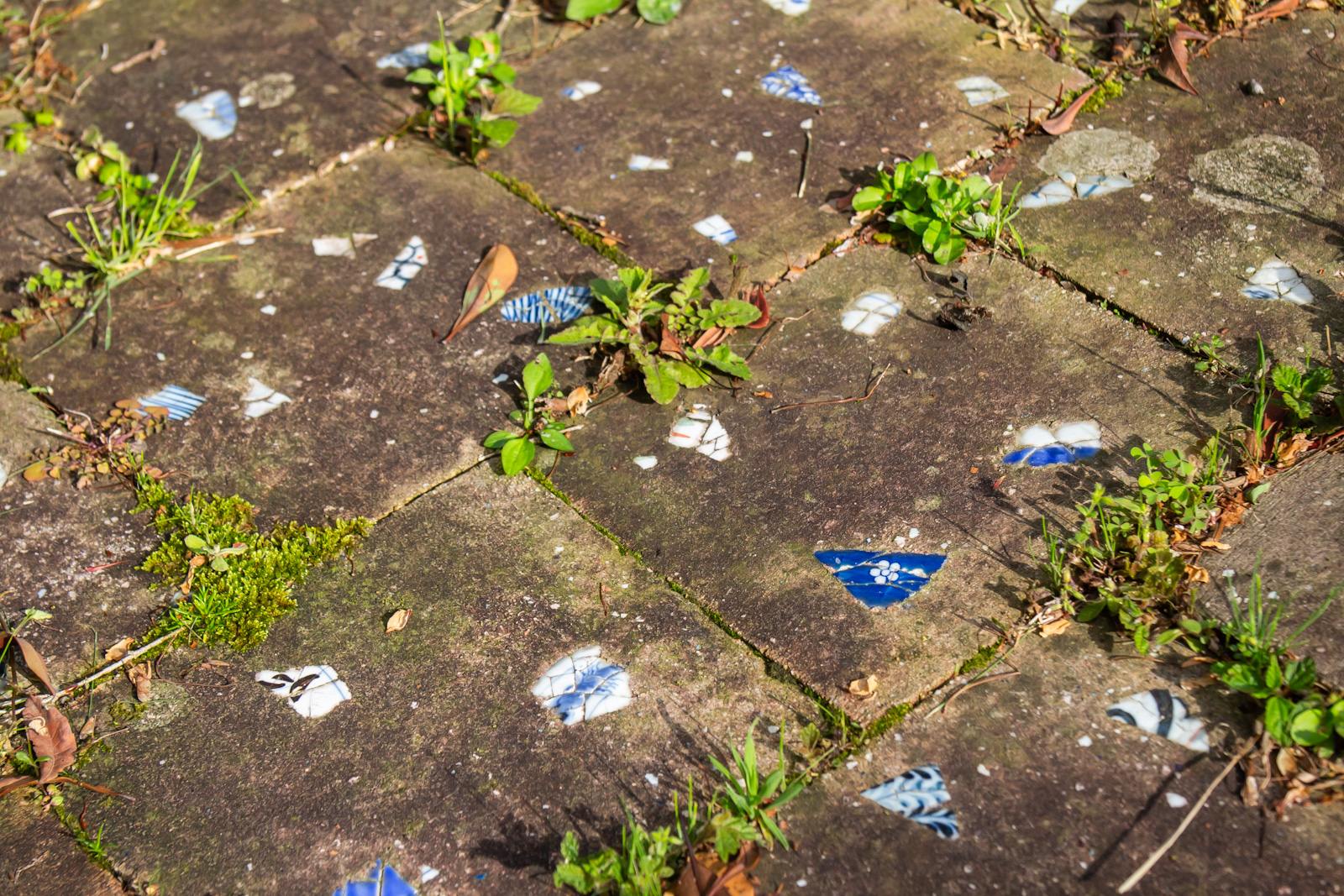
Arita History & Folklore Museum
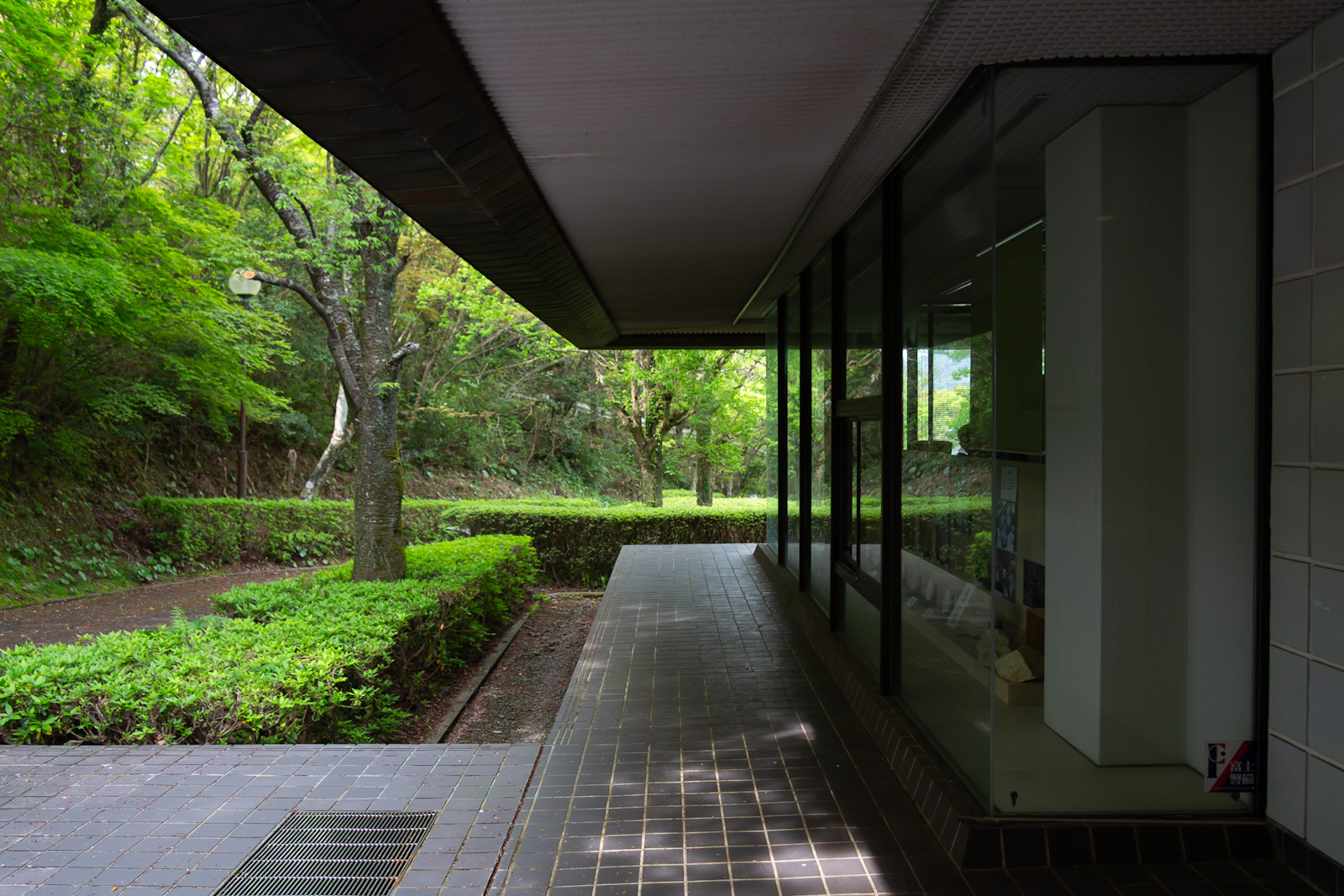
A short walk away from the sumo ring is the Arita History & Folklore Museum. I was the first customer of the day, greeted by a cheerful caretaker, who, after a quick chat, handed me an English guidebook to the museum.
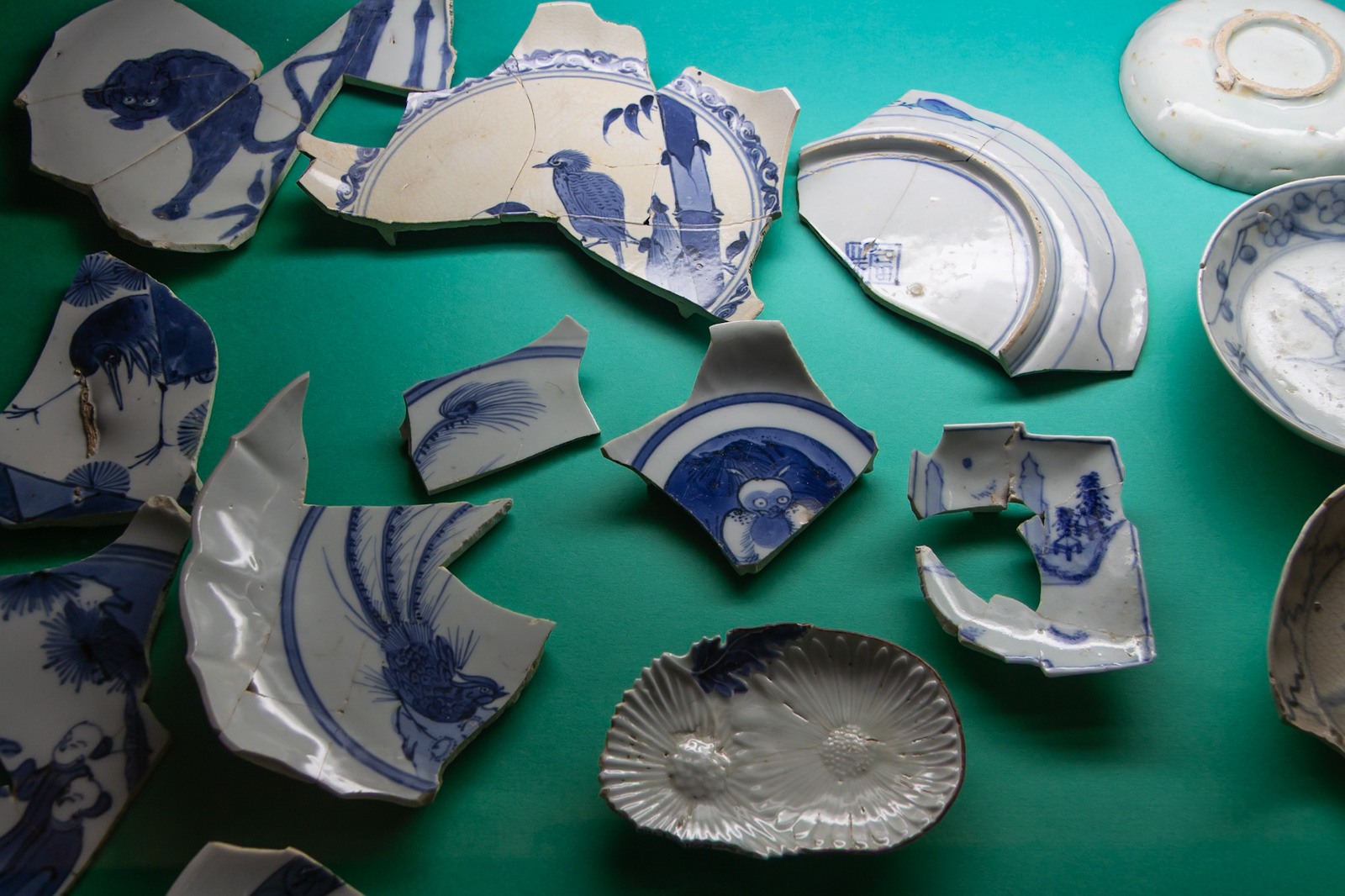
The museum isn’t very big, but it offers a pretty comprehensive history of the ceramic industry in Arita. It details the discovery of porcelain stone, the establishment, organisation, and consolidation of kilns, the different styles of Arita porcelain, and the changing technologies used in production. The museum also houses an impressive collection of stoneware and porcelain excavated at former kiln sites in the area.
I particularly enjoyed the folk objects exhibit, which features items from everyday life in a past Arita that were influenced by the porcelain trade, including a foreign-made film projector, ceramic hot water bottles, and old school backpacks. For just 170 yen ($1), it’s definitely worth a look around.
Gingko Tree of Arita
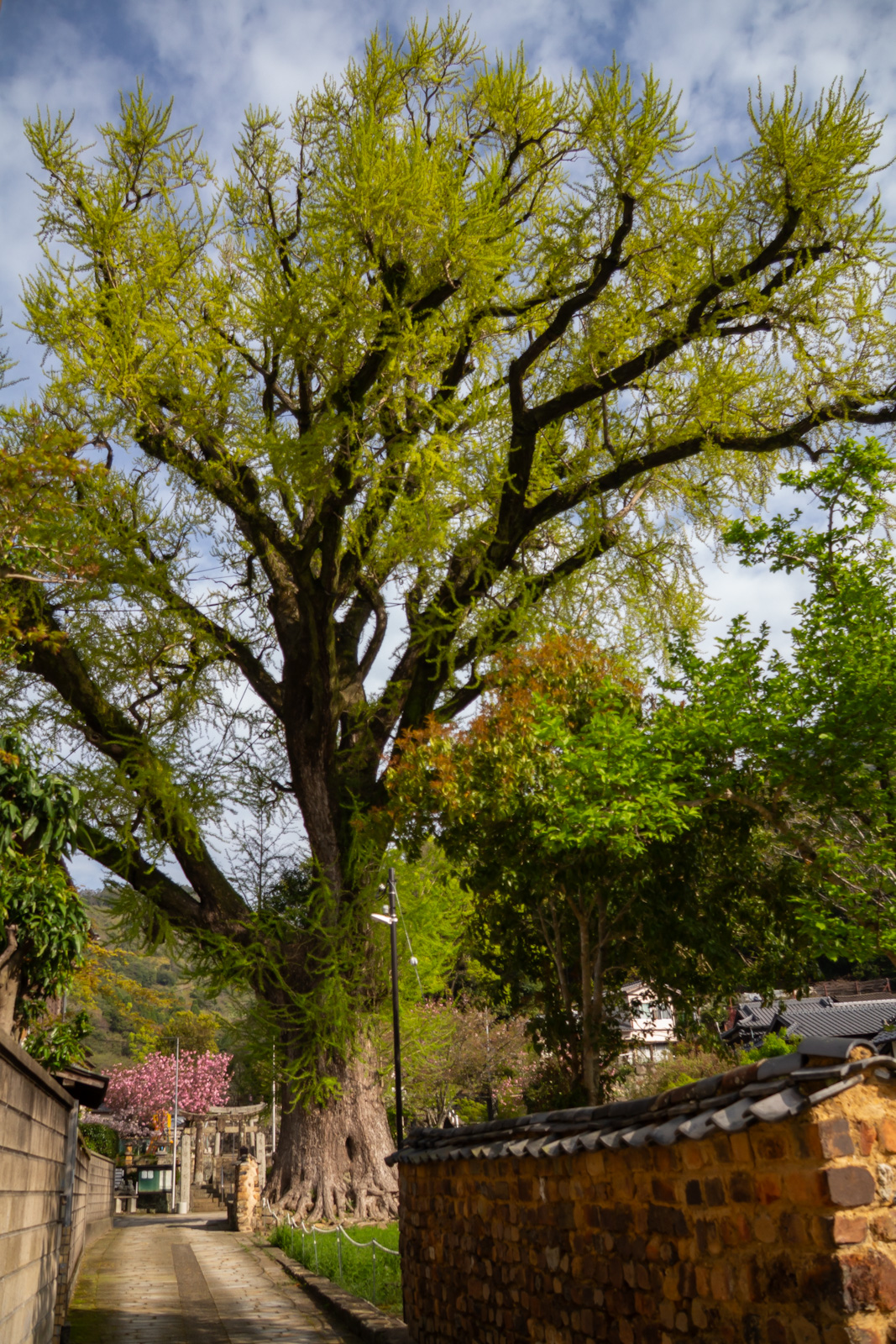
My next stop was the 1000-year-old ginkgo tree at Izumiuama Benzaiten Shrine. Towering 40 m (131 ft) high with a circumference of 12 m (39 ft), it’s one of the largest gingkto trees in Japan and was designated a Natural Monument in 1926.
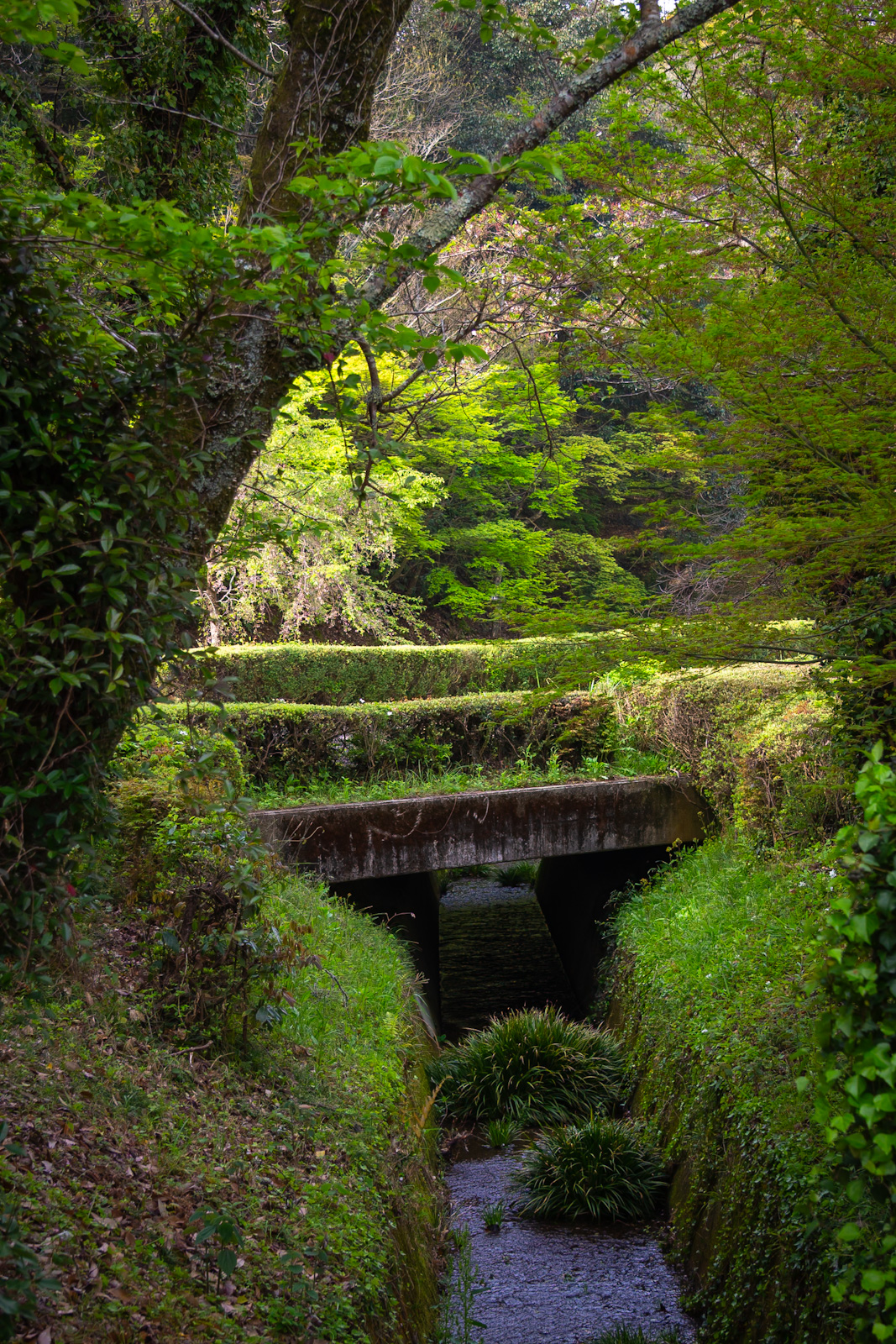
Every November, its leaves turn yellow, putting on a brilliant show for the crowds who come to see it. But even wearing a bright green coat, it’s a sight to behold.
Tombai Walls
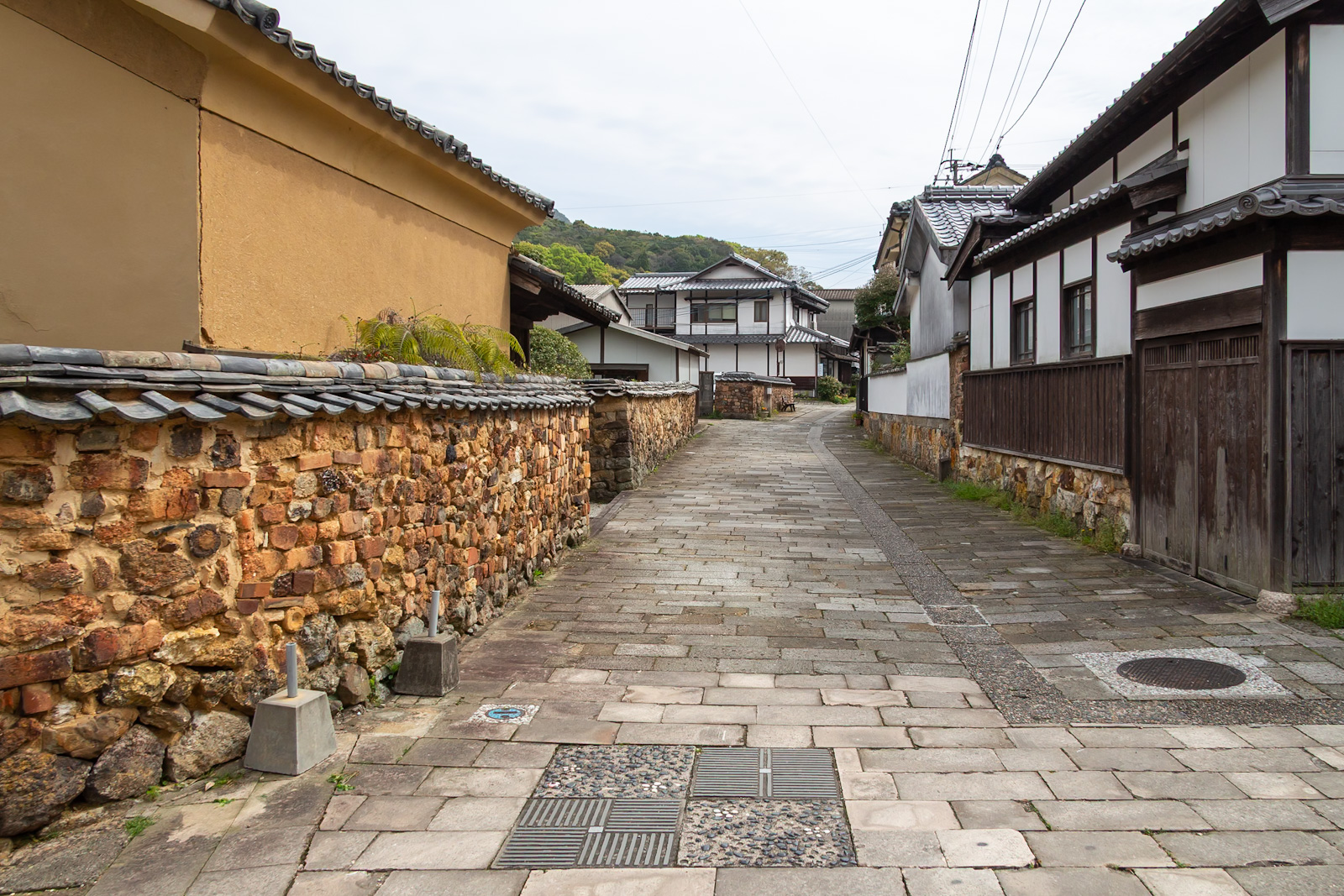
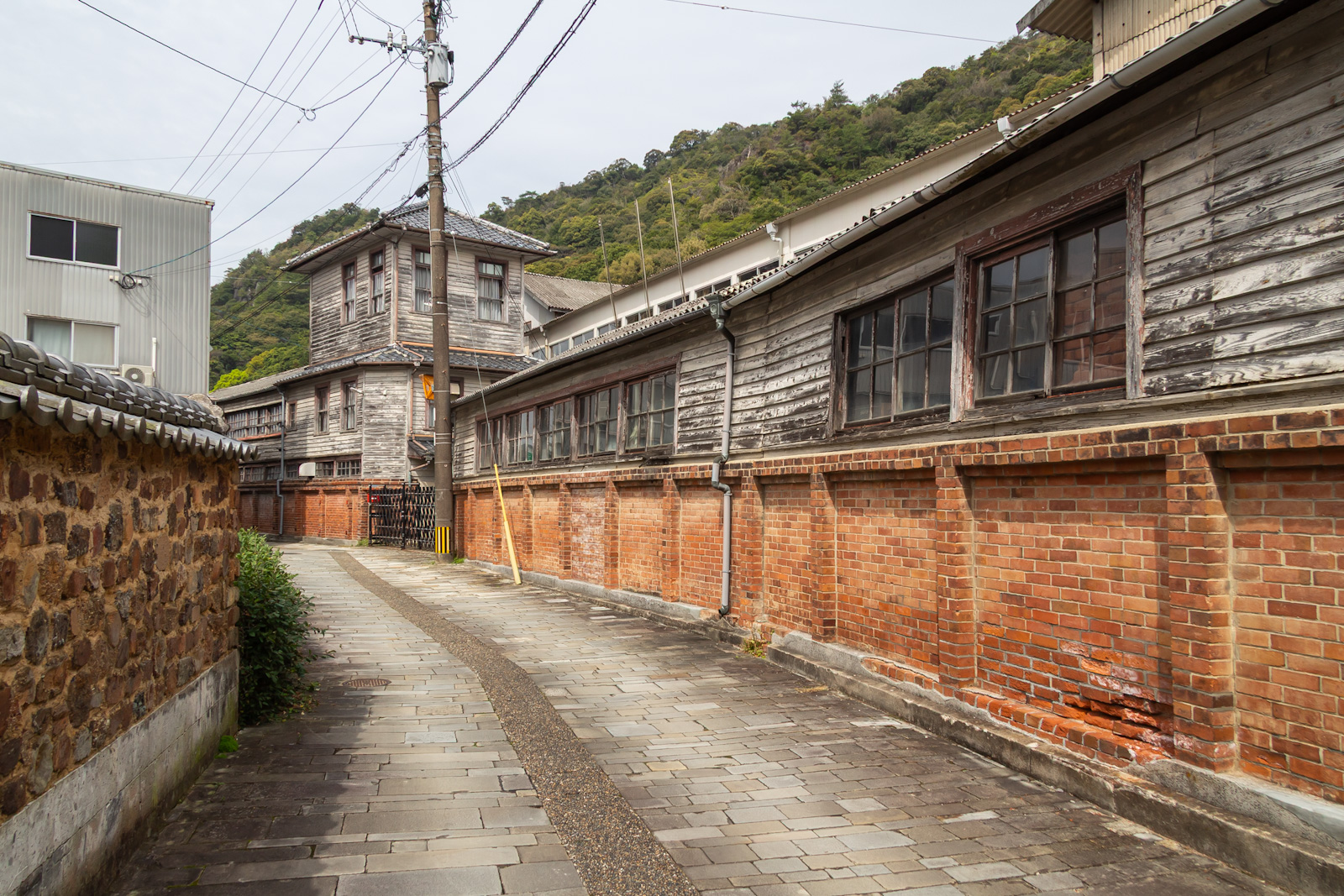
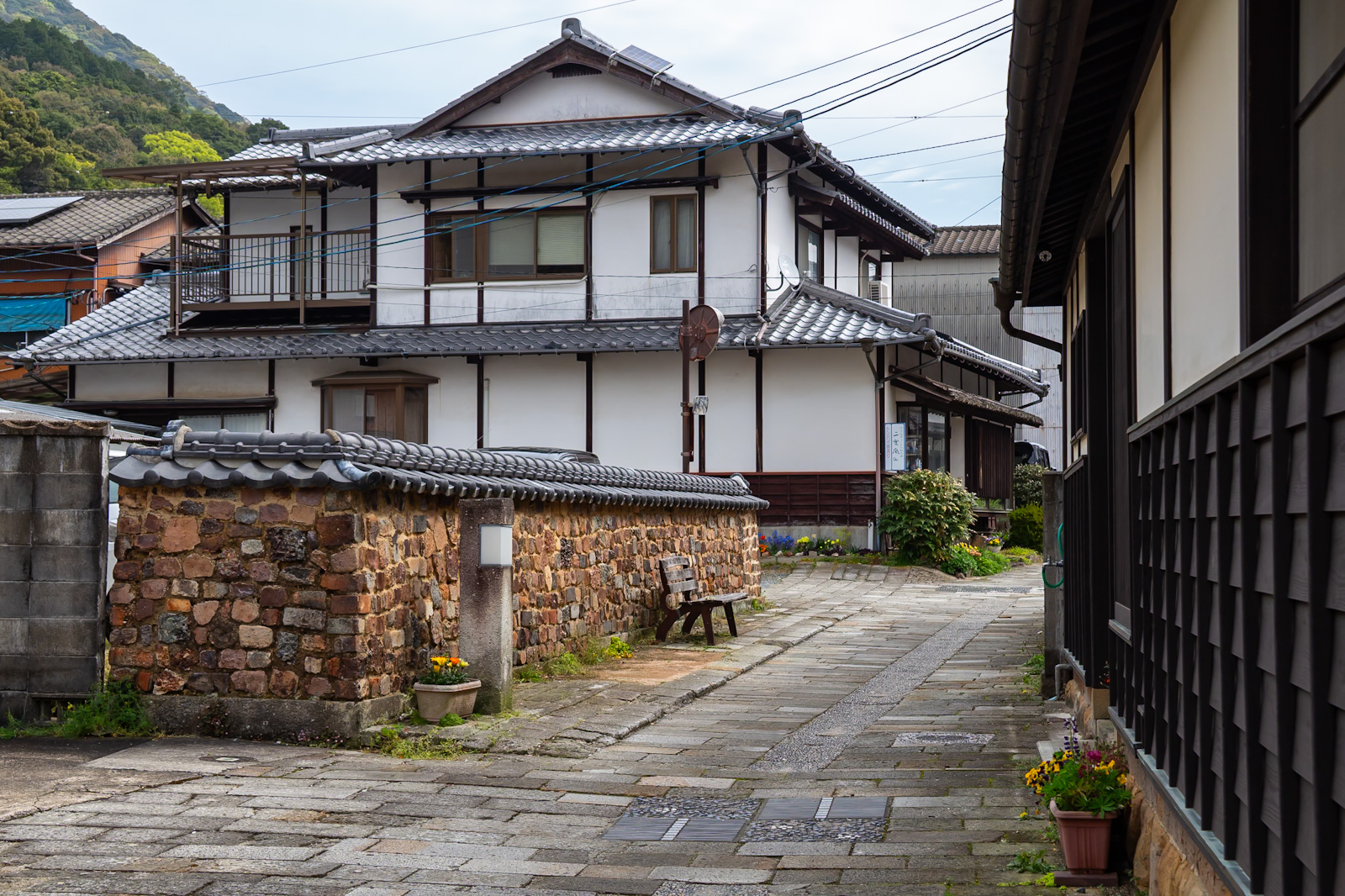
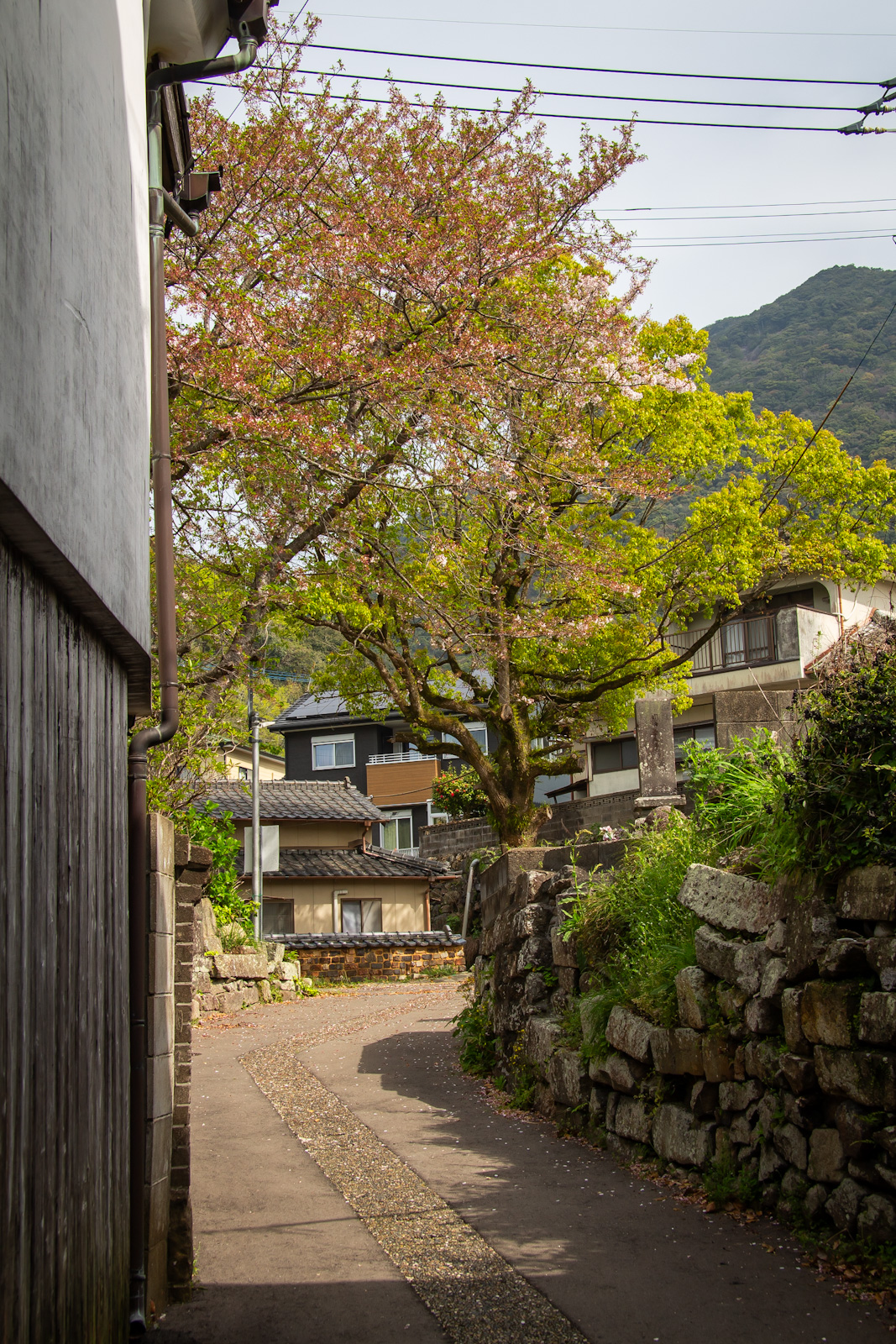
Along the alley that runs from the giant Gingko tree to the Arita Ceramic Museum, where I was headed next, you can see rows of earthen walls called tombai. They were made from leftover fireproof bricks used to build Arita’s climbing kilns and other discarded materials. They were then covered with red soil and dried out, giving them their signature reddish-brown color.
The low walls were built to define property lines but also to obscure workshops so that potters could keep their production methods a secret from competitors. The walls are a key feature of the Uchiyama district, which preserves the historic buildings of Arita’s early days.
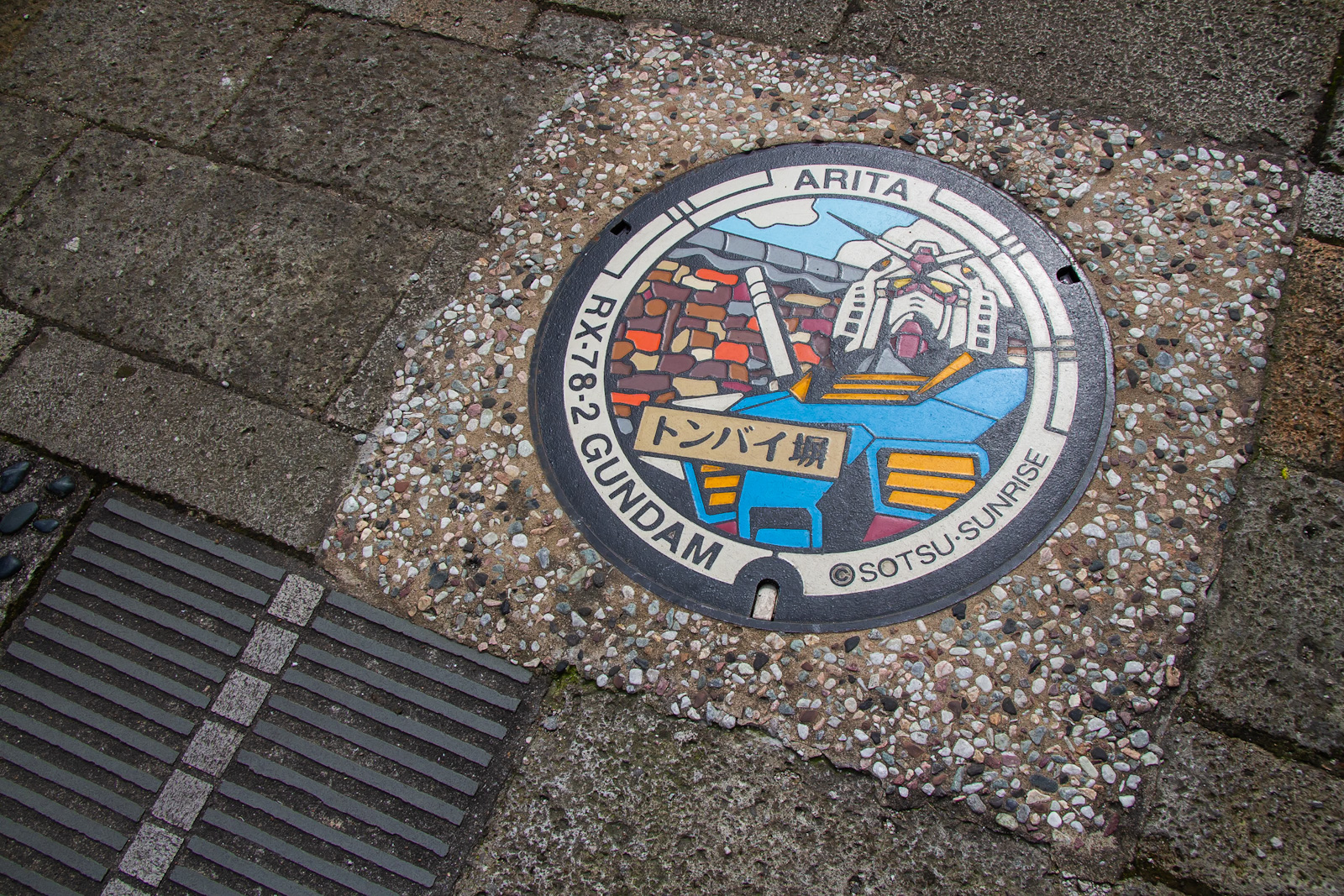
Here, you can also see the second Gundam manhole cover in Arita, featuring the RX-78-2 Gundam.
Uchiyama District
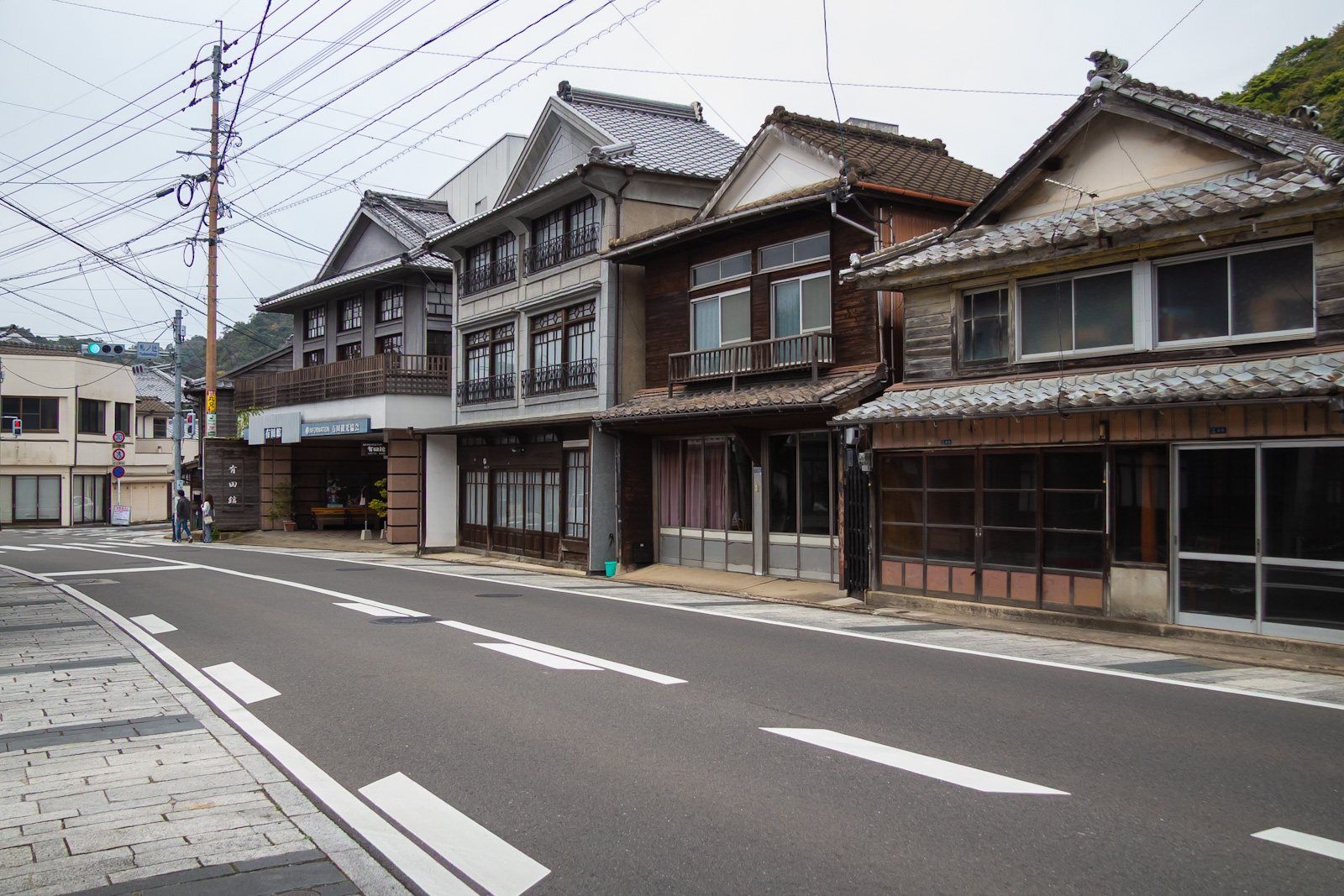
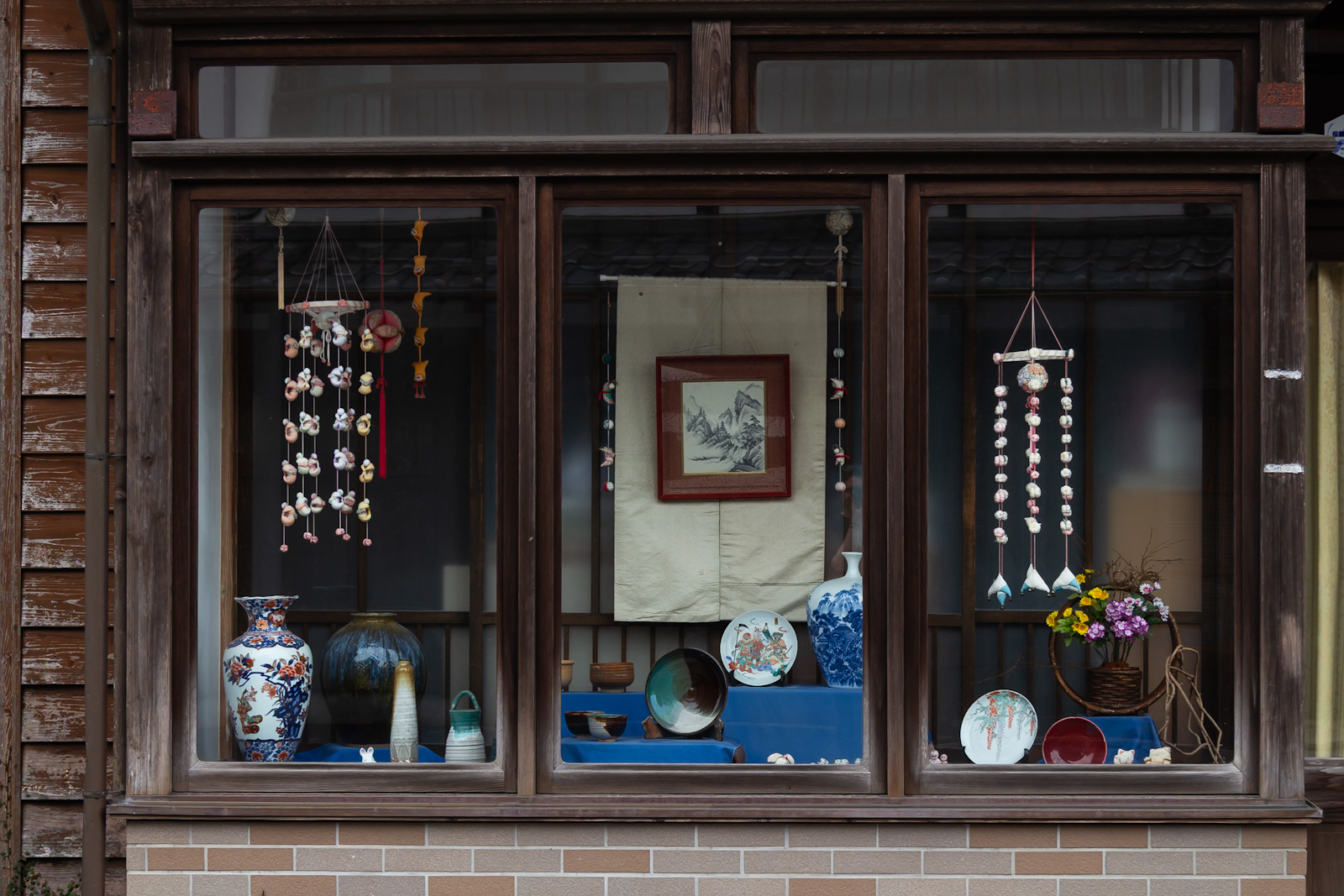
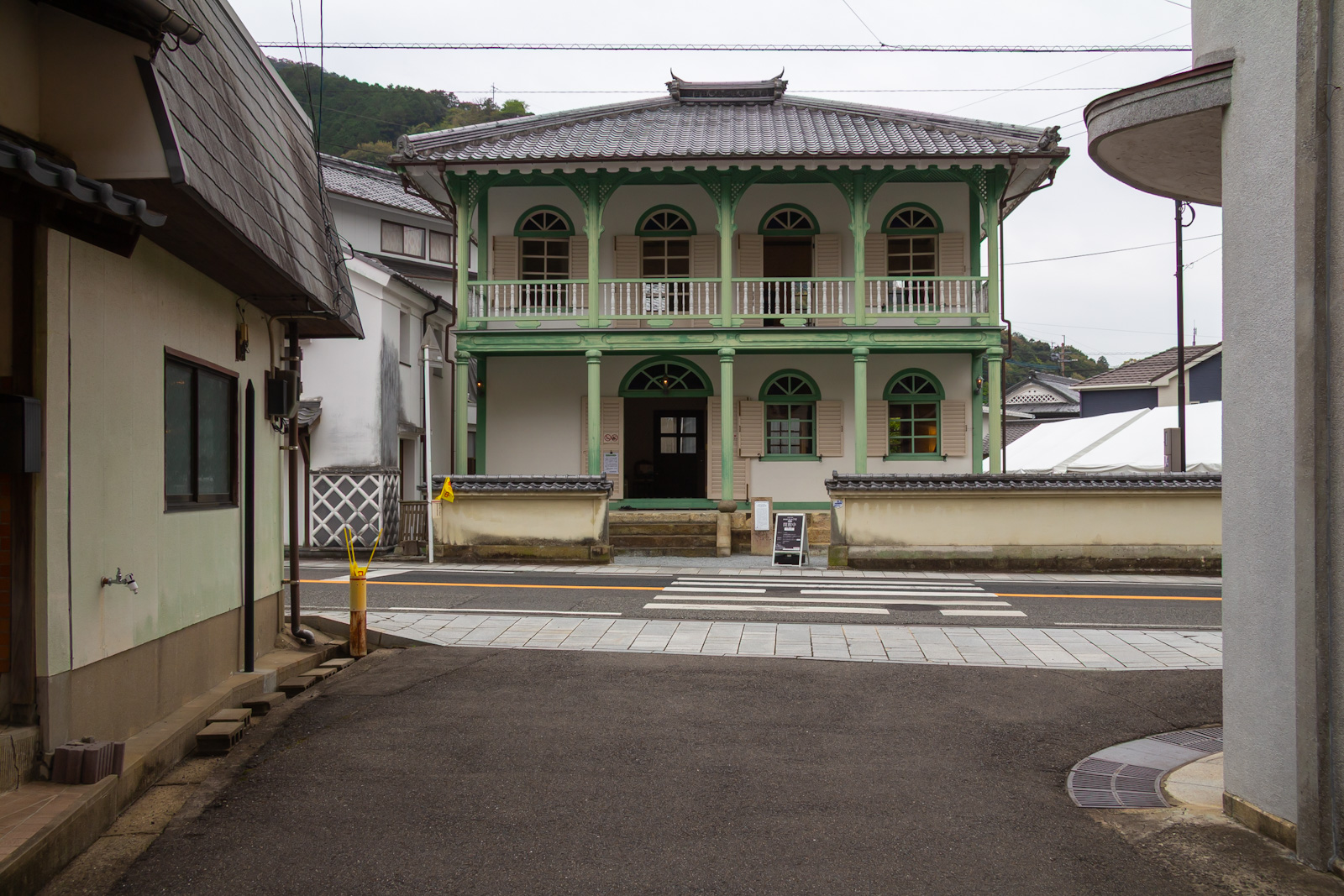
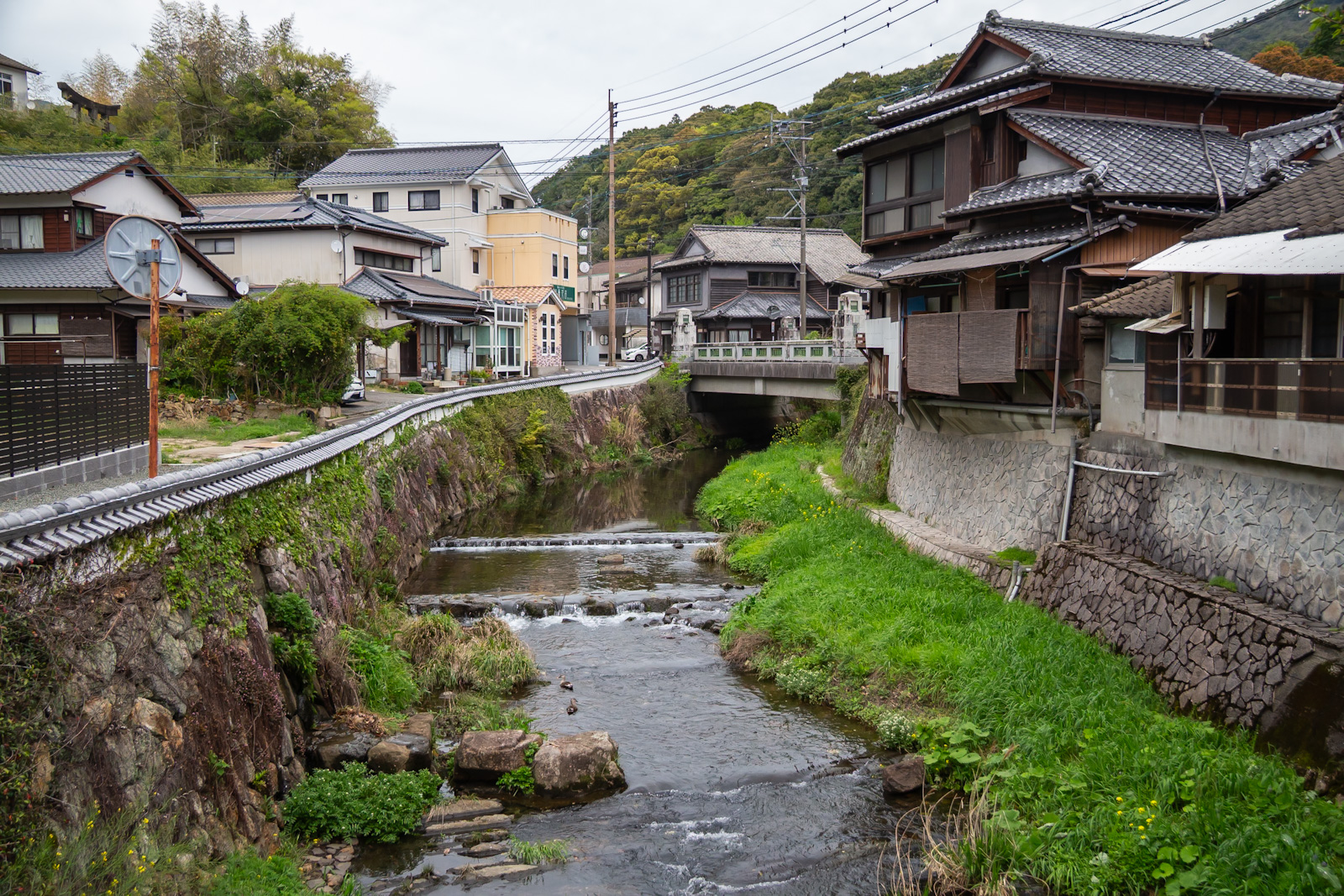
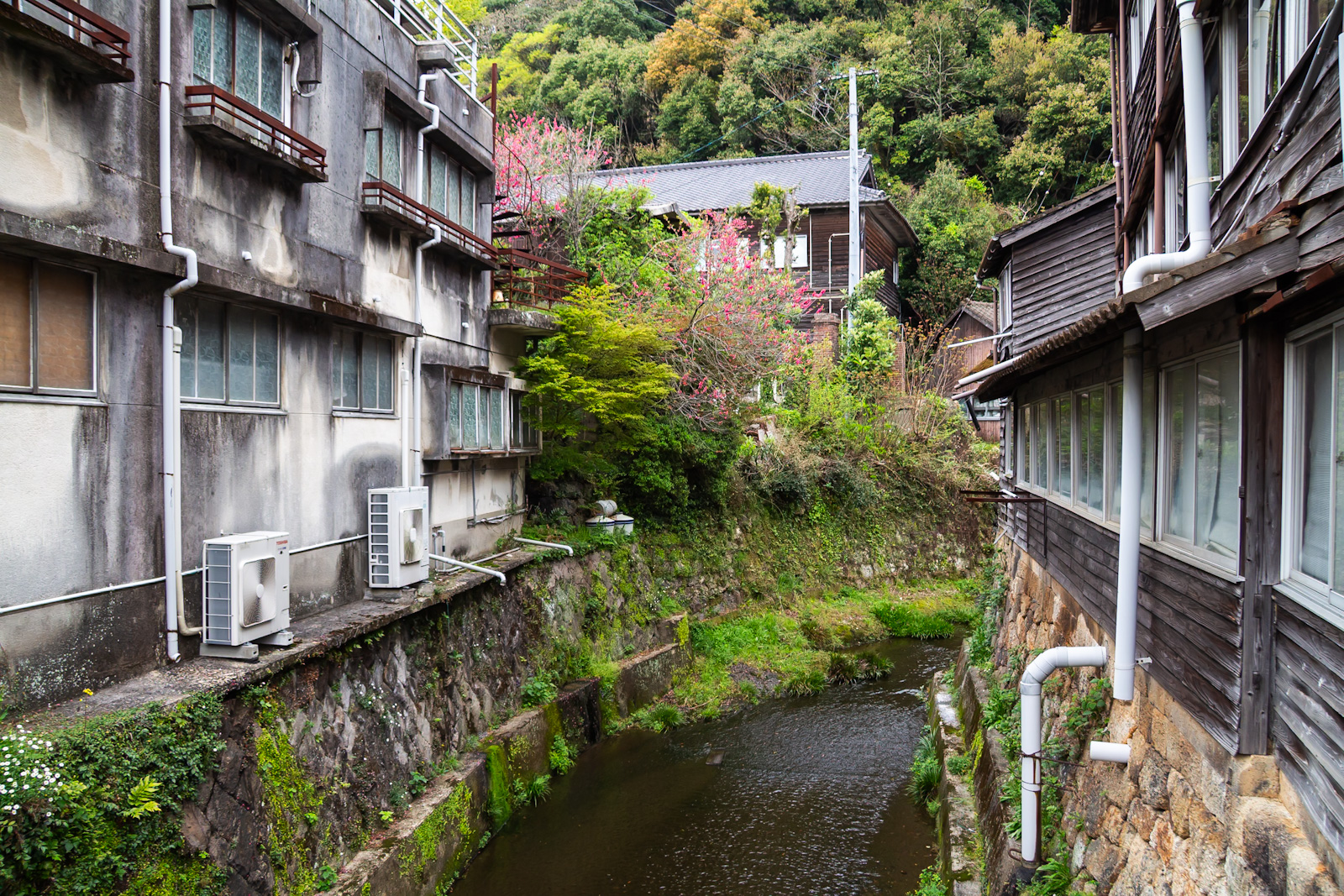
The main street that runs from east to west in Arita is about 2 km (1.2 mi) long and lined with hundreds of traditional shops and merchant houses. Many of the buildings feature plastered walls and Western-style architecture, while others reflect the gabled, ornamented roofs of the Edo, Meiji, Taisho, and Showa periods.
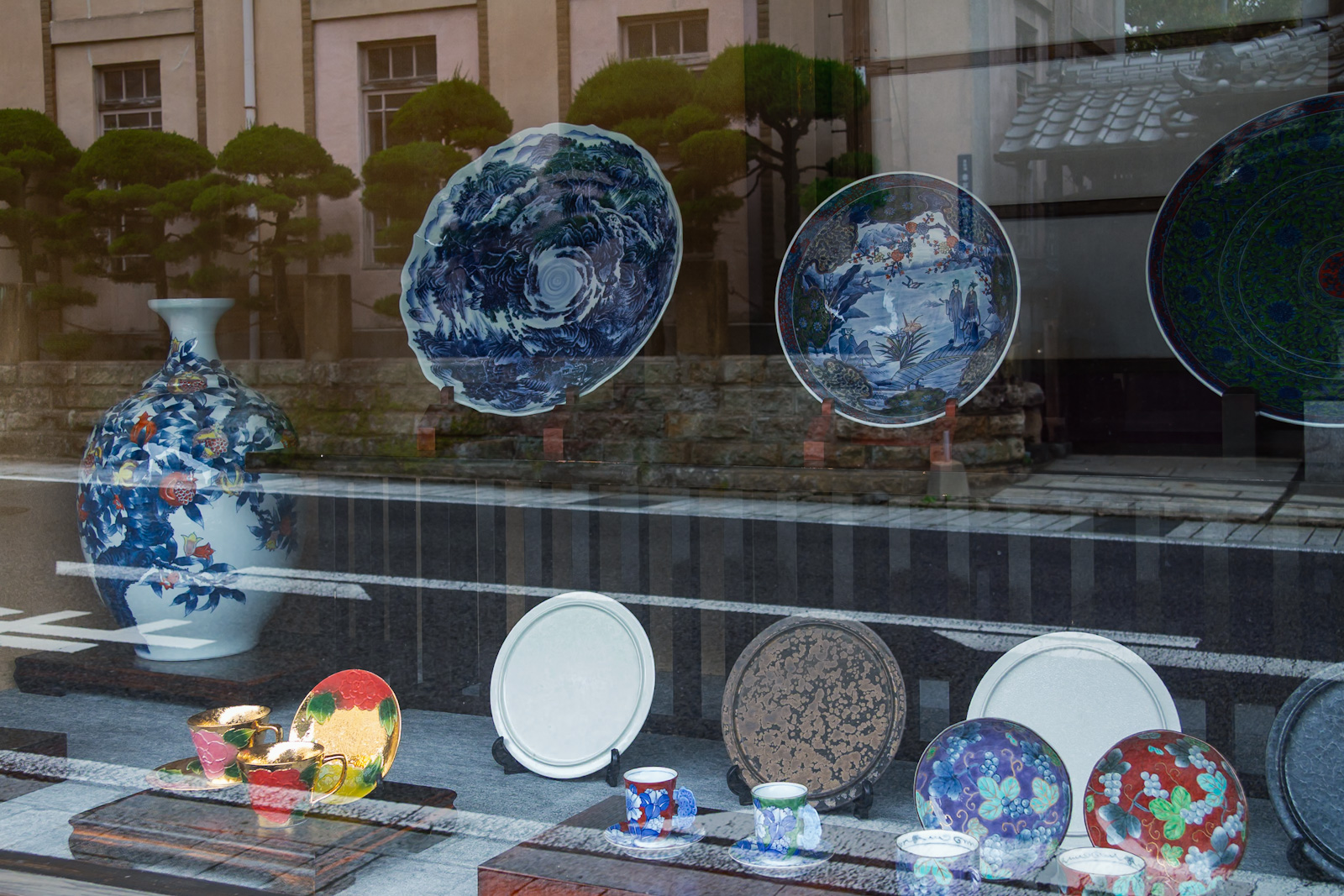
In 1991, this area was designated a Preservation District, with each historical building identified using a porcelain plaque. The many display windows, which were a feature of machiya, or townhouses, of the time, are still used to display porcelain wares. And every summer, local senior high school students compete to show off their design skills in the town’s annual window display contest.
Arita Ceramic Museum
In the heart of the Uchiyama District, near the Tombai Walls, is the Arita Ceramic Museum (not to be confused with the Kyushu Ceramic Museum in Arita, which we’ll get to later). Opened in 1954, it was the first registered museum in Saga. The building first served as a storehouse for pottery, and then as a pottery school. Today, it houses numerous porcelain works in Artia’s three distinct styles: Ko-Imari, Kakiemon, and Iro-Nabeshima.
The museum is even smaller than the Arita History and Folklore Museum, but it’s worth a visit to see the large plate featuring Arita Saruyama craftsmen, and the ceramic sculpture of guardian lions, both of which are designated as important cultural properties of Saga prefecture. Admission is just 120 yen ($0.75). You may also want to pop into the bathrooms across the way to admire the many porcelain details, including the signs and mirrors.
Meiji Yumean
By this point, I was feeling peckish, so I popped into the nearby Meiji Yumean, a gallery with a cafe in the back. Located in one of the district’s historical houses, built the same year the Titanic set sail, it serves delicious coffee and tea in porcelain cups and sandwiches on homemade bread. It also offers a delectable menu of desserts by Le Cordon Bleu-trained pastry chefs.
The gallery has a range of Kitagawa Pottery on sale, as well as baked goods and local souvenirs, like washi tape featuring the townscape of Uchiyama. You can browse more souvenirs at the Traditional Culture Exchange Plaza, which is just a street away. Run by the Arita Tourism Association, it also provides information, maps, and brochures about the town and surrounding areas.
Tozan Shrine (Sueyama Shrine)
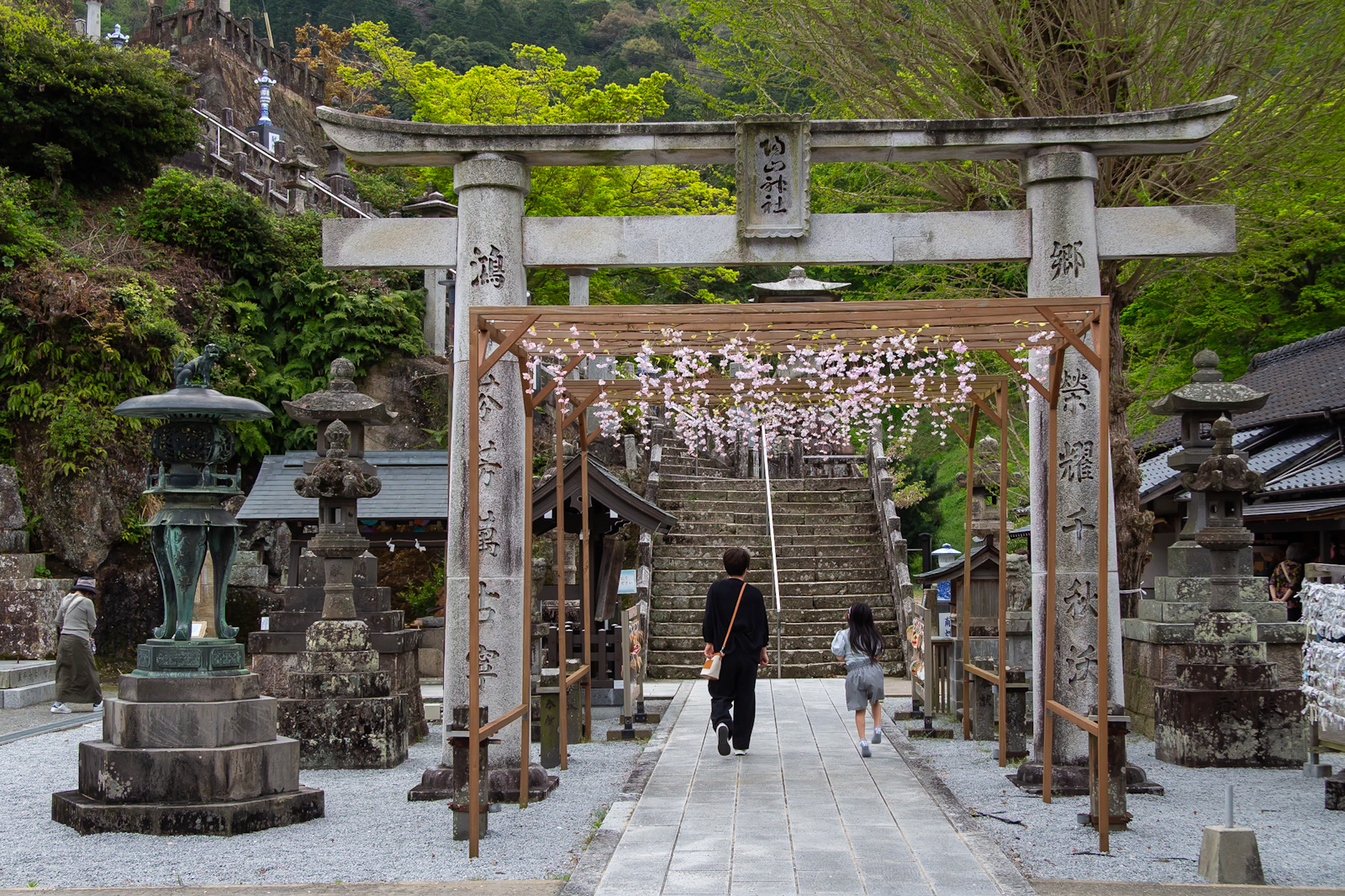
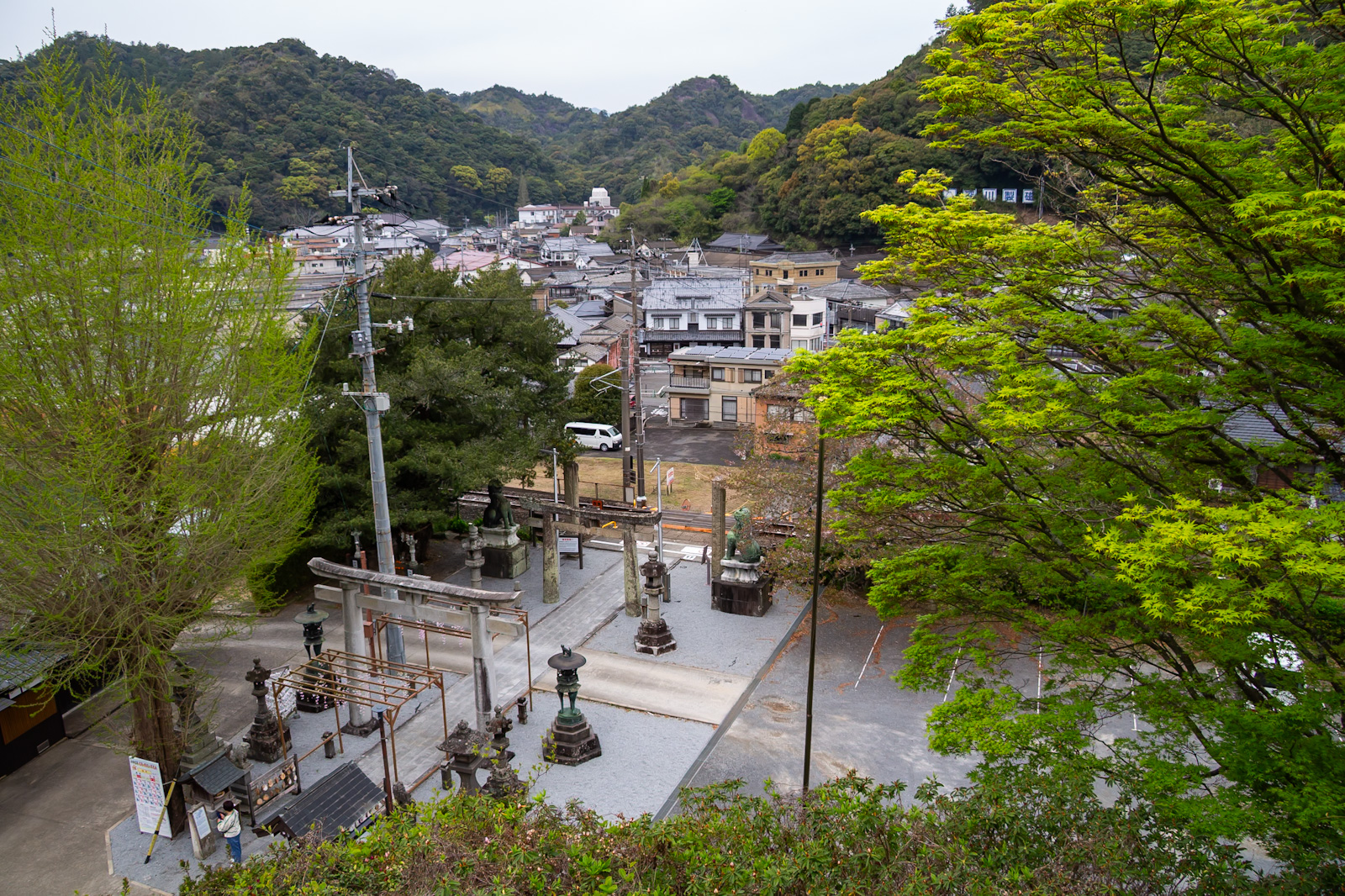
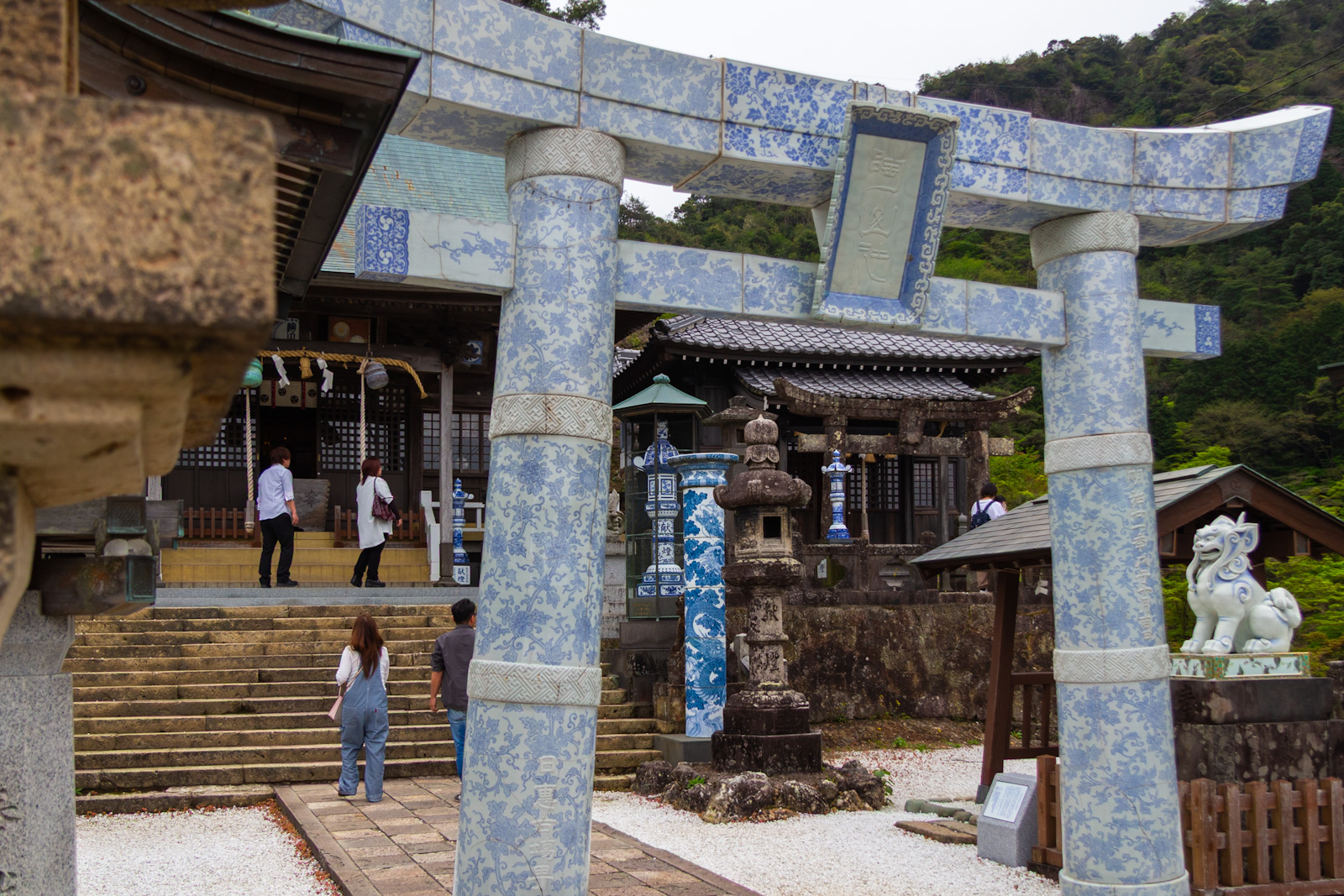
My next stop was a shrine known for its unique porcelain torii. It’s located on a hill overlooking Arita, offering gorgeous views of the town and surrounding mountains. Named Sueyama, which literally translates to “ceramic mountain shrine,” it’s also called Tozan, which is an alternative reading of the kanji.
The shrine is dedicated to Emperor Ojin and Nabeshima Naoshige, the Saga domain lord who was responsible for resettling Korean potters in the area. In 1917, a special memorial to Kanagae Sambee was erected at the shrine to celebrate the 300th anniversary of Arita ware.
In addition to its torii, it features several other porcelain structures, including a pair of guardian dogs made by the Imaemon kiln. At the shamusho, or shrine office, you can get a special goshuin stamp and unique porcelain-themed omamori, small silk pouches that provide luck and blessings.
Tengudani Kiln Site
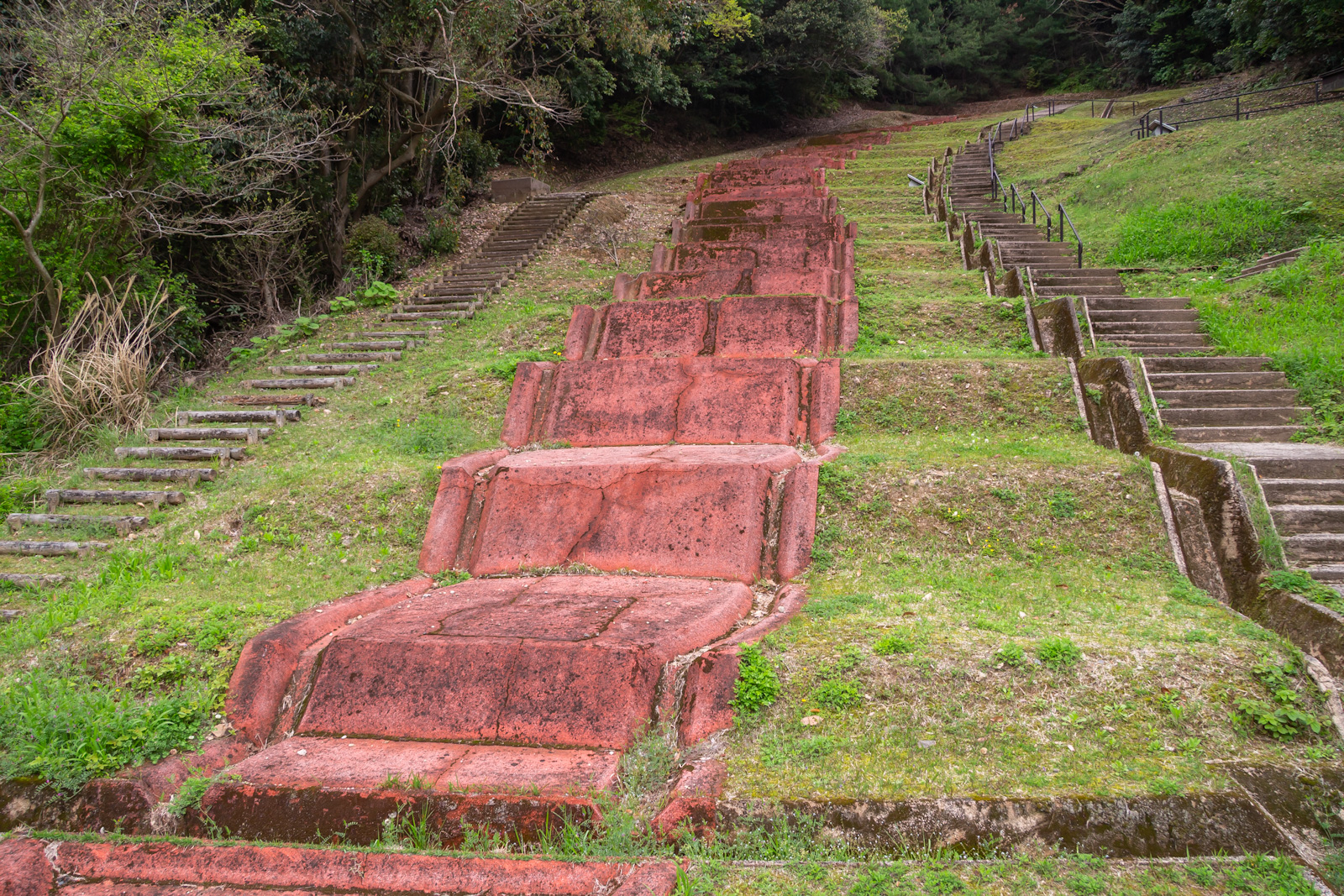
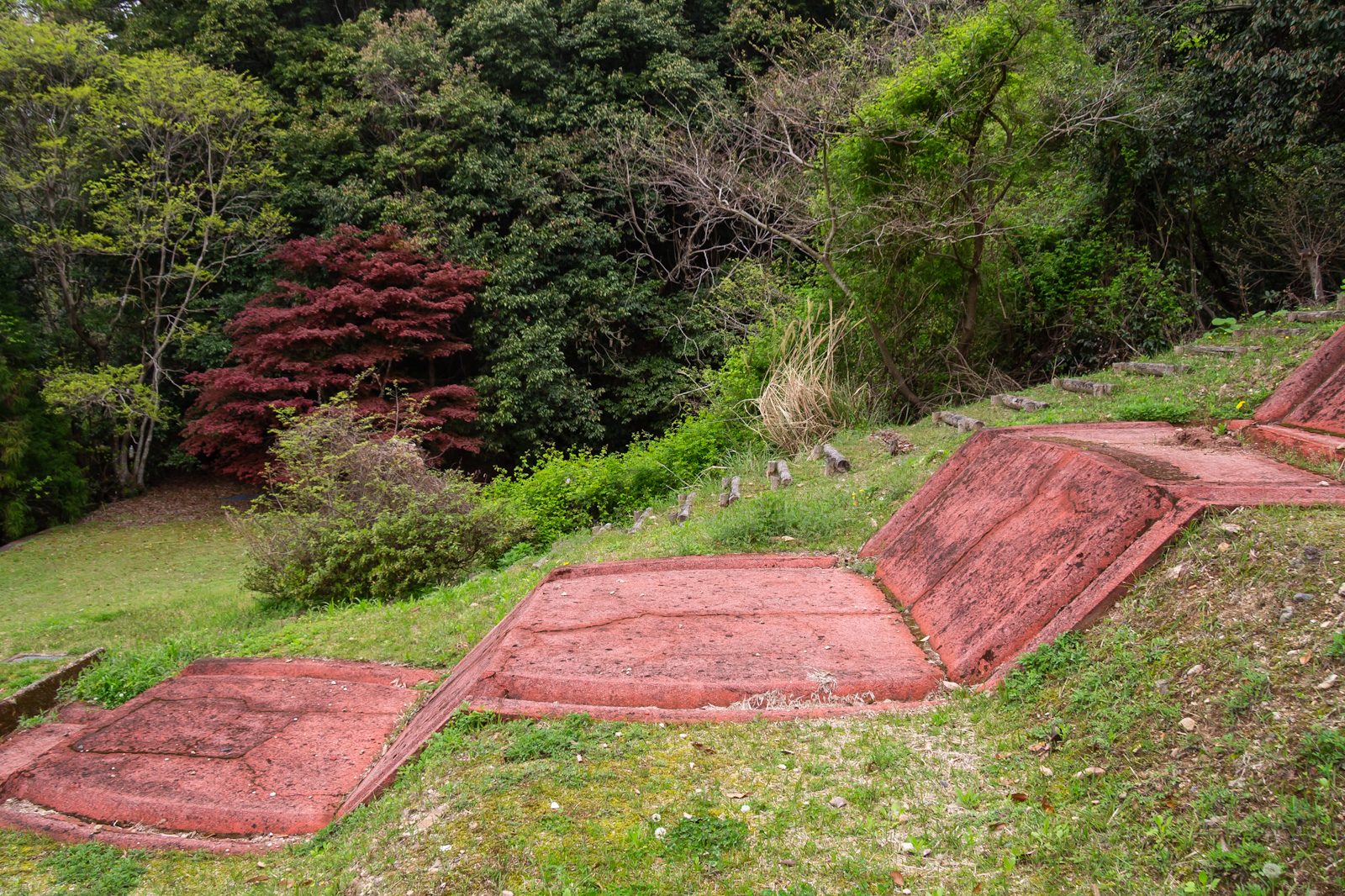
After popping into a nearby jewelry store, which sells one-of-a-kind Arita-ware accessories, I headed for the Tengudani Kiln Site. Tengudani is recorded as the first kiln built after the discovery of pottery stone at Izumiyama. A climbing kiln, it operated for more than three decades, from about 1630 well into the 1660s, and in 1980, its ruins were designated a National Historic Site.
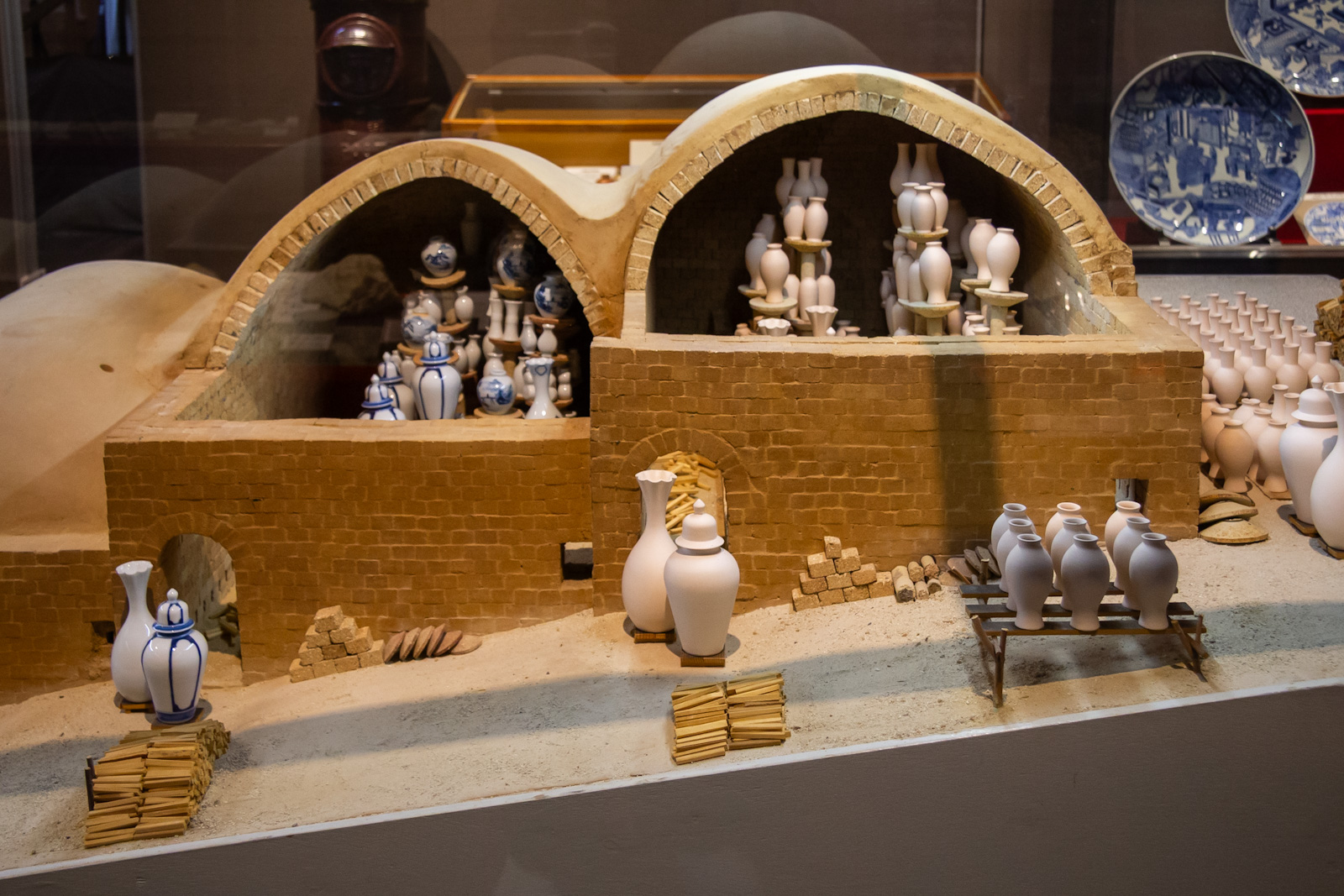
Climbing kilns were introduced to Arita in the 17th century as a way to transition from small-scale pottery to mass production. They were built on the side of mountains in a step-like design, with each ‘step’ featuring a chamber with a doorway through which firewood could be loaded.
The lowermost chamber, called a firebox, was used to raise the kiln’s temperature to dry it out before firing porcelain in the higher chambers. Walls between the chambers contained flue channels to allow the flames to move up from the lower levels.
After a close encounter with a very large, black snake, I hightailed it out of there and straight back to civilization, where I stumbled upon the Maison de Arita.
Maison de Arita
Maison de Arita is part coffee shop, part gallery, with a gorgeous cafe space on the second floor. After grabbing a drink and some baked goods, I headed upstairs for a much-needed break and was lucky enough to have the entire place to myself.
It’s cozy and beautifully decorated, which is exactly what I needed to bring my heart rate back to normal. I also managed to get my hands on some Hakuji Saika cookies, which are designed to look like traditional Arita-yaki.
After finishing my coffee, I slowly made my way towards the Kyushu Ceramic Museum while stopping at whatever pottery stores happened to be open along the way. Many of the shopkeepers were game for a chat, which is another great thing about small-town Japan—people are so warm and friendly.
Kyushu Ceramic Museum
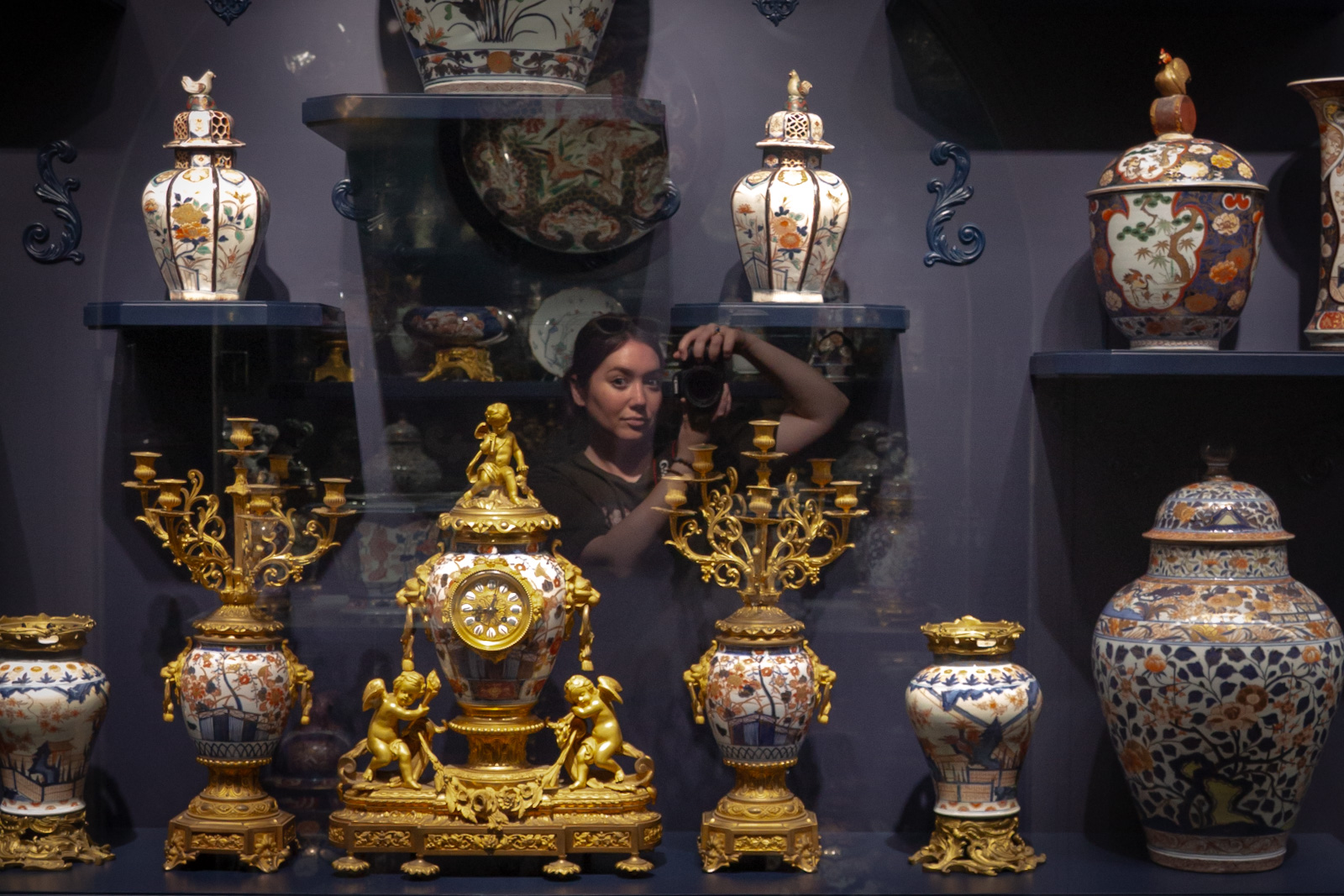
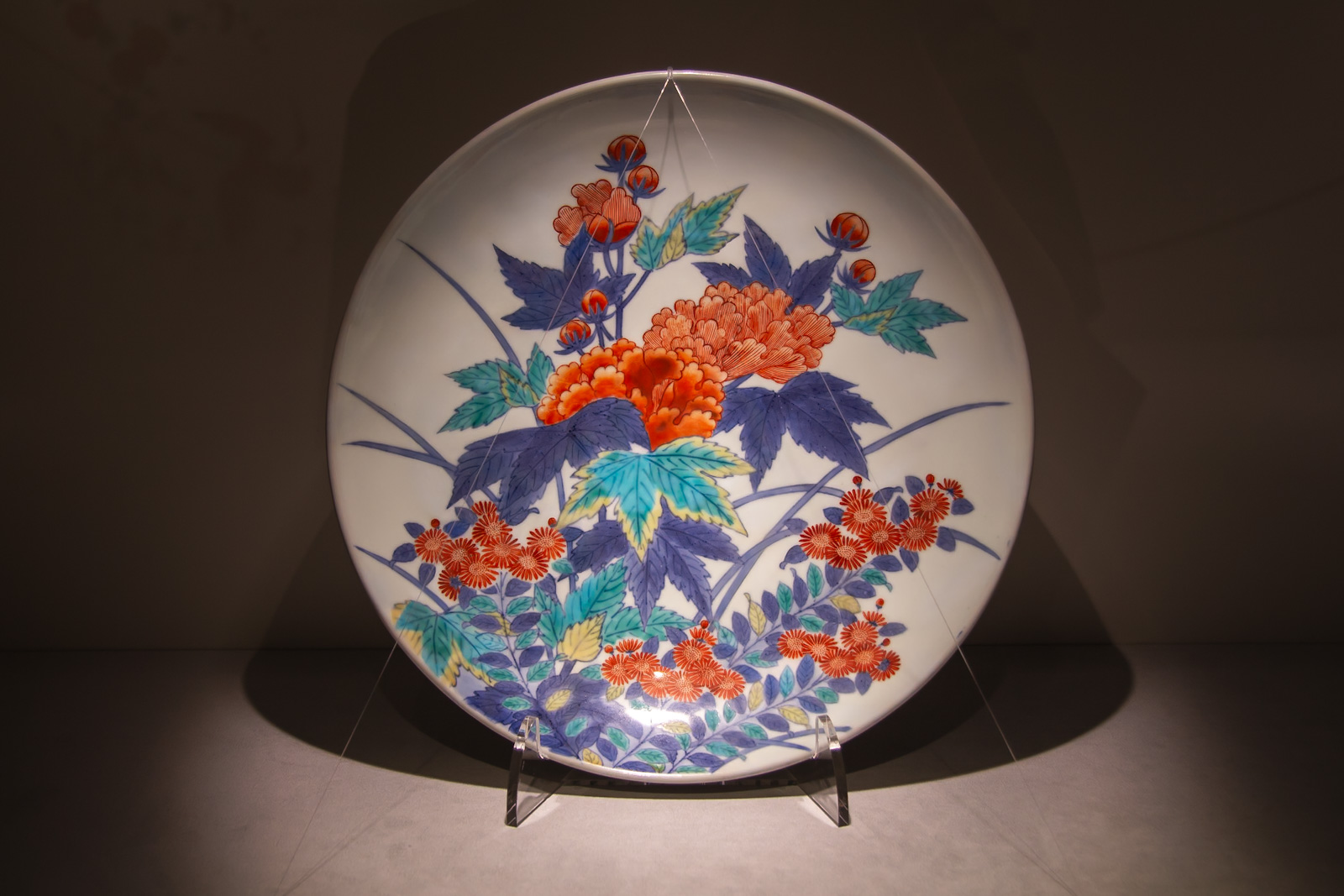
Boasting 30,000 works, the Kyushu Ceramic Museum is a must-visit for anyone interested in the history of ceramics. It details the history of Japanese porcelain from its start in Arita, to the perfection of the different styles, to expansion into international markets, and to where it stands today.
You can spend hours exploring the five exhibition halls, one of which is solely dedicated to the private collection of the Shibatas, featuring more than 10,000 pieces of Arita ware. There’s also an impressive porcelain musical clock and examples of ceramics from each of Kyushu’s prefectures.
It’s a world-class museum, featuring a cafe and gift shop, and yet, unless there is a special exhibition on, the entrance is completely free. Situated on a hilltop, it also offers some great views of the town. I highly recommend checking it out.
The museum isn’t too far from Arita Station, where I ended my day to catch the train back to Saga City.
Visit Arita Porcelain Town
For visitors using public transport, Arita is about an hour from Saga Station on the Nagasaki Line. It’s also easily accessible as a day trip from Fukuoka and Nagasaki by train or express bus. I got off at Kami-Arita Station, on the east side of town, and then walked west towards Arita Station, stopping at various places of interest along the way. You can also use the local bus or rent a bicycle to get around town.
All the places mentioned in this post are pinned on the map. For more information about Arita, check out the links below.
Arita Tourism Website
Arita Ceramics Fair Website
This article is featured on GPSmyCity. To download it for offline reading or create a self-guided walking tour of the highlighted attractions, go to Walking Tours and Articles in Arita.