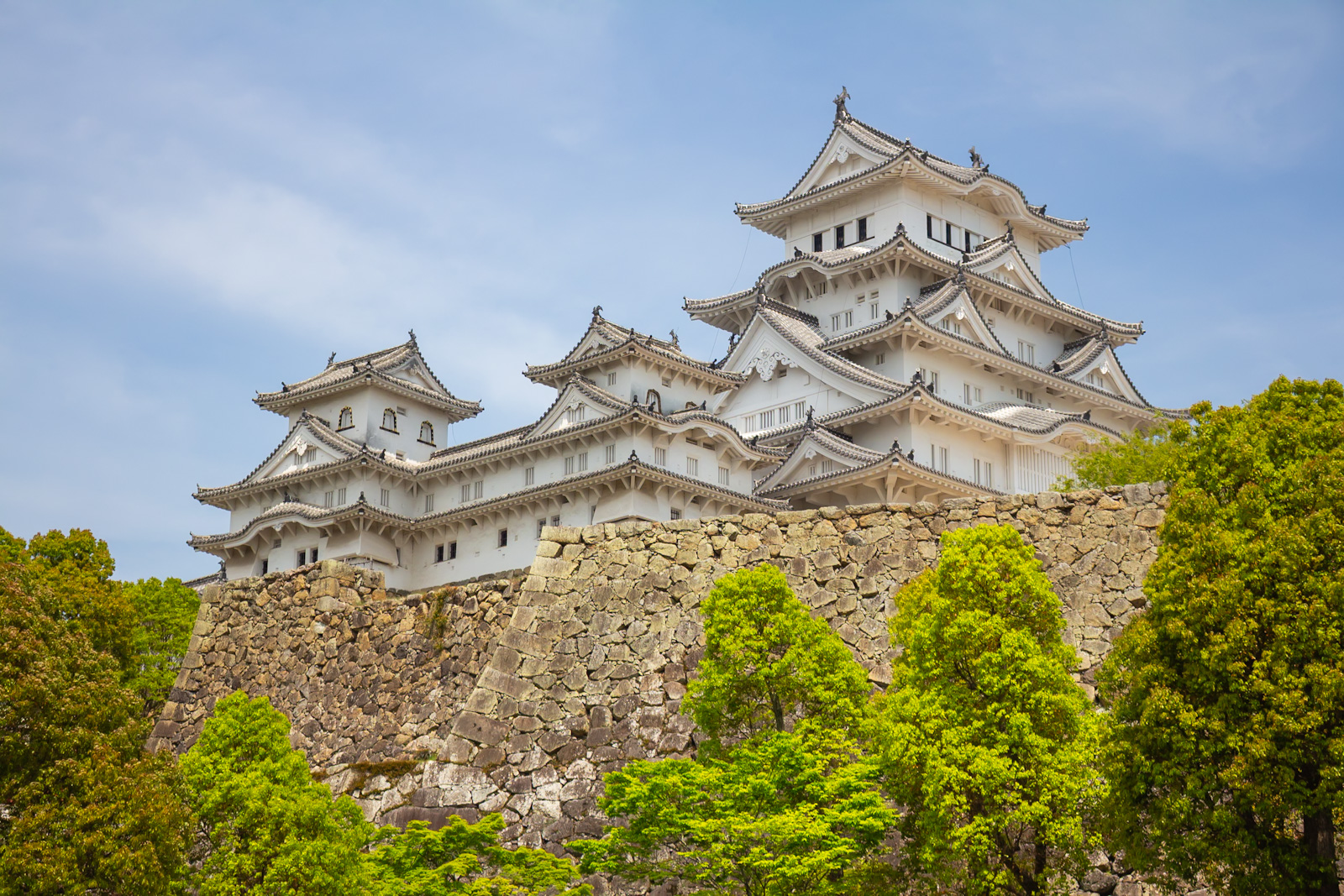
I’ve seen a fair amount of Japanese castles on my travels (there are over 200, so this is no hard task) and while they’re all interesting and unique in their own ways, none come close to Himeji. The White Heron, or White Egret, as it’s also known, definitely lives up to the hype. It’s not only one of Japan’s 12 remaining original castles, it’s also the largest and most-visited. Designated a UNESCO World Heritage Site and National Treasure of Japan, it stands proudly on a hilltop overlooking Himeji City in Hyogo prefecture.
Less than an hour by Shinkansen from major cities like Osaka, Kyoto, and Hiroshima, Himeji Castle makes a great day trip for visitors. I was staying in Kobe, so it took just 40 minutes to get to JR Himeji Station. From there, the castle is a 20-minute walk or a15-minute bus ride away. After a pitstop at the Himeji City Museum of Art, which is right next door, I headed up through the Kisaimon Gate.
Along with Matsumoto Castle and Kumamoto Castle, Himeji-jo is considered one of Japan’s three best castles. It was the country’s first UNESCO World Heritage Site, earning its designation in 1993, and one of the best examples of wooden architecture and defensive structures in Japan.
The castle as it stands today was built by Ikeda Terumasa, who expanded and renovated it at the start of the seventeenth century. It’s comprised of a cluster of keeps surrounded by baileys. Notable features include the stone foundation walls, which curve outwards giving them a fan-like appearance, and the maze of pathways leading to the main keep.
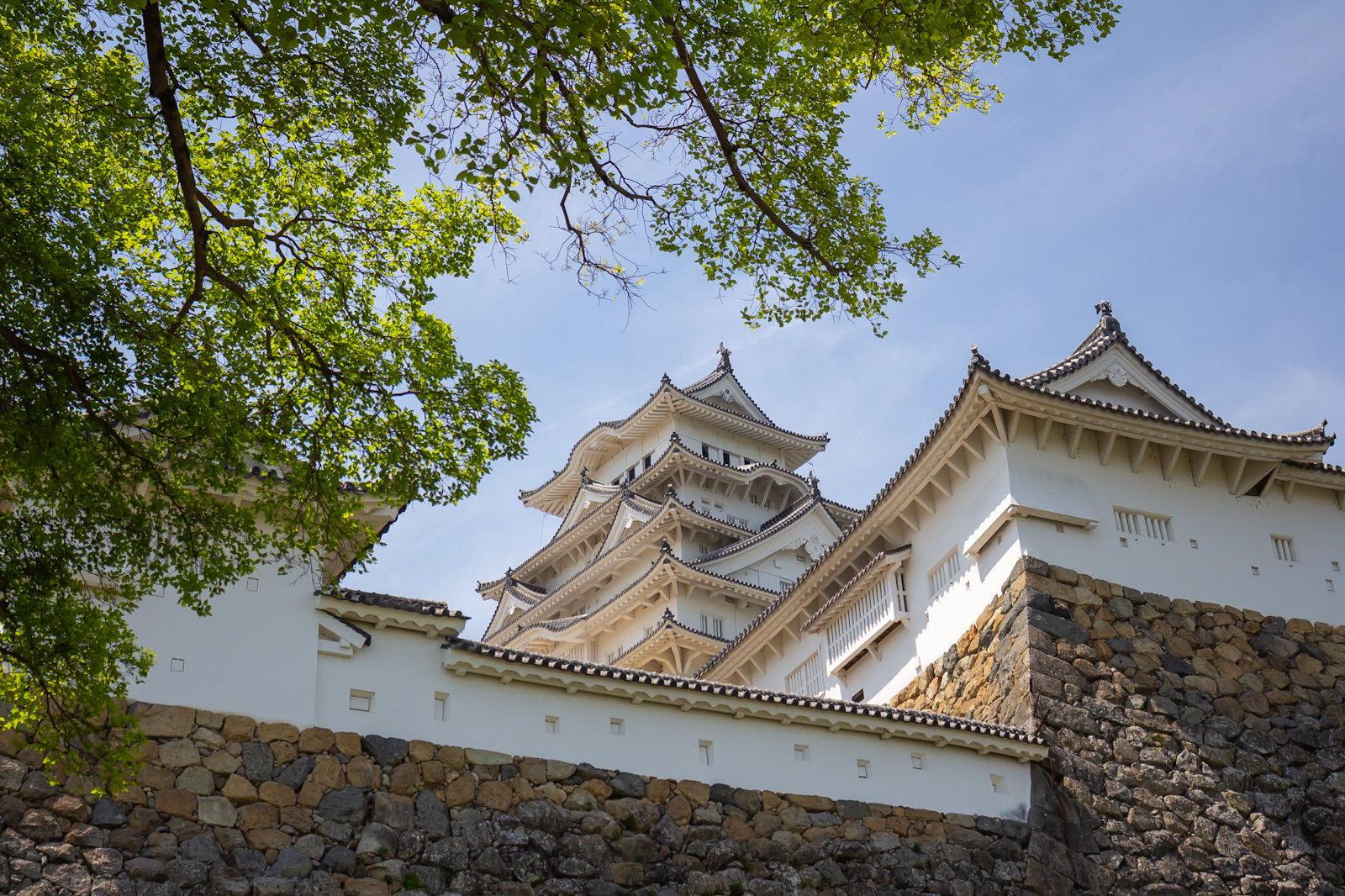
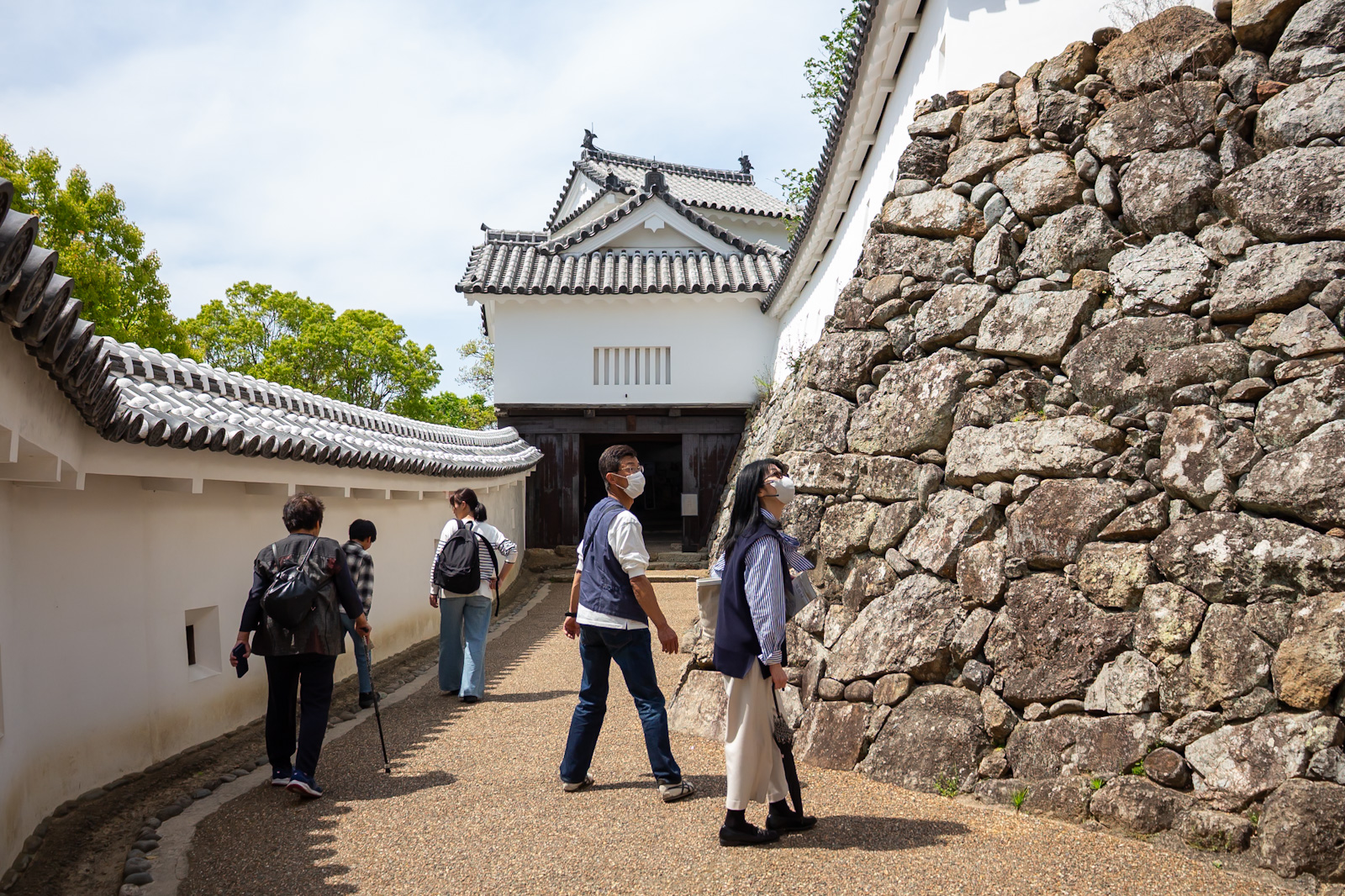


Unlike most Japanese castles, Himeji-jo was never bombed, burned, or beseiged. It was certainly designed for war, as evidenced by its many gatehouses and thousands of gun and arrow slits that line the walls, but, miraculously, it was never attacked. It served, instead, as an administrative center and the home of Himeji’s daimyo, ruled by a number of different clans over the course of history.
One of the castle’s most famous residents was Princess Sen, the granddaughter of the shogun Tokugawa Ieyasu. It’s a tragic story, really. In 1616, she married the heir of the Honda clan, who were the lords of Himeji. But that was her second marraige. In 1603, at the age of six (six!), she was married to the 10-year-old son of Toyotomi Hideyoshi. The marraige was a political match meant to unite the two clans, but the peace it achieved didn’t last long. In 1615, Ieyasu went to war with Princess Sen’s husband, burning his stronghold in Osaka to the ground. Her husband ended his own life soonafter to preserve his honor.
A year later, Princess Sen married Honda Tadatoki and moved to Himeji-jo. Her residence was in the castle’s Third Bailey and was said to be absolutely beautiful. The marraige, by all accounts, was happy, too, and the couple soon had children: a girl, Katsu, and a boy, Kochiyo. Sadly, their son passed away at the age of two and then Tadatoki passed a few years after that. Princess Sen never recovered; she returned to Edo and became a Buddhist nun, mourning their deaths until her own at the age of 69.
And that’s just one piece of Himeji-jo’s history. The castle’s main keep, which is over 45 m (148 ft) high, was built in 1601 and is one of the oldest surviving in Japan. From the outside, you can count its five stories, but the castle actually has seven floors, including a basement. Visitors can go all the way to the top, which offers sweeping views of the castle grounds and surrounding city below.
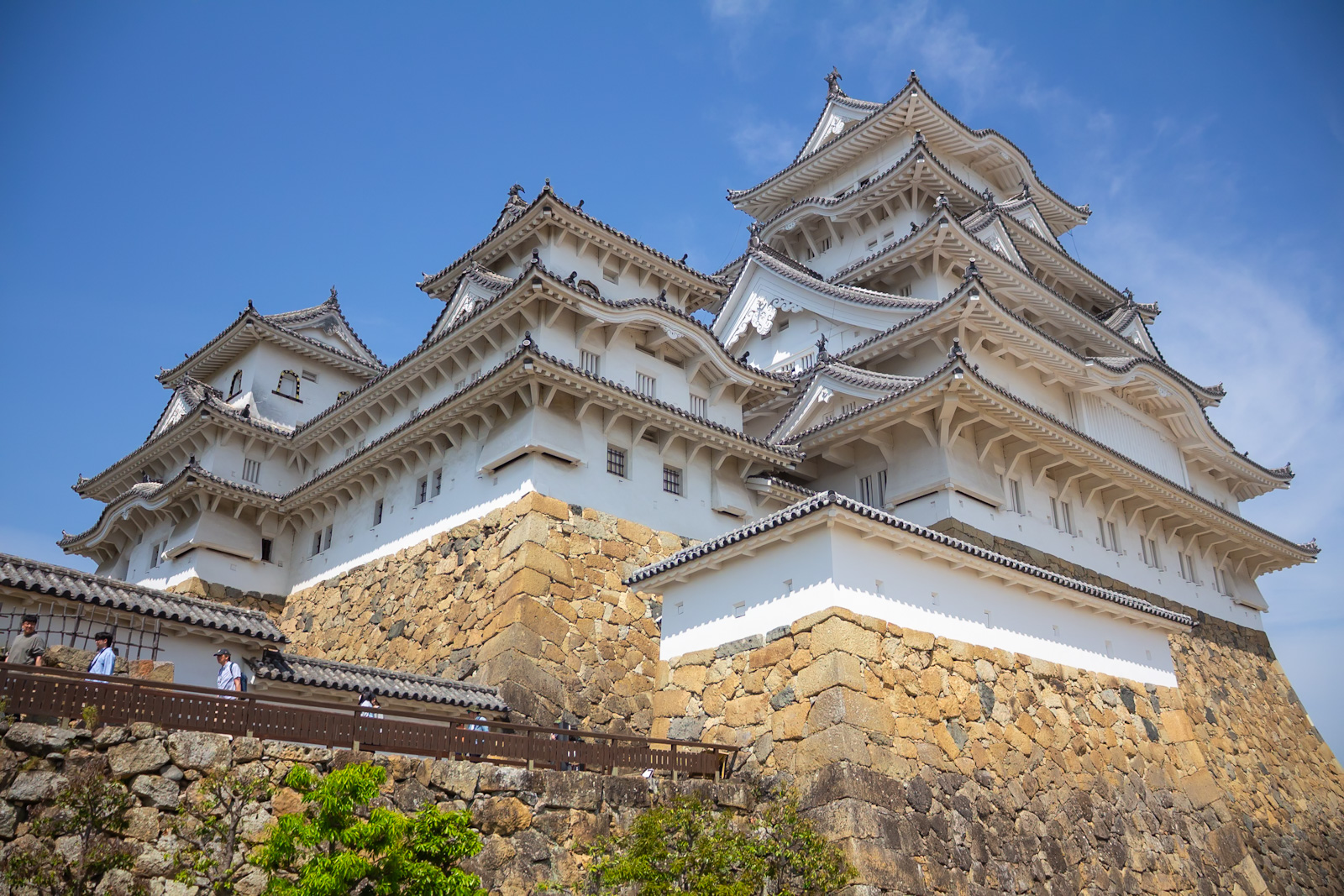


To continue preserving its legacy, Himeji-jo regularly undergoes period-accurate restorations. Most recently, in 2015, the exterior walls were replastered, returning them to their signature brilliant white. The lime-based plaster provides fire resistance and humidity control, since most of the castle is made of wood. It also gives Himeji-jo its nickname, White Heron, as the finish makes it appear like a majestic bird about to take flight. In Japanese, white heron is hakuro, so the castle is sometimes also called Hakuro-jo.
It takes about two hours to see everything Himeji-jo has to offer. You can grab a guidebook on your way in or use the website’s augmented reality app to do a self-guided tour. The castle also offers guided tours in English everyday at 10:00 and 13:00.
For something more unique and memorable, why not discover the beauty and history of Himeji-jo by cycling with a local guide? Magical Trip offers this awesome half-day trip, which includes the castle, its adjacent garden, and lunch at a local restaurant. (This is an affiliate link, which means if you book with them, I may earn a commission, but at no extra charge to you.)
To make the most out of your trip to Himeji, consider also visiting Kokoen garden, which is built on the former site of the feudal lord’s west residence. You can also check out the Himeji City Museum of Art and the Hyogo Prefectural Museum of History, which are both located within the castle park.

Visit Himeji Castle
Himeji Castle is less than an hour away by Shinkansen from Kyoto, Osaka, Kobe, and Hiroshima. From JR Himeji Station, you can walk to the castle (20 min) or take a bus (15 min). Hop on the Shinki bus at the north exit of the station and get off at Otemon-mae.
It’s free to walk around the castle grounds, but tickets are required to enter the castle itself. It’s often crowded inside and there are many stairs, so it might take some time to move through. Plan for at least 1.5 hours. You also have to remove your shoes (disposable bags are provided to carry them in), so be sure to wear or bring socks.
Hours: 09:00~16:00 Sep–Jul; 09:00~17:00 Jun–Aug
Admission: 1000 yen (or 1050 yen for a combined ticket with Kokoen Garden)