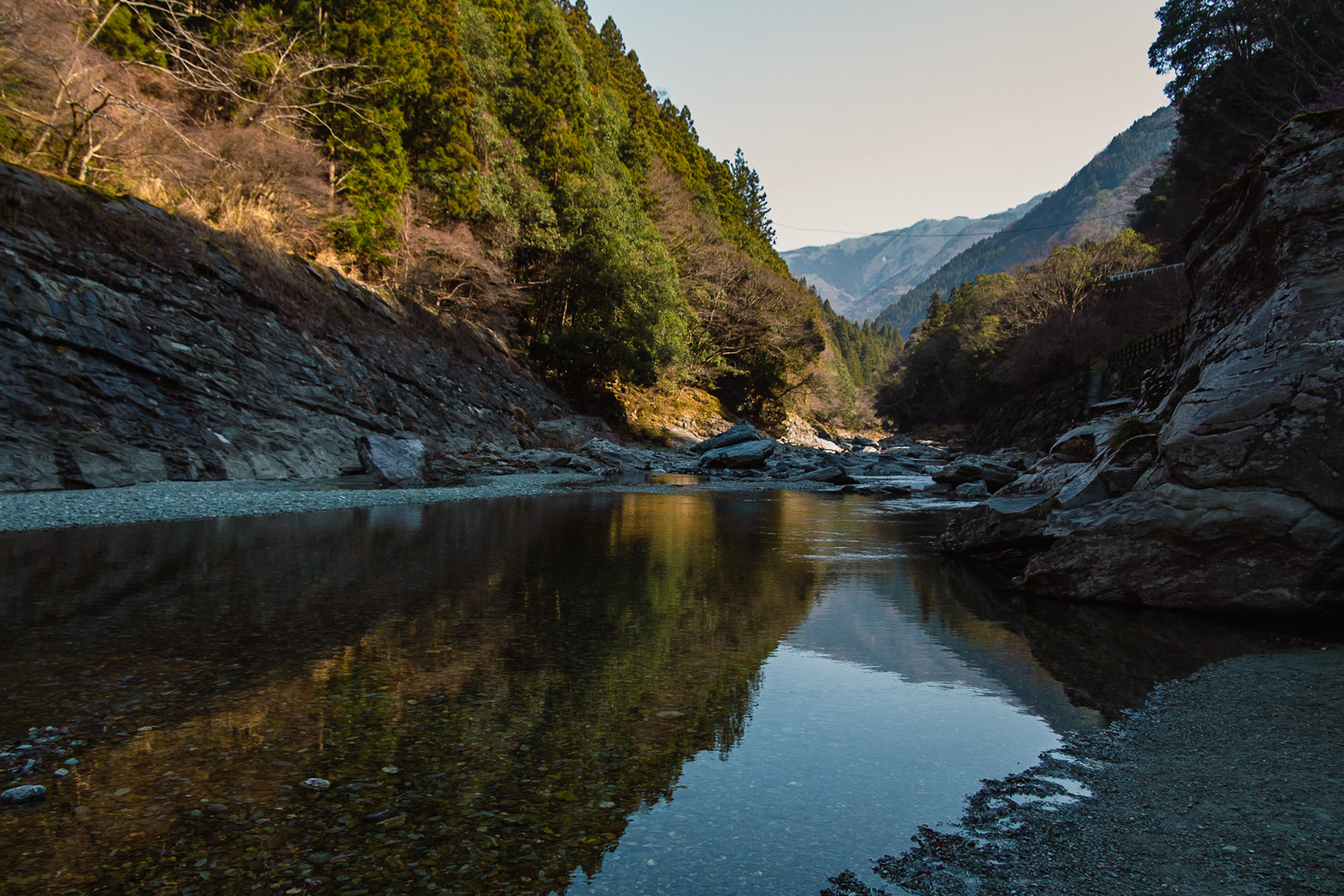
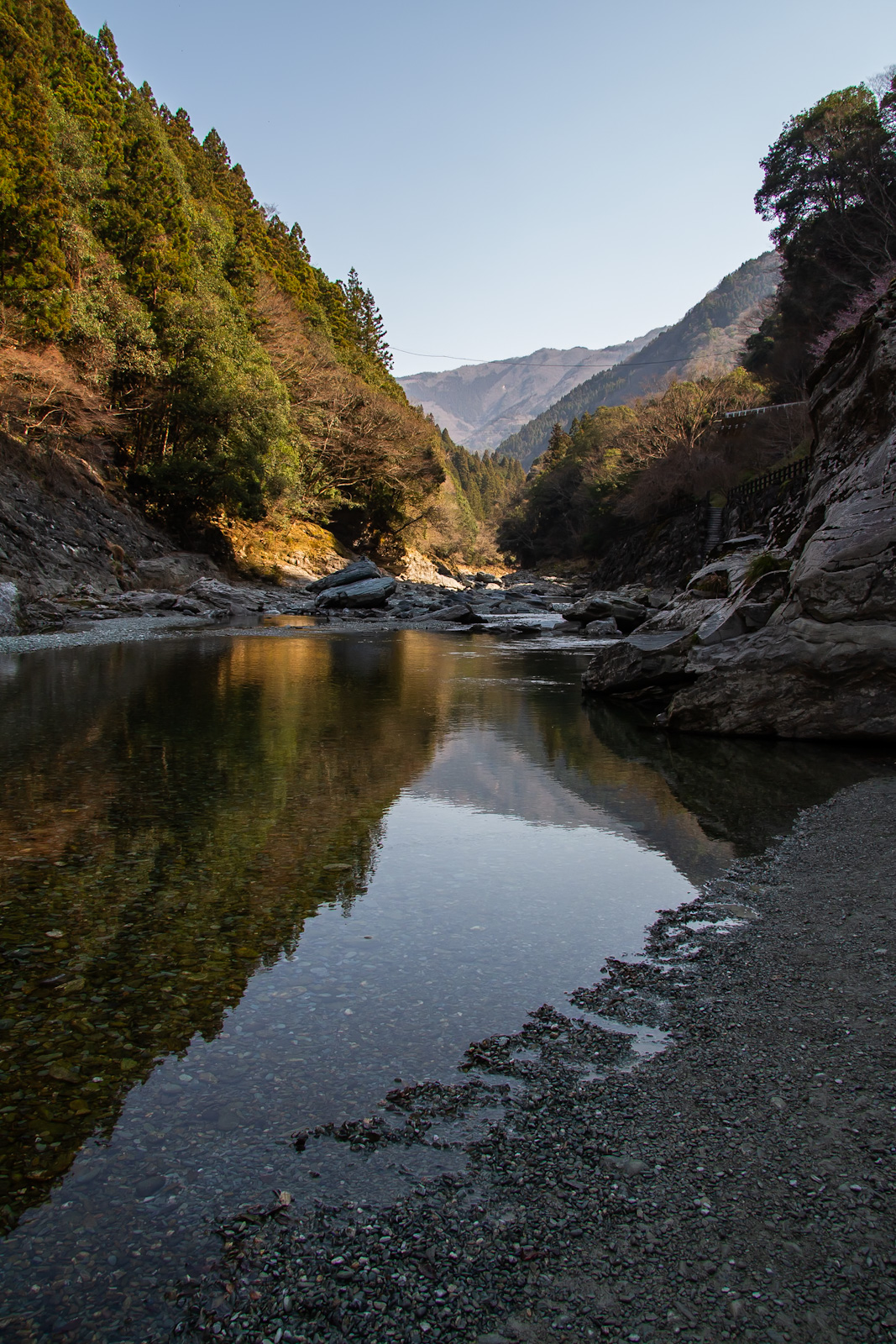
The Iya Valley region of Tokushima, located on the island of Shikoku, is one of the remotest areas of Japan. So remote, in fact, that it was once a refuge for defeated samurai. The forested slopes, deep valleys, and V-shaped gorges make for breathtaking scenery, but they also offer plenty of places to hide. This remoteness has shaped the area’s rich history, which is steeped in mystery and folklore.
Access remains challenging to this day. Without a car, the Iya Valley is impossible to navigate. Trains will take you as far as Oboke, the nearest JR station, and buses from there are few and far between. Thankfully, many local taxi companies offer tours that allow you to see as much or as little as you like.
I was hesitant at first—long car rides give me terrible motion sickness—, but I really wanted to see Nagoro Scarecrow Village, and, coming from Okayama, I would only have a day to spare. So, I decided the unpleasantness would have to be worth it. Luckily for me, the guide who picked me up was incredibly skilled at making smooth turns on the many winding roads. A lifetime of practice, I suppose. And just as the nausea began to hit a peak, we made our first stop.


Iya no Kazurabashi
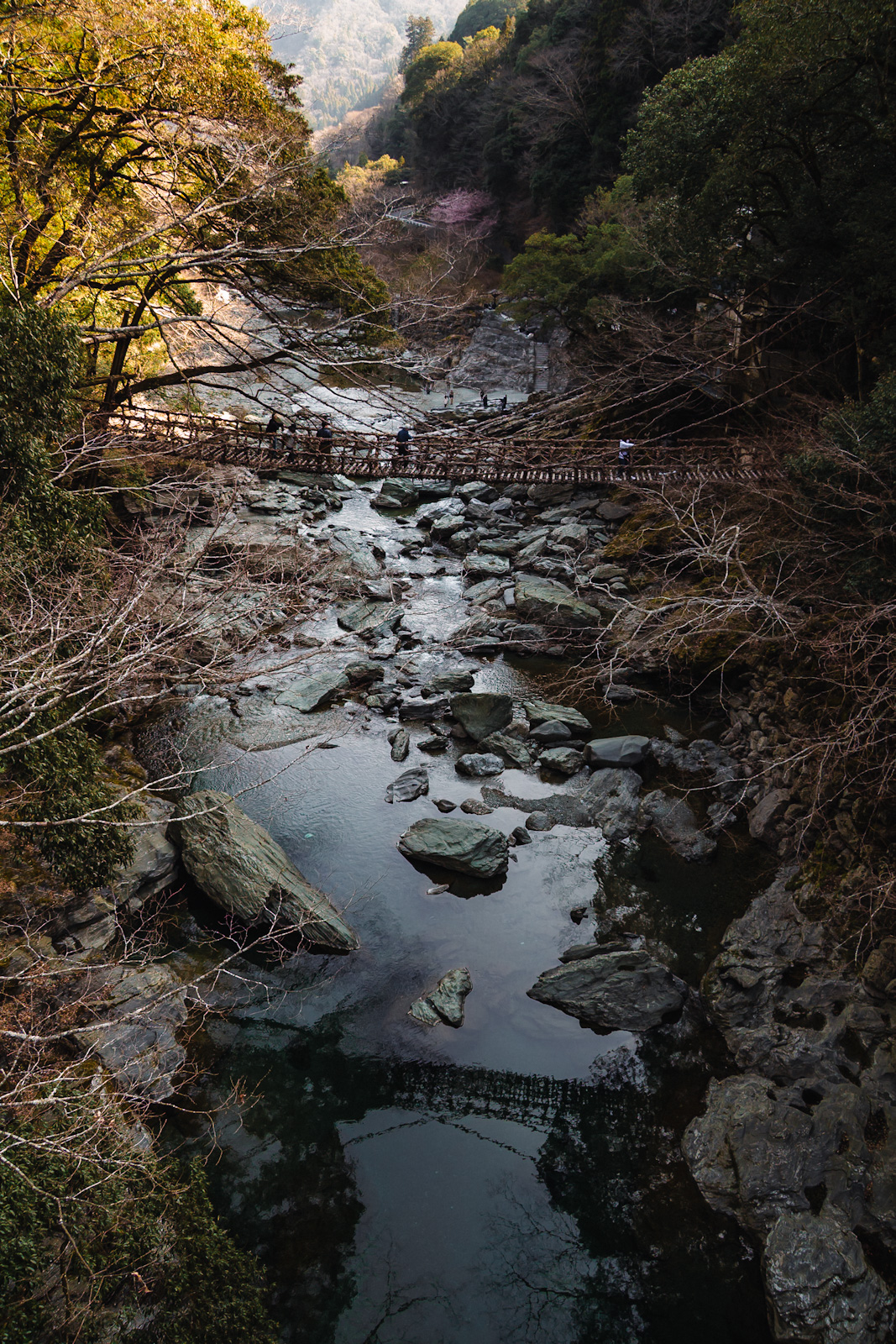
The Iya no Kazurabashi is one of the few remaining vine bridges of the Iya Valley. Woven from shirokuchi kazura vines, a species of mountain wisteria, it weighs about six tonnes and stretches 45 m (148 ft) across the Iya River at a height of 14 m (46 ft). These kinds of bridges were once a lifeline to villagers, who used them to cross the deep gorges of the valley. They also served as a deterrent, since they could easily be cut down if enemies approached.
It’s unclear who built the vine bridges. Some legends say they were the creation of the famous Buddhist monk, Kobo Daishi (774-835), to help assist the villagers. Others say they were woven by defeated Heike soldiers in the 12th century who were fleeing their Genji/Minamoto pursuers.
The Heike were a powerful samurai family in the late Heian period (794–1185) until their tragic downfall during the Genpei War (1180–1185). After the final Battle of Dannoura, which took place in the Kanmon Strait, many clan members drowned themselves or were killed. Those who survived fled to the remote mountains of Tokushima and Tochigi prefectures.
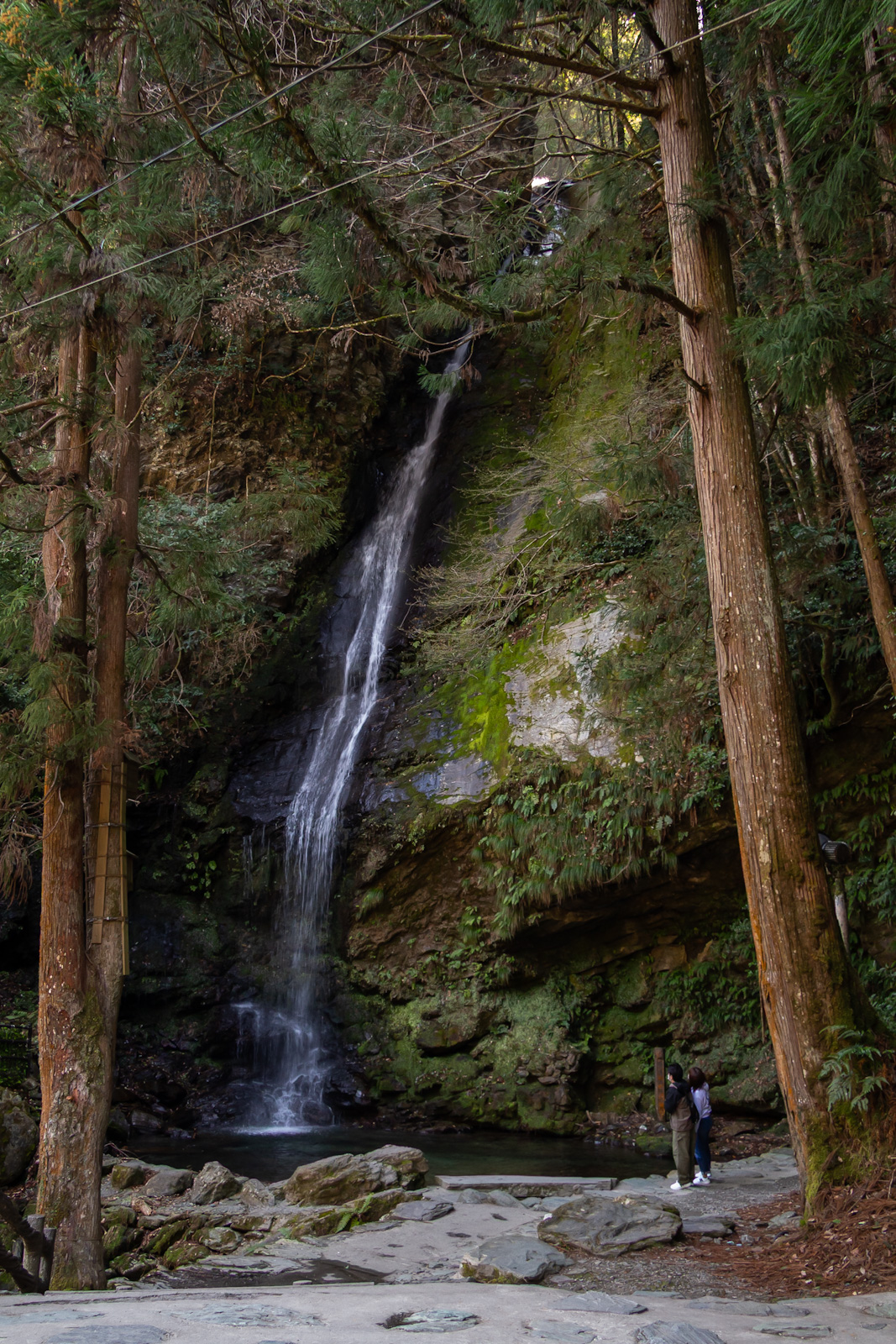
The Heike soldiers are the subject of another legend about the Biwa Waterfall, which is located nearby. Standing about 40 m (131 ft) high, it’s said to have been named after the refugees, who, longing for their hometown of Kyoto, played the biwa, or Japanese lute, at the water’s edge to soothe their loneliness.
Ochiai Village Viewpoint
Our next stop was an observatory that looks onto the Ochiai Village, which is designated a national preserved heritage site. The small hamlet was built by piling up stones onto a steep mountainside, where the difference between the highest and lowest points is about 390 m (1280 ft). It’s not known exactly when the village was formed, but its origins are said to be closely tied to the fugitive Heike clan. The village has cultivated tobacco, rye, potatoes, and rice, and raised silkworms, at different points in time.
The roads follow the contour lines of the mountains from east to west, with sites for housing and farmlands sprinkled throughout. It looks like something out of a storybook, but it also reminds me a bit of Peko-chan, the beloved mascot for the popular Japanese candy, Milky. Pareidolia for the win, amirite? Interestingly, Peko-chan is the subject of a disturbingly dark urban legend of her own, which you can read about here. Pretty on-brand for the Iya Valley, if you ask me.


Nagoro Scarecrow Village
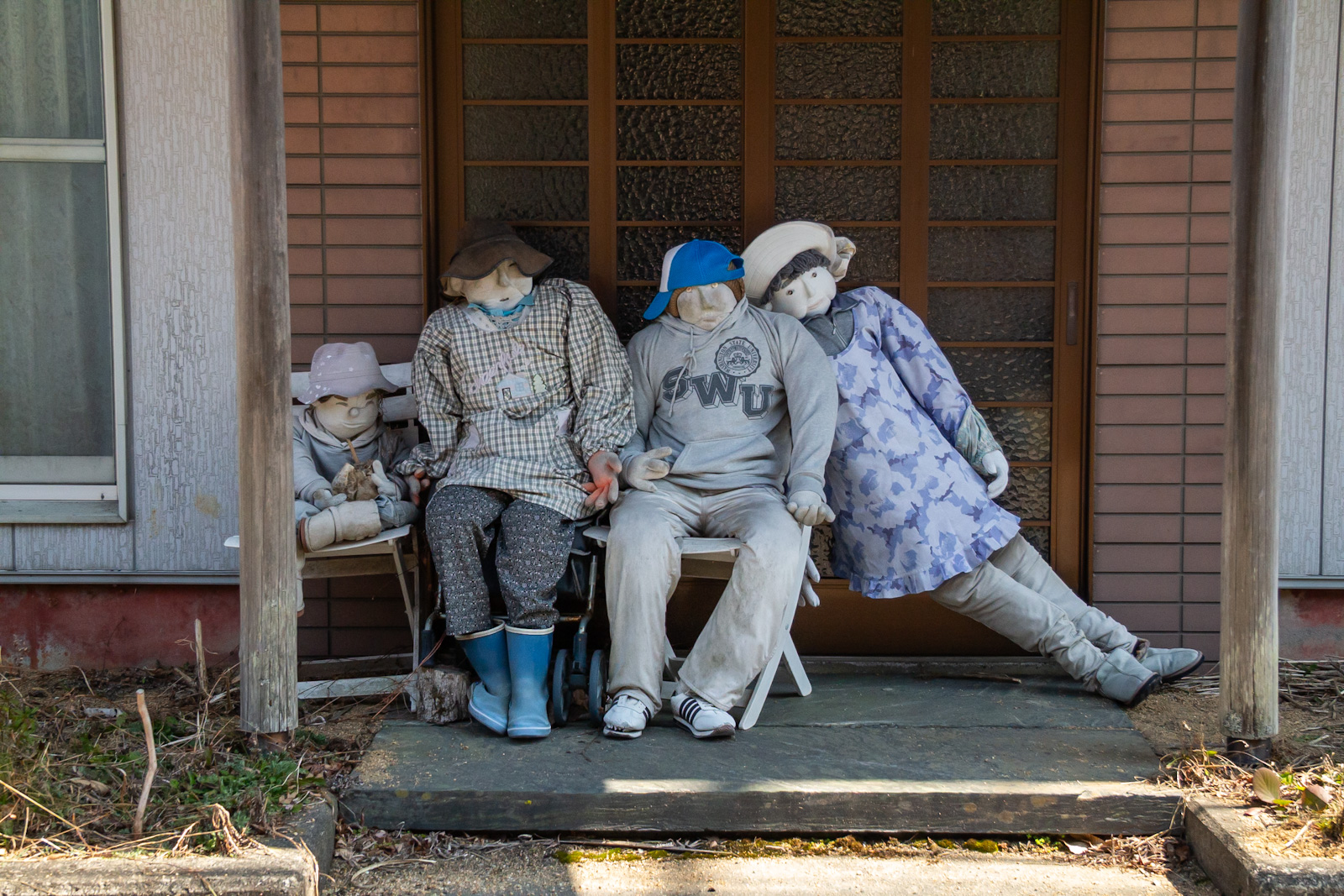
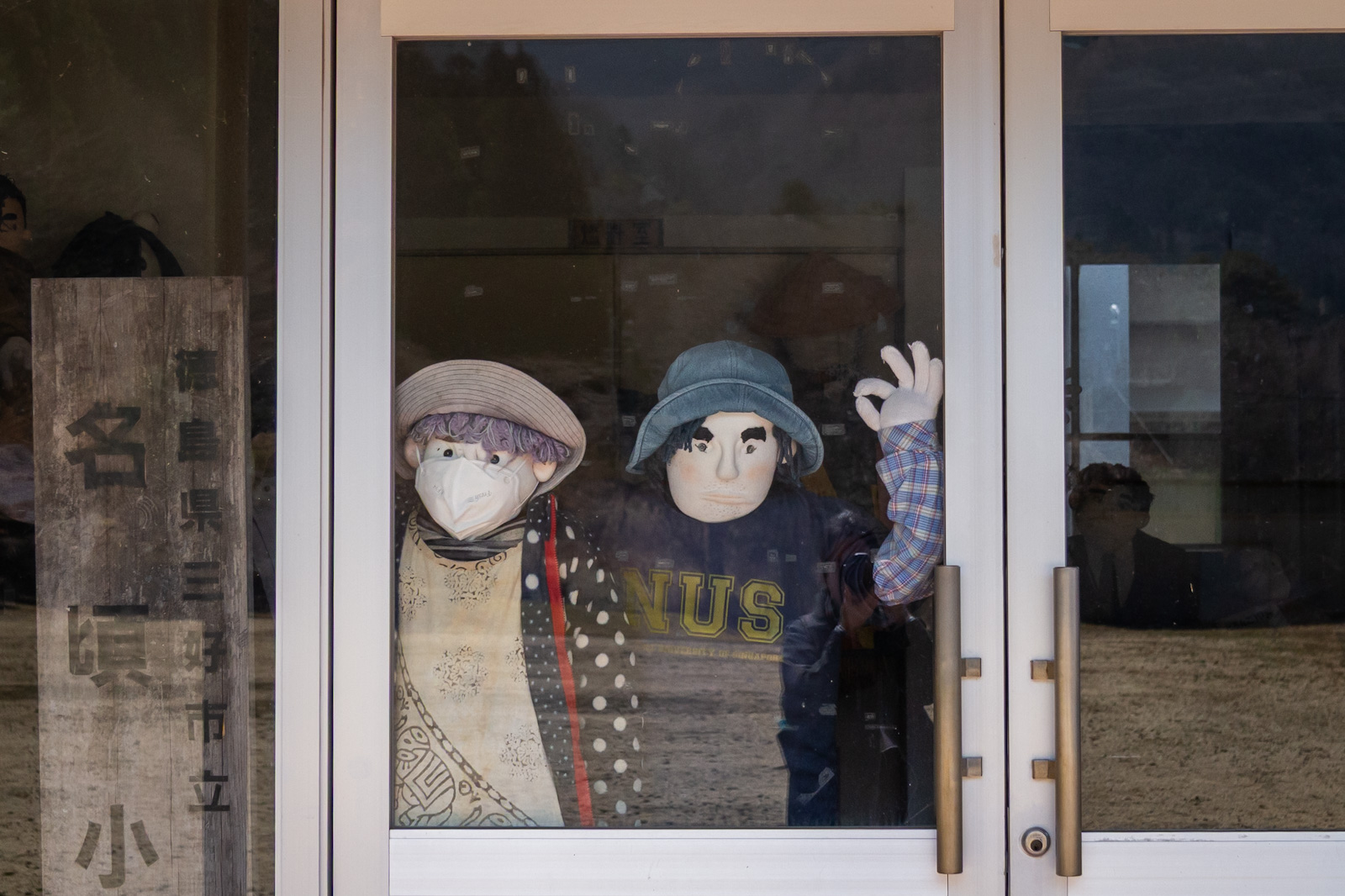
Less than half an hour’s drive from the Ochiai Village viewpoint, we reached the main attraction: Nagoro. Known affectionately as the “Village of the Scarecrows”, it features nearly 400 life-size dolls that represent many of the village’s former residents. I won’t go into too much detail here, as I wrote a whole separate blog post on it, but it was a once-in-a-lifetime kind of experience and the highlight of the tour.
Higashiiya Suspension Bridge
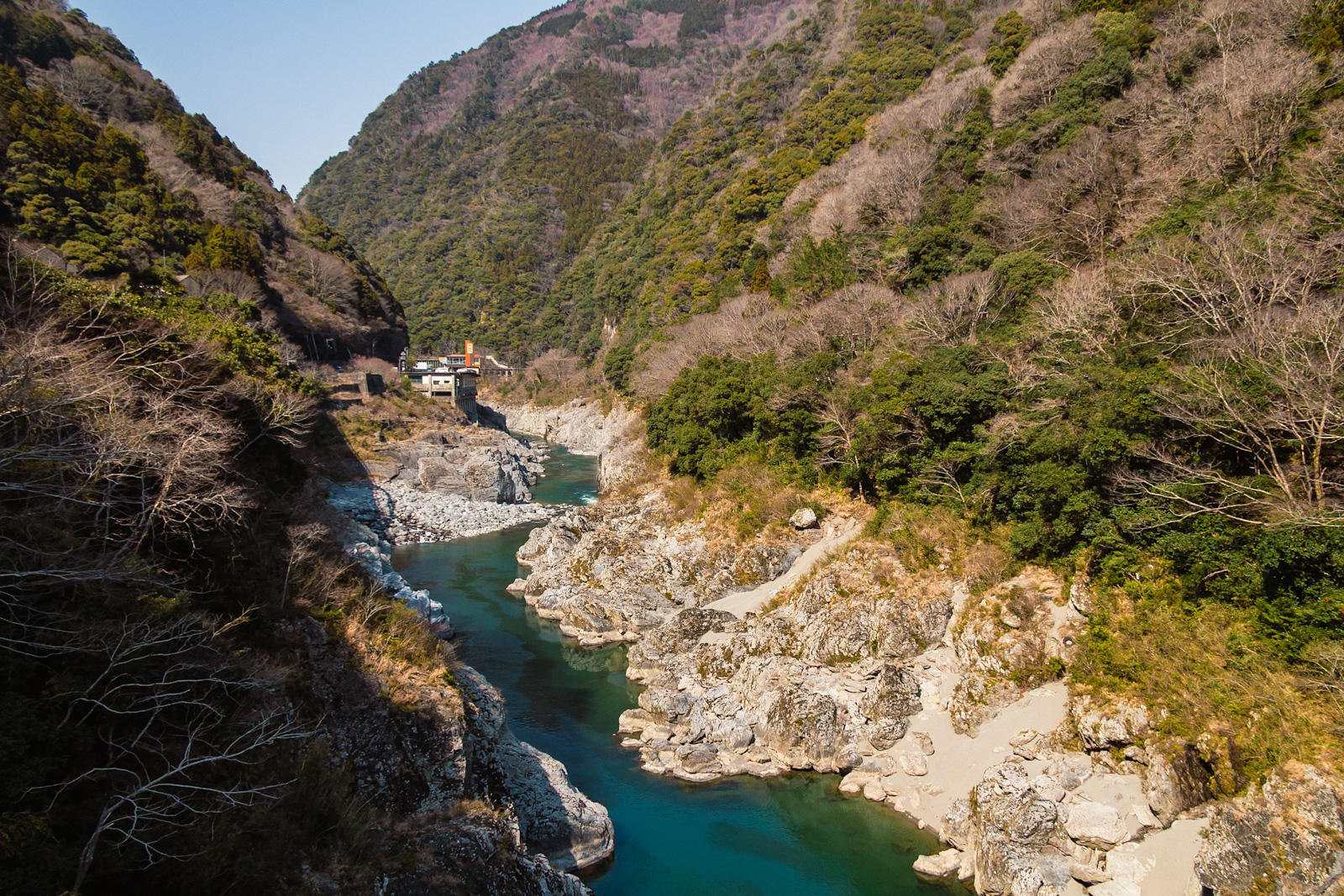
Next up, on the way back towards Oboke Station, was the Higashiiya Suspension Bridge. The wire bridge sits 70 m (230 ft) above the Iya River, making it the highest in the whole valley. It offers incredible views of the surrounding mountains, and a few jitters as well.
On the opposite side is the entrance to Ryugu Cliff Park, which has rental cabins that immerse you in the dense, virgin forest. The cabins close during the winter, but the bridge is open all year round.


Roadside Station Oboke
And just like that, our four-hour journey had come to an end. I asked the driver to drop me off at Roadside Station Oboke, which is part tourism center and part museum, where I figured I could kill the hour or so I had left before the train back to Okayama. But first, I needed lunch, so I headed to Cafe & Jibie.
The cafe, overlooking the Oboke Gorge, serves dishes made from deer and wild boar. The last time I’d had gibier was in the mountain village of Nishimera in Miyazaki Prefecture many years ago, and so I was eager to try it again. Well, the burger I ordered did not disappoint, especially as it came with a view of the Yoshino River below.
There’s another observation deck on the riverbank, and a sightseeing boat you can take to see the Oboke Gorge up close. Roadside Station Oboke also has a souvenir shop, offering local products and crafts. I highly recommend Kyokufuen Tea, a delicious green tea cultivated from the terraced tea fields of Oboke, and the hand-drawn magnets of various yokai.
Yokai Yashiki Museum
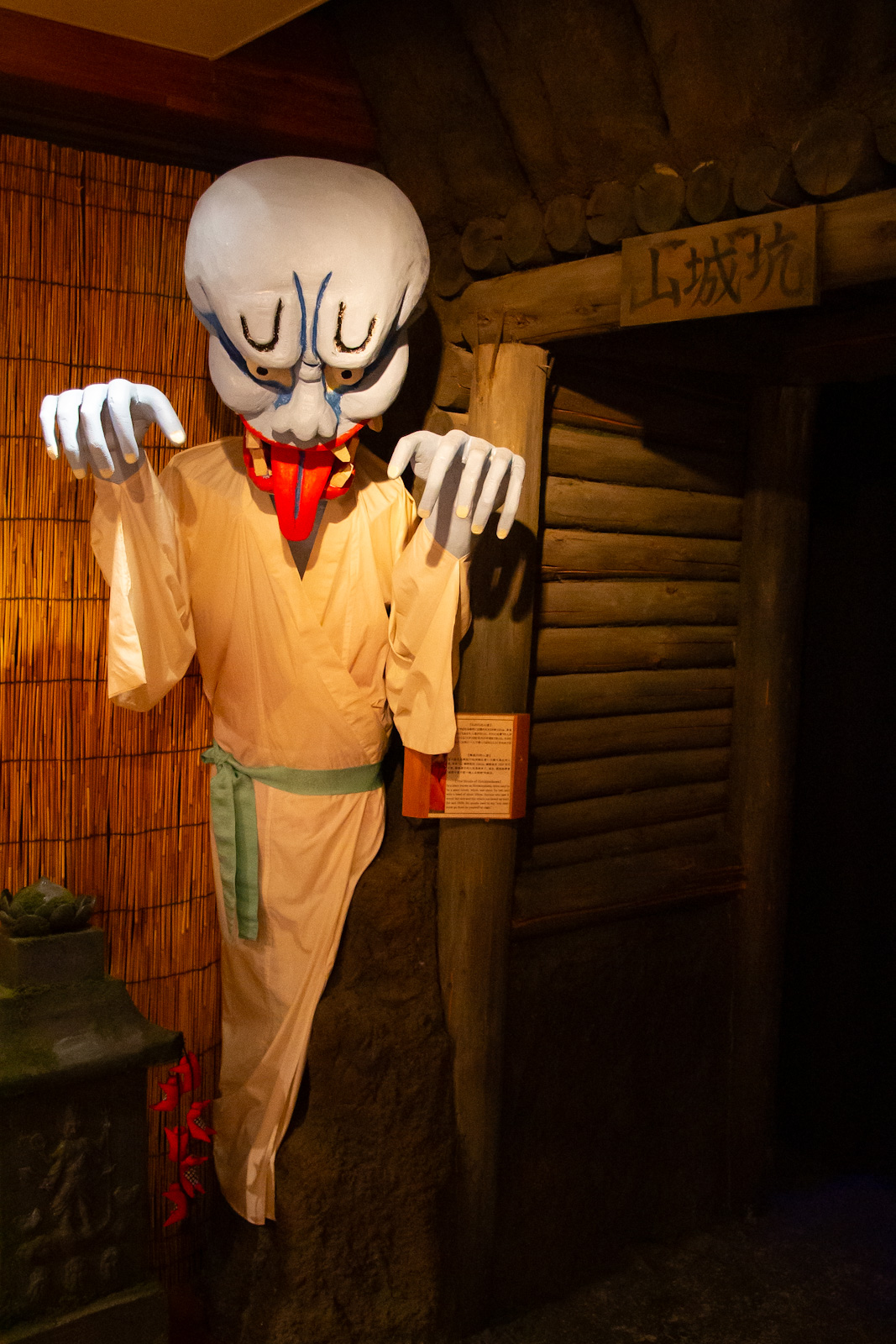
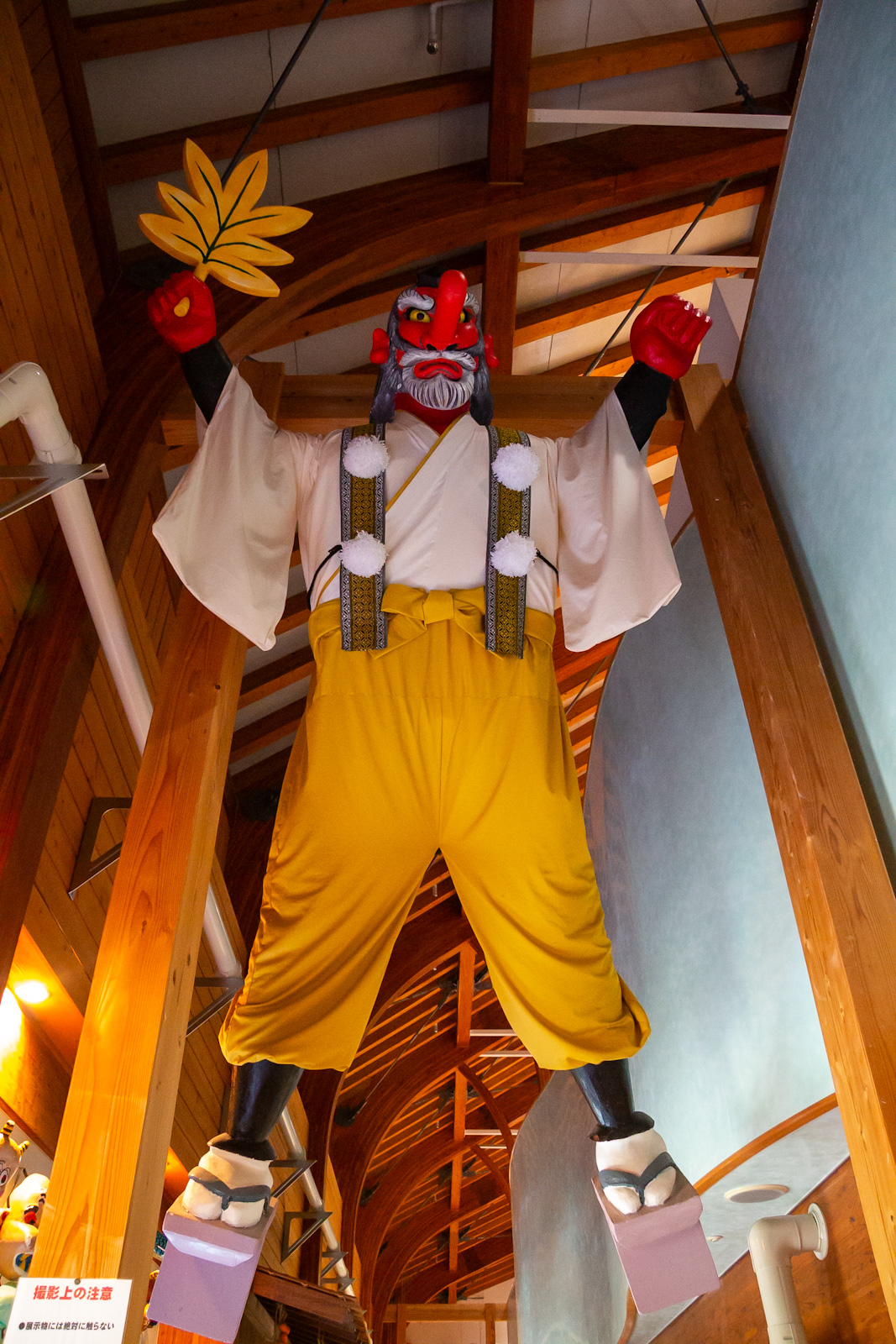
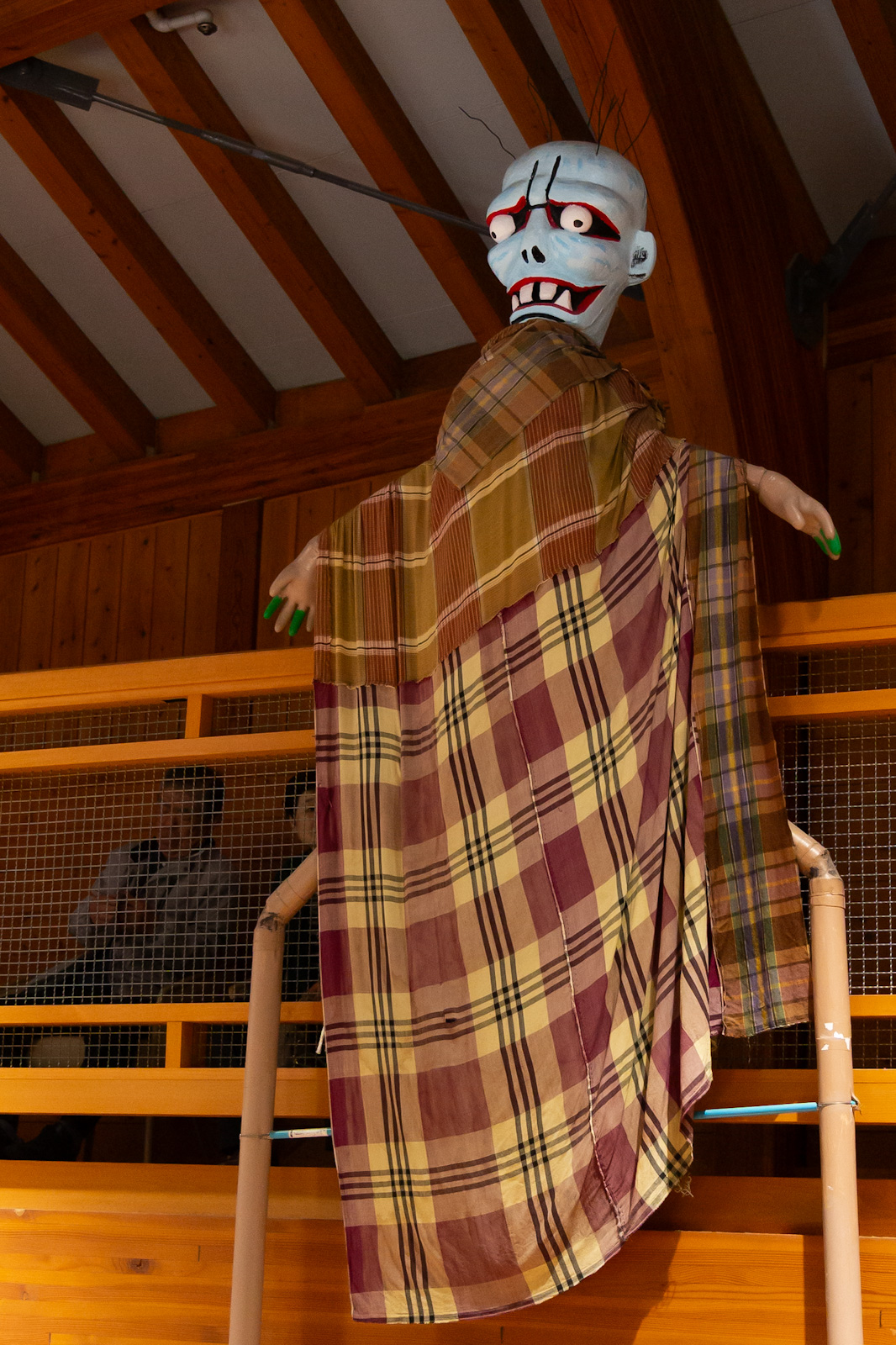
Speaking of yokai, inside Roadside Station Oboke is the Yokai Yashiki Museum, which details the many monsters, demons, and spirits that are believed to inhabit the Iya Valley region. There’s also a small gemstone museum on the second floor. I only had about twenty minutes to spare at this point, but I was intrigued because I had just spent the previous day exploring the yokai benches of Fukusaki.
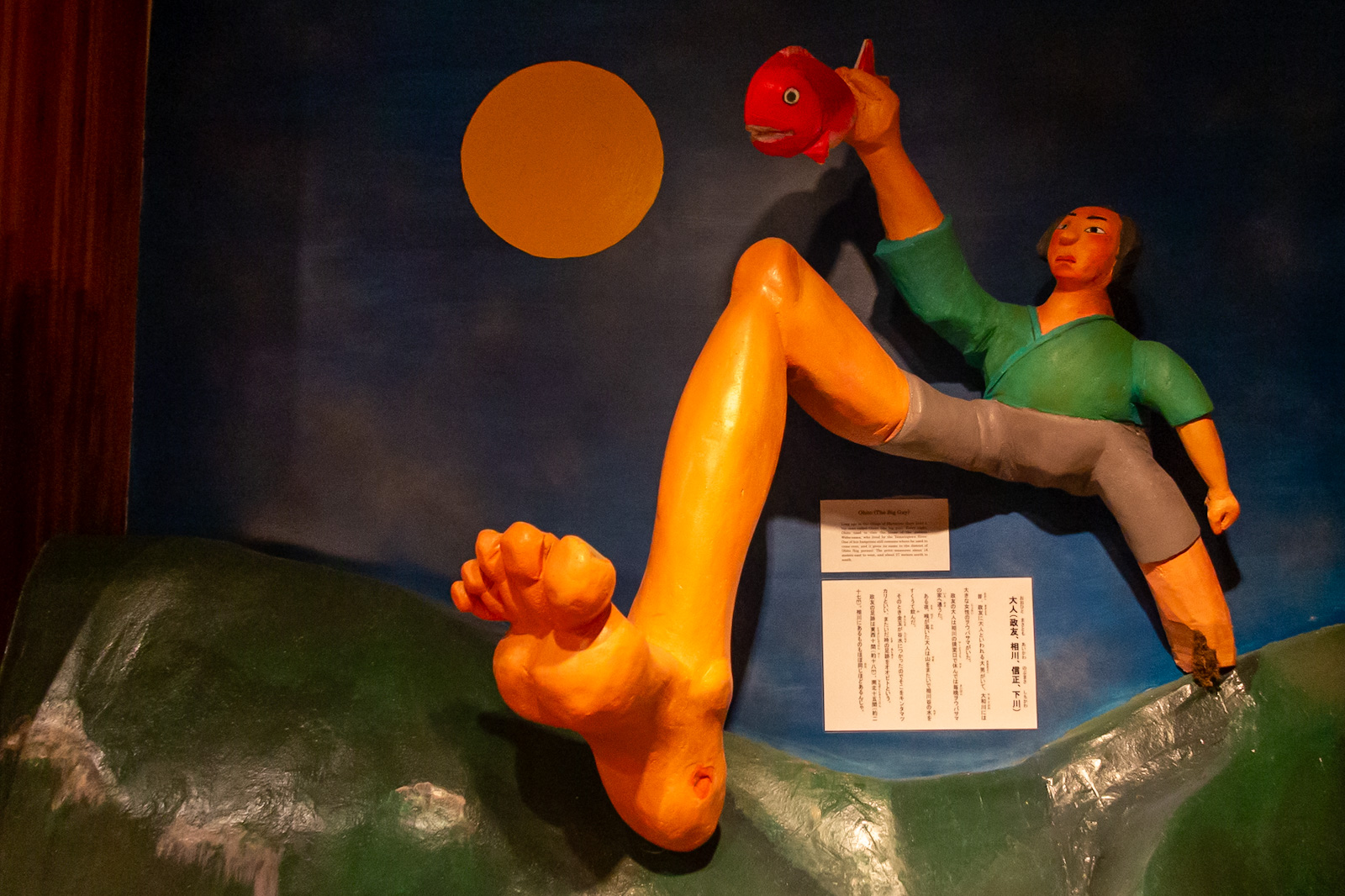
Tickets cost 700 yen, which turned out to be well worth it for the stories alone. Take Ohito, or the Big Guy, for example. He’s said to have lived in the village of Masatomo a long time ago. Every night, he would visit the house of the goddess Woba-sama, who lived on the Yamatogawa River. Where he used to cross over, one of his footprints remains, measuring 18 m (59 ft) wide and 27 m (89 ft) long.
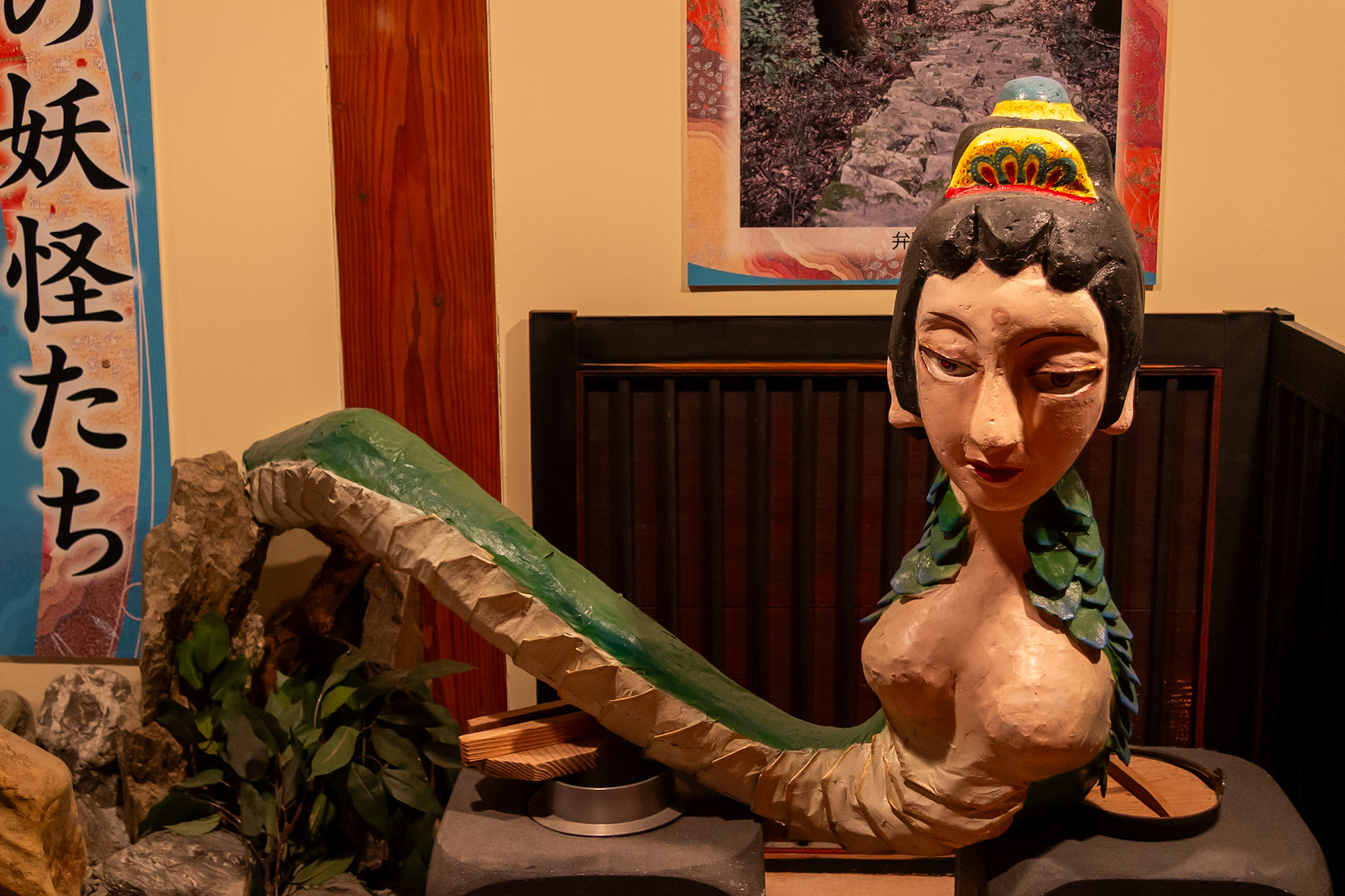
Then there’s the tale of the goddess Benzaiten, who appeared as a dragon to the members of the Shimokaewa family. One of the family members, who was taking a break from making a new rice paddy in the valley of the Yamatogawa River, broke some branches of the sacred sakiki plant to fashion a mat to sit on. Sakiki was traditionally dedicated to the Shinto gods, who were said to have descended from the tops of its tapered leaves. That’s when Benzaiten appeared in all the family’s homes, winding herself around their fireplaces. In apology, the family built a small shrine on the slopes above their houses, and Benzaiten stopped appearing.
These are just two of the many stories you can learn about at the museum. Similarly, there’s plenty more to discover in the Iya Valley. I could’ve stayed an entire week if I had the time, but alas, such is life, and after a hurried walk to the station, back to Okayama I went.
Visit the Iya Valley
The Iya Valley is located in Miyoshi, Tokushima, on the island of Shikoku. The closest major train station is JR Oboke Station. I used Okayama as a base, which is connected to JR Oboke Station via JR Okayama Station on the Dosan Line. Take the Nampu Limited Express heading for Kochi directly to JR Oboke Station. You need a special ticket, which you can get from the same green ticket machine you would use to buy a Shinkansen ticket. It takes 1 hr 40 minutes and costs 5,000 yen each way.
Several taxi tour companies operate in the Iya Valley region. I used Kazurabashi Taxi, which I highly recommend. You can choose from their suggested tours or create one of your own. I went with just a driver, but English-speaking guides are available as well. To book or enquire about a tour in English, fill in this form, and someone will get back to you. For Japanese speakers, click here.
All the places mentioned in this post are pinned on the map below. Feel free to use it to help plan your own tour. For more information on the Iya Valley, check out the links below.
Kazurabashi Taxi English Website
Miyoshi Tourism website
IyaTime website
Tokushima Tourism website