Fukuyama is Hiroshima’s second-largest city. I’ve often passed through on the Shinkansen, admiring its five-tiered yamajiro from the train window. The station-adjacent castle is the city’s most obvious draw. Its historic fishing village, which inspired Studio Ghibli’s Ponyo, is also popular. But to locals, Fukuyama is known for something else.
During World War II, almost all of the city was burned to the ground in the air raids of 1945. The survivors, who were left reeling in the aftermath, turned to nature to rebuild. They started planting rose bushes around the city to lift everyone’s spirits, which created a community outlook known as “rose mind”. Thousands of flowers turned into millions, and Fukuyama became known as the city of roses.


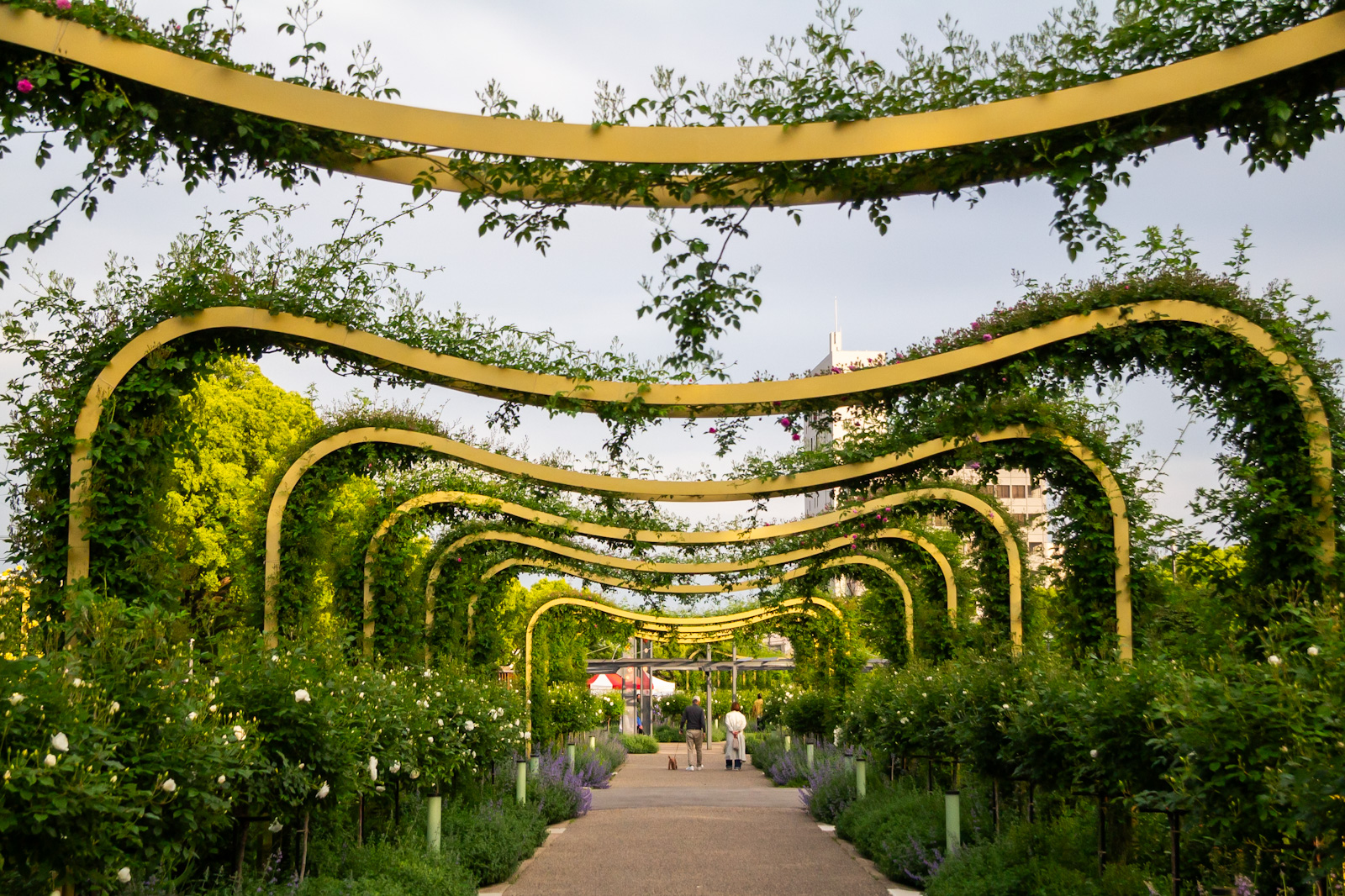


There are now over 400 rose gardens in the city, and more than 10 rose varieties named after it. Every May, when the roses bloom, a massive festival and expo is held, complete with parades, floral displays, contests, and markets. When I stepped off the bus outside Bara Park, it was a few weeks before the 2026 festival—the perfect time to beat the crowds and still enjoy some early blooms.
Bara Park, or Rose Park, is where some of the original rose bushes were planted in Fukuyama. The gorgeous space now features 7,000 plants of 670 varieties in a meticulously landscaped triangle. Along with Midorimachi Park, which is just a short walk away, it’s the best place to view flowers in the city.
Midorimachi Park serves as the main venue for the rose festival. It features a hexagonal garden known as Rose Hill, where you can enjoy over 5,000 rose bushes of 330 varieties. Some of the roses are winners of previous festival competitions, and all of the flowers are taken care of by the citizens themselves. At the top of Rose Hill is a small open-air museum detailing the city’s history with the flower.


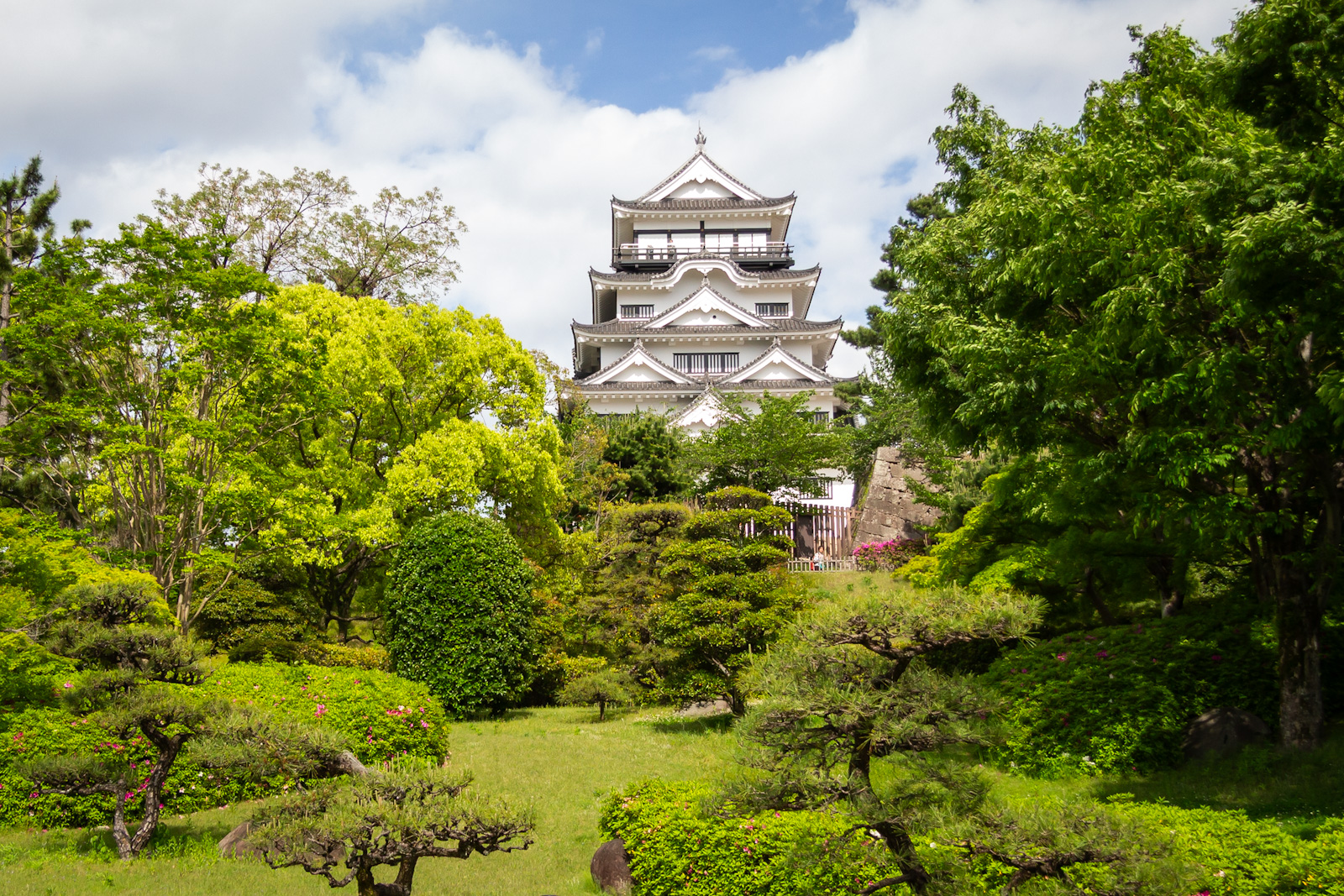
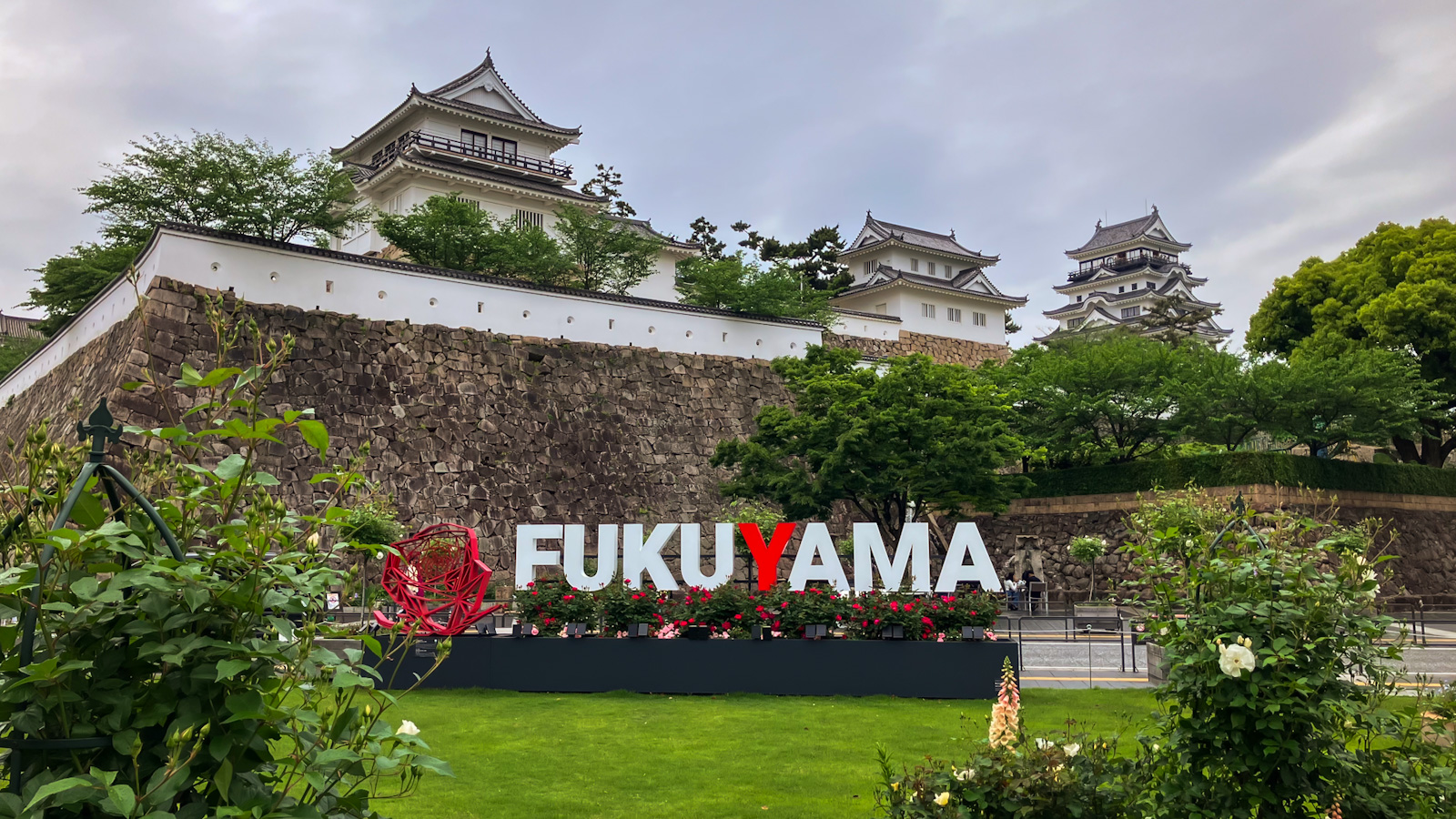
Roses can also be seen throughout the city, including just outside Fukuyama Station. Here, a giant sign welcomes visitors with Fukuyama Castle in the background. I’m fortunate enough to be suffering from castle fatigue, so I didn’t go inside this time. But I did take a walk around the grounds to get a closer look.
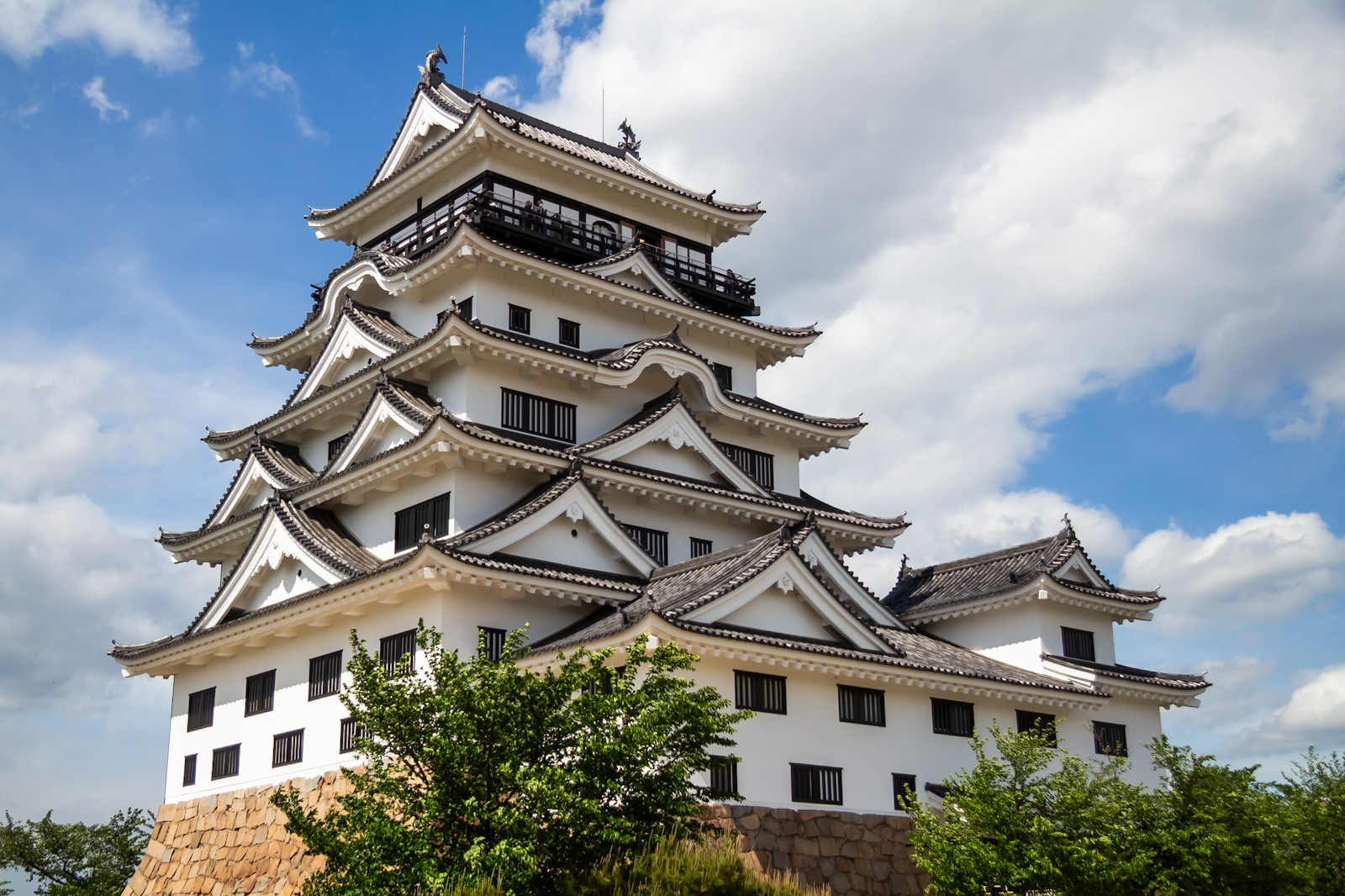
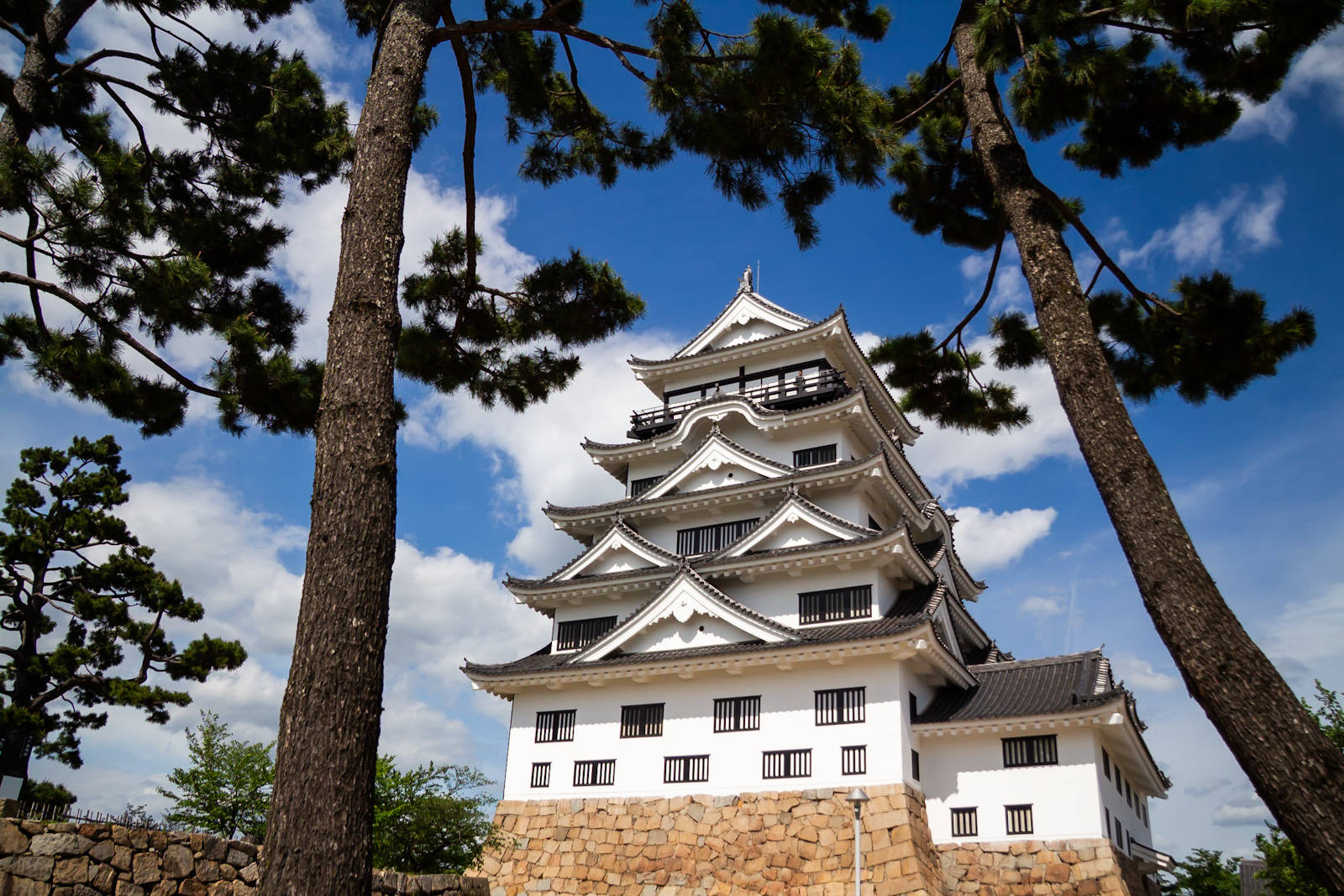
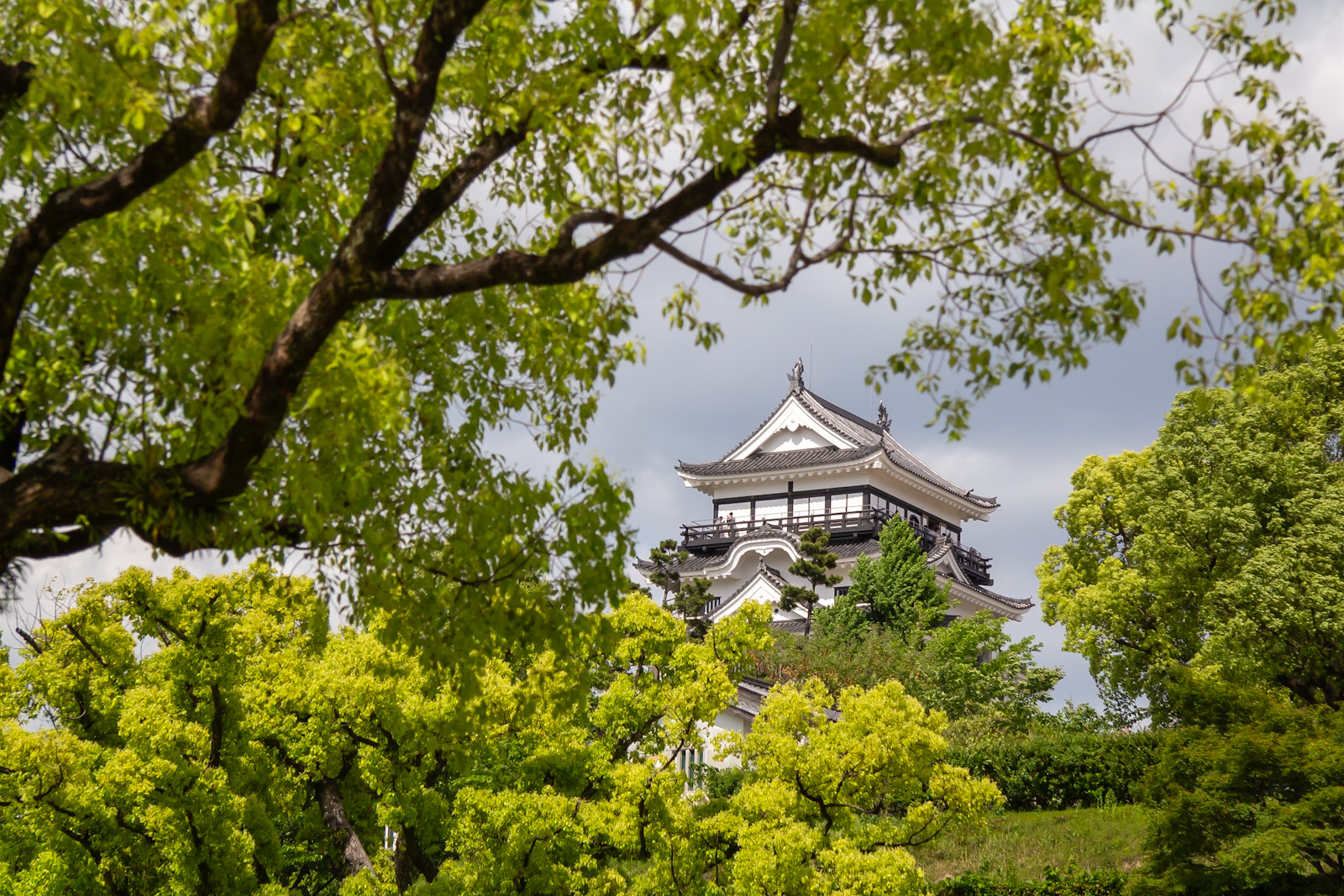
Completed in 1622, during the Edo period, the hilltop castle was built by Mizuno Katsunari, a cousin of Tokugawa Ieyasu and the first fudai daimyo, or insider lord, to be stationed in the Chugoku region. With money and supplies from the Tokugawa Shogunate, the castle was built as a show of strength to the tozama daimyo, or outsider lords, in Hiroshima and Okayama.
Fukuyama-jo was one of the greatest castles of the time, featuring 23 yagura, or turrets, and 10 gates. Unfortunately, most of it was destroyed in the air raids of 1945; the main keep is a reconstruction. It really is quite a sight to behold, even if you just admire it from the outside.
Just a short walk away from the castle is the Fukuyama Museum of Art, which offers its own special view of the castle. If you need a break or some refreshment, I recommend enjoying it from the window of the museum’s cafe.
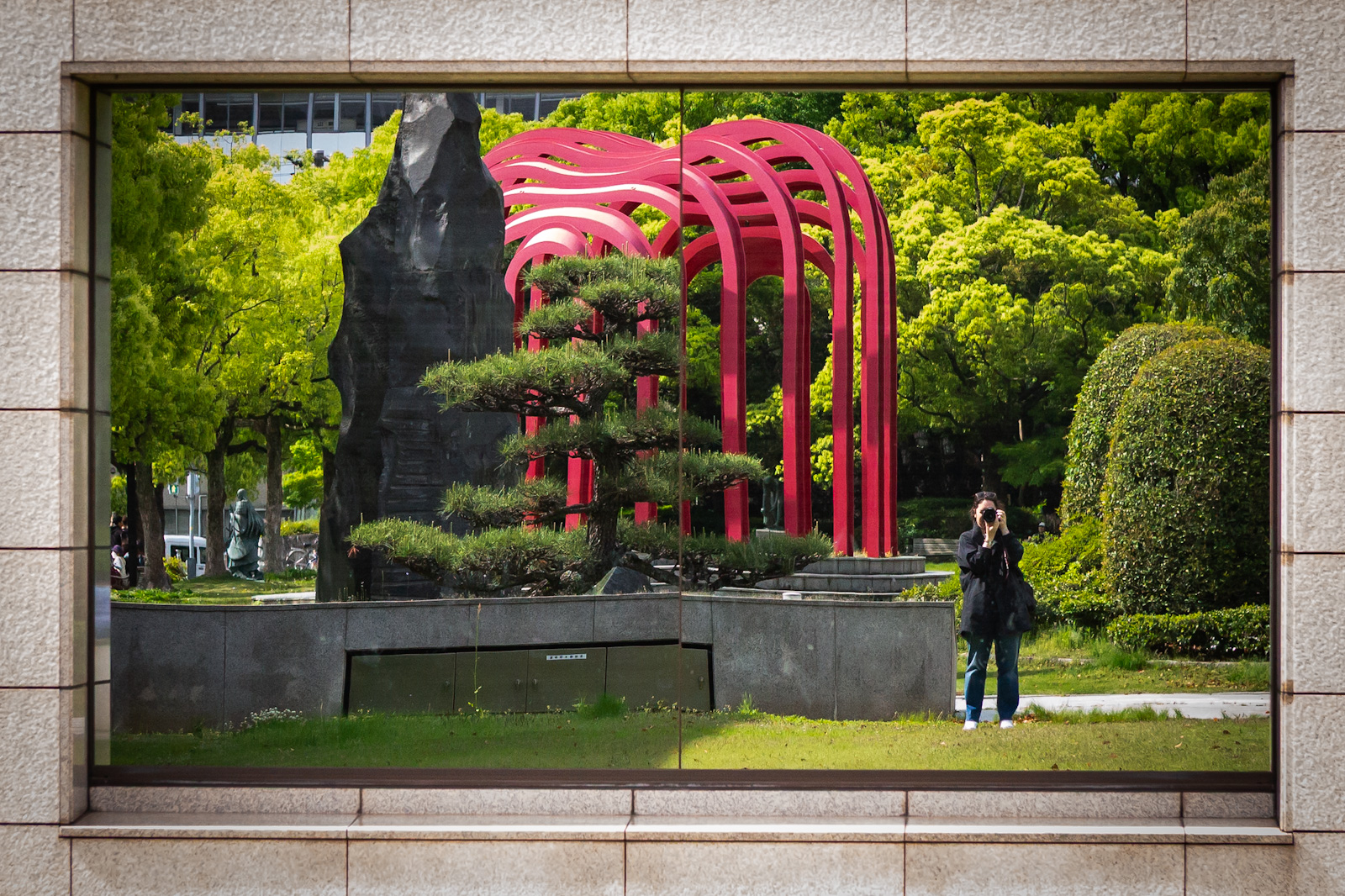
The museum has a sculpture garden, which features the iconic Arch of Love, a blazing red creation by Hiroshima-born artist Takahashi Shu. Featuring a dozen arches, it symbolizes the 12 municipalities of the Bingo region of Hiroshima.
There was a special exhibition on at the time, the first-ever retrospective of Kobayashi Tokusaburo (1884–1949), which I decided to check out on a whim. I didn’t know much about the Fukuyama-born artist going in, but it turned out to be quite the treat. Not only did I have the entire space to myself, but I was in for a fascinating ride.
Kobayashi Tokusaburo was a Western-style painter active from the Taisho period to the 1940s. But after graduating from the Tokyo School of Fine Arts, he first worked as an illustrator for books and magazines, and then as a stage designer for the Geijutsu-za.
What on earth is the Geijutsu-za, you ask? Well, it was kind of like the Second City of Japan, but instead of comedy, they did theatre, and the first iteration started all the way back in 1913. It was founded by two actors: Shimamura Hogetsu (1871–1918) and Matsui Sumako (1886–1919), who had been expelled from Bungei Kyokai.
Bungei Kyokai was another pioneering theatre company at Waseda University that had ushered in the shingeki (new theatre) movement. It disrupted traditional kabuki by staging Western-style plays, such as Shakespeare. Shimamura was actually a co-founder, along with his sempai, Tsubouchi Shoyo. But when it was discovered that Shimamura was fraternizing with another actor, Matsui Sumako, the two lovers were kicked out.
Shimamura and Sumako continued their success at the Geijutsu-za, capitalizing on the charisma of Matsui. Seeing real women perform was still a novelty at that point because they had been banned from the Tokyo stage for about three centuries. Kobayashi spent four years designing the costumes and sets for the productions, laying the foundation for future theatre aesthetics. He later resigned, shifting his focus to painting.
Tragically, Shimamura succumbed to the flu pandemic in 1918, with a heartbroken Sumako taking her own life just two months later. The company disbanded as a result but was reformed in 1924 by one of the original members, Mizutani Chikushi (1882–1935). The new iteration survived until 1945. By this point, Kobayashi had evacuated to a friend’s villa in Hakone after an air raid destroyed his home. In 1949, he moved back to Tokyo to live with his son, but unfortunately suffered a fatal heart attack soon after.
Kobayashi’s paintings aren’t as wild as these stories; they mostly depict landscapes, portraits of his kids, and still lifes. But the exhibition was so unexpectedly fascinating, I’m glad I went.
Another wonderful surprise was waiting for me at the station’s omiyage store: Fukuyama’s version of momiji manju. Now, if you know anything about Japan, you know about omiyage, which is a special souvenir that people bring back for friends, family, and colleagues after visiting a different area of Japan. Sweets or snacks are the most common and traditional choice for omiyage, because regional food is an enormous sense of pride for people here.
Hiroshima’s most beloved omiyage is momiji manju, a maple leaf-shaped castella-type cake filled with red bean paste. It’s inspired by the gorgeous autumn foliage of Miyajima’s Momijidani Park. Well, Fukuyama has an exclusive rose-peach version that is possibly the most exquisite thing I’ve ever tasted in Japan. It’s exclusive to Fukuyama, and I swear I’d go all the way back just to buy some more.
Even without the proverbial cherries on top, Fukuyama is a worthy destination full of hidden gems. So if you’re planning a trip west, consider adding it as a stop.


Visit Fukuyama
Fukuyama is only a 25-min ride from Hiroshima and a 15-min ride from Okayama on the JR Shinkansen. It can be reached from Osaka or Kyoto in less than 1.5 hours. The rose festival is held every May, but the Bara and Midorimachi Parks are free to enter year-round. You can reach them from the station on foot or by bus. The castle grounds are also free to explore; going inside costs 500 yen. Standard admission to the Fukuyama Museum of Art is 310 yen; special exhibitions are priced individually. For more information, check out the links below.